
The U.S. Navy disabled an Iranian-flagged container ship trying to run a blockade in the Arabian Sea, boarded and seized the vessel, and released footage of the engagement; this article walks through what happened, the weapons used, the boarding, and the diplomatic fallout while keeping the focus on decisive American action.
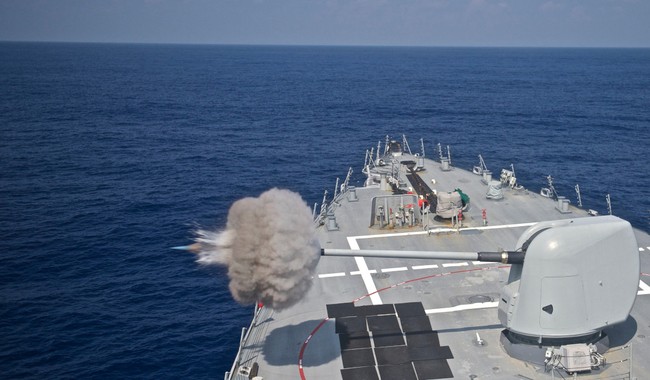
Hours ago the Arleigh Burke-class destroyer USS Spruance fired on and disabled the Iranian-flagged container ship M/V Touska after the merchant vessel tried to push through a U.S. blockade line in the Arabian Sea. The Touska was reported to be en route from Port Klang, Malaysia, headed for Chabahar, Iran, and had ignored repeated warnings to stop over a six-hour encounter. The crew’s decision to press forward instead of complying amounted to a direct challenge to U.S. forces enforcing the blockade. The vessel was also under U.S. Treasury sanctions for its links to the Islamic Revolutionary Guard Corps, which made its choices even less tenable.
U.S. forces recorded the warnings and the engagement and have now released that video to the public, which shows both clear orders and the kinetic response when those orders were refused. The visual record removes any fog of war about whether warnings were issued and ignored, and it demonstrates a clear escalation path followed by American commanders. In short, the Navy warned, the ship refused, and the Navy acted. That sequence is simple and intentional: warnings, escalation, disabling fire, and boarding.
The weapon used to force compliance was the Mark 45, a 5-inch, 62-caliber naval gun capable of firing heavy projectiles at very high velocity. Each shell weighs roughly 68 pounds and leaves the muzzle at about 2,500 feet per second, which explains why shots through the engine room were effective at stopping the vessel’s effective maneuvering. Reports indicate three rounds struck areas consistent with engine and propulsion spaces, dramatically lowering the ship’s ability to resist. Those hits left the crew little choice but to accept boarding and control by U.S. forces.
Marines from the 31st Marine Expeditionary Unit conducted the boarding and now control the Touska, securing the crew and taking the vessel into American custody. That boarding followed established Navy-Marine procedures for seizing noncompliant ships on the high seas under a lawful blockade. Since the blockade was announced, U.S. forces have routinely ordered dozens of ships to reverse course; this incident marks the first time a ship challenged the line with force and paid the predictable price. The odds that the vessel’s owners recover it or receive insurance payouts are extremely low, given the clear documentation of sanctions and hostile intent.
This action is unfolding against the broader diplomatic backdrop of talks and demands between Washington and regional partners, where the U.S. has framed enforcement as a necessary step to counter Iranian pressure on shipping lanes. U.S. negotiators were scheduled to travel to Islamabad amid tense exchanges, while Iranian officials demanded removal of the blockade as a precondition for talks. That hardline Iranian posture, combined with attempts to push a ship through a blockade, underlines a strategy of coercion that the United States chose to blunt with decisive force. The situation remains fluid, but the operational message is already clear to all maritime actors in the region.
Commentary and coverage from various outlets noted the tactical miscalculation by the Touska’s crew, summarized bluntly by one headline: It “Did Not Go Well for Them.” The Navy’s public release of the encounter footage reinforces that characterization by showing both restraint and effectiveness—warnings were plain, escalation was controlled, and the disabling fire achieved its objective without wider escalation. That kind of calibrated force sends a practical deterrent message without needlessly expanding the conflict.
This operation also highlights the interoperability of naval firepower and Marine boarding teams in modern maritime enforcement missions. The Spruance provided the stand-off precision effects to halt the vessel, while embarked Marines executed the close-quarters work necessary to secure people and evidence. Together they achieved a tactical and legal result: a sanctioned vessel prevented from reaching its destination and subject to U.S. control for further action. Those combined capabilities are what keep sea lanes open and hostile actors in check.
The diplomatic chain reaction is predictable: Tehran can either step back from its demands and accept the reality of U.S. enforcement, or it can double down and risk broader military consequences. For now, Washington has shown it will follow through on declared policies at sea and will document those actions transparently. That clarity reduces ambiguity for allies, commercial shippers, and adversaries alike, and it demonstrates a willingness to enforce national policy with real-world consequences.


Add comment