
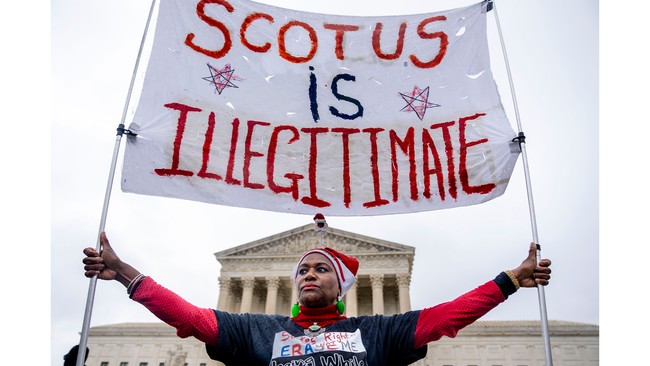
This article examines recent leaks about the Supreme Court’s so-called “shadow docket,” argues the media’s handling of leaked memos is irresponsible, and defends the court’s use of emergency orders as a necessary tool when executive overreach and activist litigation flood the system.
The New York Times published internal memos allegedly from Supreme Court deliberations, and the coverage leaned hard on anonymous sourcing. The way those outlets rush to publish leaked material risks damaging the court’s confidentiality and public standing. When institutions are exposed to partisan leaks, confidence in neutral adjudication suffers.
The Times spoke to 10 people, liberals and conservatives, who were familiar with the deliberations over the pivotal emergency order and who spoke on the condition of anonymity because confidentiality was a condition of their employment.
Chief Justice Roberts tightened internal procedures after the 2022 draft leak in Dobbs v. Jackson Women’s Health, but recent memos suggest leaks persist. Critics in the court and some reporters treat emergency rulings as a scandal rather than a tool judges use when time is of the essence. Framing every procedural shortcut as proof of partisanship ignores why those shortcuts exist.
The papers expose what critics have called the weakness at the heart of the shadow docket: an absence of the kind of rigorous debate that the justices devote to their normal cases.
After obtaining the papers, The Times confirmed their authenticity with several people familiar with the deliberations and shared them with a spokeswoman for the court. The Times posed detailed questions to the justices who wrote the memos; they did not respond.
Leaks in the press are often framed as heroic transparency, but anonymous sourcing without context fuels narratives more than truth. The Times and similar outlets portrayed the emergency docket as a new, secretive method used to favor one side. That reading skips over decades of judicial practice and recent pressures that force courts to rule quickly on urgent questions.
Emergency orders based on abbreviated briefing and almost no deliberation have now become commonplace, notably in cases arising from challenges to presidential actions. Critics call this new way of doing business the “shadow docket.”
Those who want a weakened executive and a constantly expanding role for judges have weaponized rapid filings and litigation campaigns to force the court’s hand. When Congress is gridlocked and presidents push executive authority, courts see more emergency petitions. The court’s response is often to decide temporarily while preserving the possibility of a full hearing later.
The New York Times has obtained those papers and is now publishing them, bringing the origins of the Supreme Court’s shadow docket into the light.
The 16 pages of memos, exchanged in a five-day dash, provide an extraordinarily rare window into the court, showing how the justices talk to one another outside of public view.
The leaked memos centered on a 2016 emergency stay that halted the Obama administration’s Clean Power Plan, and the Times spun that episode into a theory about motives. The piece argued Chief Justice Roberts acted from personal animus and set the modern shadow docket in motion. That interpretation reads motive into routine judicial judgment and ignores the legal reasons the court acted at the time.
At the time, the ruling seemed like a curious one-off. But that single paragraph turned out to be a sharp and lasting break. That night marks the birth, many legal experts believe, of the court’s modern “shadow docket,” the secretive track that the Supreme Court has since used to make many major decisions, including granting President Trump more than 20 key victories on issues from immigration to agency power.
Readers are told to see a partisan throughline: decisions that limit agency overreach are presented as part of a coordinated conservative plot. But courts routinely check executive action when agencies exceed statutory bounds, regardless of which party sits in the White House. Calling those institutional checks a scandal is a political framing, not a neutral legal analysis.
In the Trump era, he and the other conservative justices have repeatedly empowered the president through their shadow docket rulings. By contrast, the papers reveal a court wielding those same powers to block Mr. Obama. Justice Samuel A. Alito Jr. warned that if the court failed to stop the president, its own “institutional legitimacy” would be threatened.
The court’s liberals pushed back, but compared with their recent slashing dissents, they were not especially forceful, mostly confining their arguments to procedures and timing.
[…]
Since that breakneck February 2016 exchange, the emergency docket has swelled into a major part of the court’s business, as the justices have short-circuited the deliberations of lower courts. The decisions are technically temporary, but are often hugely consequential.
Rulings with no explanation or reasoning, like the sparse paragraph from that February night, have become routine. The emergency docket is now a central legacy of the court led by Chief Justice Roberts.
The Times’ claim that the justices did not appreciate what they were doing reads like moralizing after the fact. Judicial actors make split-second calls based on the record before them, and sometimes choose temporary measures to preserve the status quo until full review. Labeling that a mistake is convenient for critics who want to delegitimize outcomes they dislike.
Read a decade later, the memos suggest that none of the justices fully appreciated what they were doing: embarking on a questionable new way of operating.
Justice Sonia Sotomayor recently acknowledged the torrent of emergency filings, saying, “We’ve done it to ourselves.” That frank admission points to a larger truth: litigation strategy, political theater, and federal overreach have forced the court into choices no one designed it to handle. The proper response is to defend institutional integrity, not to breathlessly leak and weaponize private deliberations for headline value.

Liberal clerks, just like liberal judges, no oath, no integrity!
Absolutely!
Google paid $200 a hour on the internet..my close relative has been without labor for nine months and the earlier month her compensation check was $51005 by working at home for 10 hours a day….. Here is I started_____ ⫸ Www.FindJobs1.Site
Let’s be clear…2016 was the very end of obama* and the beginning of establishing a massive “progressive” judicial branch to control “Trump” (not 2008)…
…everyone KNOWS that went into hyperdrive with virtually EVERY Presidential action filed against by district judges
With no mention of WHY this is happening AND why it is being leaked before “Birthright Citizenship” ruling, shows the daily presser bias…
Absolutely and it’s the same wicked game no matter how they wrap it!
Home-based job that pays more than 12,000 Dollar per month by doing simple tasks on a laptop or mobile device part-time. Last month, I earned 24,863 Dollar from this job by working 4 hours per day online. Very simple jobs to do, and the earnings are insane. Everyone can now make more money online by joining the website listed below…..
𝒋𝒖𝒔𝒕 𝒖𝒔𝒊𝒏𝒈 𝒕𝒉𝒊𝒔 𝒔𝒊𝒕𝒆.. Www.FindJobs1.Site