
Checklist: Explain Trump’s executive action to pay TSA agents; describe the political standoff driving the move; include the president’s exact statement; note legal and senatorial context; outline operational impacts at airports and ICE involvement.
President Donald Trump announced an executive order directing the Department of Homeland Security to pay Transportation Security Administration agents after lawmakers deadlocked over DHS funding. The move came amid a partial government shutdown led by a refusal from Senate Democrats to approve funding without immigration policy concessions. Trump framed the action as an emergency response to protect American workers and keep airports functioning. The announcement lands squarely in the middle of a partisan standoff that has real operational consequences for aviation security and travelers.
The president used his Truth Social platform to lay responsibility at the feet of Senate Minority Leader Chuck Schumer and House and Senate Democrats who tied DHS funding to immigration demands. In that post, the president argued Democrats “prioritize criminal illegal immigrants over American citizens” and blamed them for leaving TSA workers unpaid. He portrayed the executive step as necessary because congressional Democrats are unwilling to compromise. That framing sets the political stakes high and positions the action as an effort to unfreeze a public safety problem caused by legislative gridlock.
The Radical Left Democrats, and their “Leader,” Cryin’ Chuck Schumer, have made it very clear where they stand, and that is, ON THE SIDE OF CRIMINAL ILLEGAL ALIENS, AND NOT THE AMERICAN PEOPLE. They are refusing to fund Immigration Enforcement unless the Republicans agree to their Open Border Policies, which will never, ever happen again. They almost destroyed our Country, allowing 25 Million People to enter from Prisons, Mental Institutions, and Insane Asylums, those that are Drug Dealers, and thousands of Murderers, many of whom killed more than one person.
Because the Democrats have recklessly created a true National Crisis, I am using my authorities under the Law to protect our Great Country, as I always will do! Therefore, I am going to sign an Order instructing the Secretary of Homeland Security, Markwayne Mullin, to immediately pay our TSA Agents in order to address this Emergency Situation, and to quickly stop the Democrat Chaos at the Airports. It is not an easy thing to do, but I am going to do it! I want to thank our hardworking TSA Agents and also, ICE, for the incredible help they have given us at the Airports. I will not allow the Radical Left Democrats to hold our Country hostage any longer. Thank you for your attention to this matter! President DONALD J. TRUMP
The legal basis for such an executive action was a point of discussion among lawmakers and legal scholars, and not everyone agrees on its scope. Senator Susan Collins was quoted as saying there is funding that “can be used perfectly legally to pay TSA,” suggesting congressional appropriations law may allow targeted spending even during a lapse. That comment gave the Trump team a political and procedural opening to proceed. Whether the move withstands legal scrutiny will likely be tested in debates and possibly courts, but the immediate intent is operational continuity.
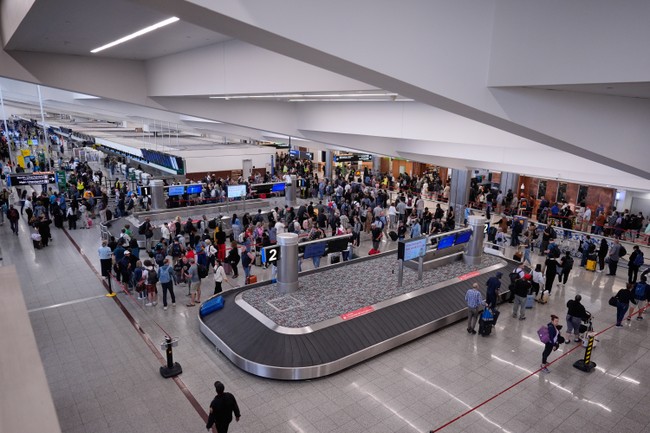
Airports across the country have already been feeling the effects of the shutdown, with longer lines and staffing shortages reported as TSA employees called in sick or stayed home amid uncertainty. The administration said it would use available authorities to ensure TSA agents receive pay and that security checkpoints remain staffed. Operationally, paying workers is meant to reduce absenteeism and restore normal screening throughput at busy hubs. For travelers, the order aims to cut down wait times and avoid further disruptions.
The White House also described boots-on-the-ground assistance from Immigration and Customs Enforcement in certain locations to help manage airport operations and emergencies. ICE officers were credited with filling gaps in some security and emergency response tasks while TSA shortages persisted. That coordination highlights how multiple agencies can be mobilized when congressional dysfunction spills over into public safety. It also underscores the administration’s priority to keep critical infrastructure functioning even as funding talks stall.
Political reactions are predictable and sharp on both sides. Republicans called the executive action a responsible use of executive power to protect frontline workers and public safety, while Democrats argued it circumvents Congress and sets a problematic precedent. Left unresolved is the larger dispute over immigration policy and the conditions Democrats have put on DHS funding. Those negotiations remain the pivot point for a full resolution of the shutdown; the payment order is a tactical move to blunt immediate harm.
For TSA personnel, the announcement was presented as direct relief after days of unpaid work and escalating stress. From an operational standpoint, restoring pay can stabilize staffing, deter mass callouts, and allow airports to get back to expected service levels. The order is meant to be a short-term fix while lawmakers either reach a funding agreement or the administration pursues other steps. The central question now is whether this executive intervention will ease pressures on the system or deepen the political divide over who controls spending in an emergency.
Add comment