
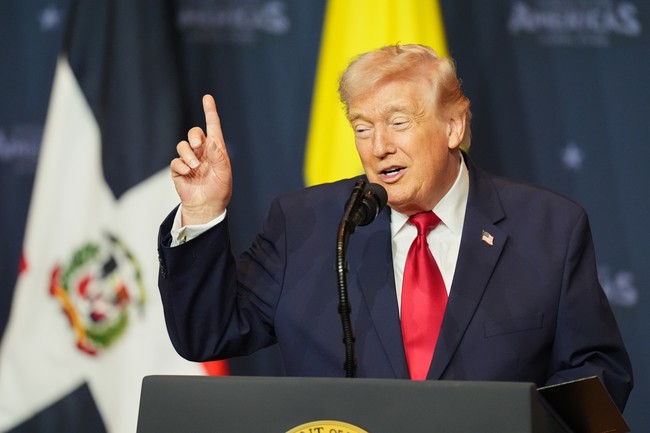
President Trump called into Fox News’ The Five and laid into California Governor Gavin Newsom, critiquing his competence, record, and public remarks while defending his own standing and taking aim at liberal commentators. The exchange highlighted concerns about leadership, policy failures in California, and the broader political stakes ahead.
I have strong opinions about many politicians, and this moment centered on one man who could be a presidential contender: Gavin Newsom. For years California has wrestled with soaring taxes, strict regulations, and persistent problems like homelessness and crime, and those failures shape how some voters see his fitness for national office. Trump used the call to underline what he sees as Newsom’s weaknesses and to contrast his own vigor and blunt style with what he framed as left-wing policy failures.
The president focused on a widely discussed interview in which Newsom made awkward comments about his own abilities, using that as a launch point for broader attacks. Trump described that interview as “maybe the worst interview for a professional politician that I’ve ever seen,” and he emphasized that Newsom’s statements opened the door to real doubts about his readiness. The critique went beyond mere mockery and aimed at persuading voters that a candidate’s public presentation matters for the presidency.
Trump quoted Newsom directly and hammered the point home with blunt assessment. The president pressed the idea that voters should not want someone who publicly questions their own competence in the Oval Office. That argument tied into memories of recent administrations and a desire among some conservatives for clearer, more decisive leadership after years of policy choices they disagree with.
Trump said:
Well, first of all, he [Newsom] said he can’t read. Okay? You know, he did an interview…
That was maybe the worst interview for a professional politician that I’ve ever seen. He said he’s mentally incompetent. He can’t read a speech. He said things about his brain, he’s got bad Board scores.
And then he looked at the room, and he said something to the effect that, uh, I’m dumb, just like all you people. And he ends up being called a racist because of that statement.
That exchange set the tone for Trump’s broader critique: not merely personal attacks but linking those remarks to policy consequences. He argued voters should consider how a candidate’s language and demeanor reflect judgment under pressure. The debate had the familiar edges of partisan theater, but it also raised substantive questions about messaging and leadership that voters watch closely in a national race.
The president continued to press the point and expanded his critique into Newsom’s public persona and performance on the national stage. Trump suggested there were physical cues and mannerisms that, when combined with the interview’s content, reinforced doubts about Newsom’s suitability. He framed the issue as a stakes decision: America needs someone steady, not someone who appears unsteady when under scrutiny.
Trump added:
This was the worst interview, but he admitted that he was a stupid person. And we don’t want a stupid person as president. And if you watch him with the hands and everything else, there’s something wrong with the guy. [Brutal, but true. Watch the above video if you don’t believe me.]
Uh, he’s a nice looking guy, but he’s losing the look… It happens…
That language is direct and unapologetic, and it ties into a Republican perspective that emphasizes toughness in leaders and accountability for perceived failures. The pivot is clear: attack the messenger to undermine the message, and connect personal missteps to policy incompetence. For conservative listeners, such a strategy reinforces long-standing criticisms of progressive governance in places like California.
Trump then broadened his targets, taking aim at television commentators he sees as defenders of left-leaning politicians. He singled out a liberal analyst by name and mocked the habit of relying on partisan polling and talking points. The point was to paint media allies as peddlers of soft cover for political figures who, in Trump’s telling, deserve sharper scrutiny.
The president said:
President Trump: “I watch Jessica and I’m not a fan. She uses fake numbers. She’ll give, ‘Well he’s only polling at 42%.’ That’s not right. I’m polling very high actually. I hate people that use fake polls.”
“I’m sure I’d like her. I’m sure she’s a lovely person… She’s just not for me.”
“Now tell me, did she not want to do it, or did you kick her off the show?”
Conservative audiences will hear this as routine pushback against media narratives they distrust, while critics will view it as a personal and partisan rebuke. Either way, the exchange shows how media appearances and phone-ins remain a powerful arena for shaping public perception and setting the terms of a campaign. Trump used the platform to amplify his themes: competence, toughness, and skepticism of liberal governance.
Beyond the rhetoric, the core complaint remains policy-driven: California’s struggles with housing, homelessness, crime, and fiscal management are offered as examples of what the president warns against on a national scale. For Republicans who favor deregulation, fiscal restraint, and law-and-order approaches, that contrast is central to the case against a Newsom bid. The call was less about decorum and more about drawing a bright line between competing visions for the country.
The episode reinforced familiar partisan dynamics: a combative president, a criticized Democratic governor, and media figures caught in the crossfire. For Republicans, it was another moment to highlight perceived failures of progressive leadership and to present a different path for governance. The argument was forceful, aimed at persuading undecided voters and energizing the party’s base ahead of the next round of national choices.

Add comment