
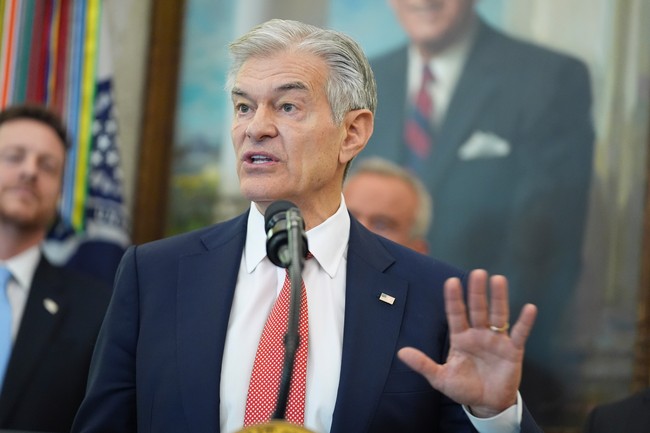
At CPAC 2026 in Texas, CMS leaders laid out the MAHA (Make America Healthy Again) agenda: attacking fraud, forcing drug prices down, protecting kids, boosting rural care, and defending American biotech from foreign control. Their remarks mixed blunt accusations about waste and criminal schemes with policy promises like TrumpRx, work requirements, rural funding, and an aggressive fraud task force led by the White House. The administration framed these moves as moral and economic necessities, arguing that fixing health means strengthening the nation. Below are the details and direct quotes from administrators who spoke to a conservative audience about practical steps and fierce enforcement.
CMS Administrator Dr. Mehmet Oz opened by calling out rampant fraud in Medicaid and Medicare as both a financial and human crisis. He argued the losses amount to huge sums and directly harm patients whose care is stolen. He gave specific examples from states already under scrutiny and warned that corruption often follows the money.
Let me start with something that is on all of your minds, because we’ve been hearing from you about it: which is the fraud, the waste and the abuse, which we believe is taking $100 billion out of our health care system. But more than the money, if you’re willing to steal someone’s cash, you’re willing to steal their health and inhibit their life. And we’re witnessing this happen in states around the country. Our administration has sent letters to Minnesota. You saw what happened with civilians and others taking advantage of the system.
An autism program was supposed to be three million. They lied. They got mothers to lie that their kids were autistic. That’s now a $400 million budget. And that’s the tip of the iceberg. A fair amount of money has been given to them already to make sure that they fix some of their past billing, but there’s lots going on.
Oz singled out California and New York for egregious examples, portraying Los Angeles as carrying an impossible concentration of hospices and New York as having turned personal care assistance into a taxpayer-funded jobs program. He warned of unions trying to formalize this grift and of the voter-registration link that flows from Medicaid enrollment. His tone was both accusatory and urgent, underscoring a need for federal action to stop the theft.
We’re seeing fraud in New York State where the number one job of all is not retail. You think about that happening on Fifth Avenue. The number one job in New York State now is being a personal care assistant. Basically, you call up and say, I think that I need help getting my grocery’s upstairs. So, I’m going to hire my son, and federal taxpayers are picking up a fair amount of the tab, most of the tab, and now that’s become a jobs program in New York State.
Foreign networks also came under fire. Oz described cartels and foreign nationals profiting from Medicare and Medicaid scams, saying the system has become a pinata for bad actors. That kind of language framed fraud as not just local corruption but a national security vulnerability that demands a coordinated crackdown.
There are foreign governments involved in some of these activities. I want you to recognize that. We have Cubans involved in the South Florida. We have Russian Mafia in California. We have Chinese involvement in Flushing, Queens, where I happened to visit recently, was involved in the boroughs. And we have corruption in Somalis that we mentioned in Minnesota. So, there are foreign governments or foreign nationals being involved in all these activities. Medicare is a pinata.
Oz praised the administration’s Fraud Task Force, led by the Vice President, and touted an immediate moratorium on new durable medical equipment suppliers to stop scams at the source. The rhetoric left no doubt: enforcement will be aggressive and persistent, aimed at evicting corruption and protecting vulnerable Americans.
The President created a Task Force, Matt, he announced it during the State of the Union address. Vice President Vance is heading that task force. We had a press conference the day after the State of the Union. The first thing out of the gate was to make sure everyone knew we were going to put a national moratorium on new suppliers of medical equipment so you can’t scam us anymore. And we will not stop until we evict this corruption. It’s worth doing this, in addition to the fact that our most vulnerable deserve it.
Chris Klomp framed the drug-pricing fight as a patriotic economic fight against global freeloaders. He explained TrumpRx and Most-Favored-Nation pricing as a way to stop paying more for U.S.-developed medicines than other wealthy nations. Klomp highlighted concrete results like dramatic price drops for GLP-1s and certain fertility drugs as evidence the policy is working.
What was the problem? Look, everyone here knows that President Trump inherited an unaffordability crisis, but he’s working to fix it. Let me give you an example of what’s happening. Right now, America develops life-saving medications only for the rest of the world to get them for a fraction of the cost. We paid three times what citizens of every other wealthy nation have planned to pay for the drugs that we developed here in the United States. That’s more than half of our money. That’s a global ripoff, and that now ends.
Klomp also raised the China issue as a national security threat, warning that Beijing’s growing share of pharmaceutical manufacturing threatens U.S. innovation and control over life-saving medicines. He argued for speeding up innovation timelines and protecting intellectual property while incentivizing domestic production. That ties drug affordability to industrial policy and geopolitical competition.
We face a national security threat right now that hasn’t been named meaningfully until President Trump. It’s not one of missiles and tanks, it’s of laboratories and life-saving medications. It’s a war right now with China on American innovation in biotechnology.
Stephanie Carlson emphasized prevention and the need to reshape America’s food and activity environment so children grow up healthier. She blamed lobby-driven dietary guidelines and a food system stacked against whole foods for worsening public health. The administration positioned MAHA as a culture change, combining policy nudges, enforcement, and funding to make healthy choices easier.
It’s because the system is actually getting to have the say. If you think about it, our grocery stores are flooded with all the processed food. They’re easier to find than fruits and vegetables are in places. We’ve traded out physical activity, walking around outside, playing outside, for screen time. And we have a system that is rewarded and paid for the pandemic. When you get sick, instead of focusing on a cure, that system is making us sicker. Let me tell you this; the Trump administration is here to take on that system, and we’re doing it.
The team wrapped by stressing rural health investments, work requirements tied to the new benefits, and an optimistic call to defend truthful narratives about America’s progress. They framed these reforms as practical, enforceable steps to restore health, fiscal sanity, and national strength.

Add comment