
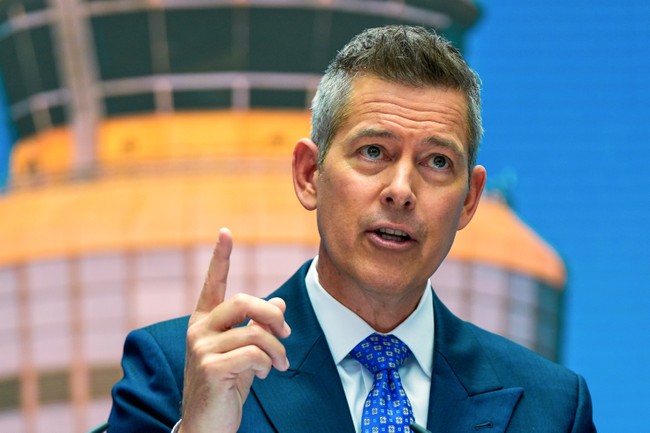
This article reports on Transportation Secretary Sean Duffy’s remarks to the White House Cabinet about lax oversight of commercial driver training that allowed unqualified drivers onto U.S. roads, the public safety risks involved, and steps the current administration says it is taking to revoke dangerous licenses and tighten standards.
The conversation at the Cabinet meeting focused on tangible safety failures tied to how commercial driver’s licenses were issued and who got to train and certify new drivers. Officials described practices that let some driving schools self-certify without meaningful state or federal checks, creating gaps in accountability. The result, they say, has been unqualified drivers operating multi-ton vehicles on public roads.
Duffy highlighted the language barrier as a key safety concern when drivers cannot communicate with law enforcement or read road signs during stops and emergencies. He pointed to standardized testing and language proficiency as basic safeguards that were not consistently enforced. Those failures, according to him, put first responders and everyday Americans at unnecessary risk.
He delivered a blunt assessment: “Thousands of people who can’t speak the language [in violation of] a long standing rule, and it’s a safety issue…if you can’t understand road signs, if you can’t communicate with law enforcement when you get pulled over, and communicate [to them] what’s on your rig, huge problem.” The quote was presented exactly as spoken and used to underline the stakes. Cabinet members heard that inadequate language screening can translate directly to fatal outcomes on the highway.
The Department of Transportation review described a system in which some truck driving schools effectively certified themselves after paying a fee rather than proving the capability to train safe commercial drivers. Duffy argued that allowing that practice was like running an honor system for potentially deadly vehicles. The contrast was drawn between proper oversight of safety-critical industries and the lax processes that had been tolerated.
Officials framed the issue as a policy failure that transcends partisan lines because the primary objective is public safety. Duffy likened the situation to earlier fraud schemes in state-run programs where oversight gaps enabled abuse. The point was to show a pattern: when oversight is weak, people and institutions exploit it with dangerous consequences.
Part of the cabinet briefing described a cleanup effort that has already produced concrete results, including the revocation of licenses for drivers who failed a standardized English proficiency test. Duffy noted that roughly 17,000 foreign drivers who could not meet the required language standard had their commercial licenses revoked and were removed from the road. That number was presented as evidence that enforcement can make a rapid and measurable impact on safety.
The administration also described outreach to states with historically looser enforcement, noting a shift in some places toward cooperating with stricter federal standards. Duffy cited examples of jurisdictions that are “starting to come on board,” including one large state that has begun to tighten rules. The message delivered was that states and the federal government can partner to restore consistent standards across the nation.
The briefing touched on industry and labor responses, pointing to unexpected partners in the effort to remove dangerous drivers and improve oversight. Representatives from concerned sectors have begun to align with the safety-focused approach the Transportation Department is promoting. The involvement of stakeholders outside government was framed as a practical way to build lasting change.
Cabinet members were told the department will no longer tolerate programs that allow self-certification without verification, and that new controls will be implemented to prevent false or inadequate training from qualifying people to operate heavy commercial vehicles. Duffy described the goal as ending the “rot” that permitted these gaps. He stressed that this was a public safety initiative aimed at preventing further tragic incidents on highways and city streets.
The presentation included examples of roadside interactions and enforcement work to illustrate the day-to-day consequences of past policy choices, reinforcing why language competency and credible training matter. Officials emphasized enforcement plus preventive changes to eliminate weak links in the licensing chain. The combination, they argued, will reduce the chance of unqualified drivers harming Americans in the future.
Cabinet-level attention was intended to signal that transportation safety is a priority for the administration and not an afterthought. The approach outlined combines revocations, stricter testing, enhanced oversight of training providers, and state cooperation. The public-facing message was straightforward: the government intends to tighten controls to keep commercial vehicles in the hands of qualified drivers.
The discussion closed with an affirmation that enforcement actions are ongoing and that officials will continue monitoring progress and adjusting policy as needed. The plan presented to the president and the Cabinet emphasized measurable steps and accountability. The aim is to make U.S. roads safer by ensuring those behind the wheel of large commercial vehicles meet the standards required for the job.



Add comment