
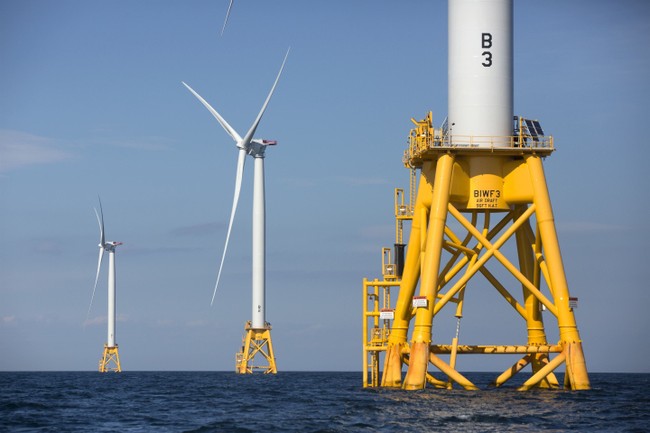
The Trump administration has paused all large-scale offshore wind leases on national security grounds, citing classified War Department findings about radar interference and supply chain vulnerabilities tied to China, and officials argue this move protects defense readiness, supply independence, and American workers.
The Department of the Interior announced that “effective immediately—the leases for all large-scale offshore wind projects under construction in the United States” will be stopped “due to national security risks identified by the Department of War in recently completed classified reports.” That declaration signals a major policy shift for coastal development and for anyone who assumed offshore wind was a done deal. Secretary of the Interior Doug Burgum stressed the move was about protecting people, saying, “The Trump administration will always prioritize the security of the American people.”
Concerns go beyond the classified details that triggered the pause; radar interference from turbine blades and towers has been a known issue for years. The Energy Department warned that as turbines grow in size and number, they “can interfere with radar systems” and create clutter that raises false alarms and can mask real threats. In an era of hypersonic missiles and advanced drones, even modest increases in radar clutter are not a theoretical risk — they are operational vulnerabilities.
There’s a second, strategic problem: the global supply chain for turbines and components is heavily dominated by Chinese manufacturers. Analysts have observed that Chinese firms “increasingly dominate the global wind energy business,” creating a concentration of manufacturing power in the hands of a geopolitical rival. Relying on equipment and materials largely produced under the control of an adversary invites leverage and exposes critical infrastructure to disruption.
That concentration of supply matters for more than economics. Reports and investigations have tied parts of the clean-energy supply chain to forced labor and horrific working conditions, particularly in certain mining operations. Those abuses, and the broader environmental and human-cost footprint tied to low-cost production under the Chinese Communist Party, raise ethical and security questions about where we source our energy hardware. It is hard to defend a strategy that substitutes one set of risks for another.
Beyond manufacturing and labor concerns, there is a practical case to be made about energy reliability. Wind and solar are intermittent by nature, and current grid realities still depend on dispatchable power to sustain modern economies and military operations. Moving too aggressively to intermittent sources without credible, domestic backup risks outages and undermines the resilience required for national defense and critical industries like AI and advanced manufacturing.
Those advocating for a wholesale rush to green tech sometimes ignore the geopolitical cost of relying on materials and finished goods sourced from competitors. If China controls key nodes in the supply chain, Washington must reckon with the consequences: price leverage, export controls, and the potential for supply cutoffs during a crisis. For national security planners, such single points of failure are unacceptable.
The administration has framed energy policy explicitly as a security matter, arguing that strengthening domestic production of oil, gas, and other energy inputs is part of preserving U.S. power and autonomy. That priority is reflected in messaging around “unleashing American energy,” and in broader moves to secure supply chains and encourage onshore manufacturing. Policymakers who place defense readiness first see energy independence as a foundation for everything from troop deployments to semiconductor fabs.
Critics will call the pause political or protectionist, but defenders note that defending radar integrity, protecting coastal population centers, and avoiding dependence on strategic competitors are not partisan proposals; they are practical steps for a nation that expects to remain a global leader. The decision forces a conversation about balance: how to pursue cleaner electricity while ensuring defense systems, supply chains, and industrial capacity remain robust.
For towns along the Eastern Seaboard and for people working in fisheries and coastal industries, the pause also buys time to assess local impacts and community concerns that often get drowned out in national debates. Offshore projects change shorelines and local economies, and a careful pause creates space for better planning and consultation. That can reduce conflict between federal goals and local realities.
Ultimately the administration’s move is an assertion that energy policy must be judged by strategic outcomes, not slogans. Stopping projects that present demonstrable risks to radar systems and national resilience is presented as a precautionary measure to keep the country both secure and capable of sustained global leadership. The discussion now turns to how to meet climate, economic, and security goals without trading one set of vulnerabilities for another.



This crap is just another BOGUS RIPOFF from the TOTALLY FRAUD Biden/Harris Demoncrap supposed New Green Deal that BLEW 14 $TRILLION taxpayer funds in those just 4 short years for such lunatic money grabbing projects, while that Maniac evil cabal was running the Nation!
WHAT A DISGRACE AND ABOMINATION TO AMERICA and WE THE PEOPLE!!!