
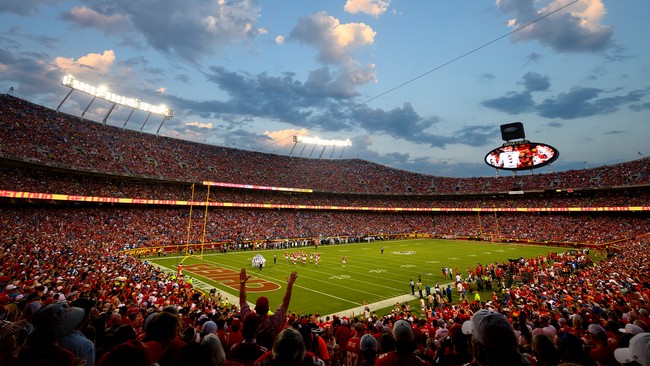
The Kansas City Chiefs announced a franchise move from Missouri to Kansas with plans for a new domed stadium and training complex, a development that shifts tax revenue, facilities, and the team’s official home starting in the 2031 NFL season.
The team will relocate operations and play home games in a new domed stadium in Olathe, Kansas, roughly 30 miles from Arrowhead Stadium where the Chiefs have played since 1972. Officials said the move includes significant public investment and a large mixed-use development tied to the franchise’s future in the Sunflower State. Clark Hunt’s statement confirming the deal made clear that the partnership with Kansas is formal and forward-looking. Many fans and local leaders are now parsing what this means for jobs, taxes, and the region’s sports economy.
“Today we are excited to take another momentous step for the future of the franchise,” KC Chiefs owner and chairman Clark Hunt’s announcement read. “We have entered into an agreement with the State of Kansas to host Chiefs football beginning with the 2031 NFL season.” The plan calls for a domed stadium and additional development in both Wyandotte County and Olathe. Officials estimate at least $4 billion of related development tied to facilities, headquarters, and mixed-use districts.
Gov. Kelly said, “This agreement to bring the Chiefs to Kansas takes our state to the next level. With this new stadium, we’re creating thousands of jobs, bringing in tourists from around the world, attracting young people, and most importantly, we’re continuing to make Kansas the best place in America to raise a family. This is a game-changer for Kansas, and it’s a signal to America and the world that our state’s future is very bright.” Her remarks highlight the political and economic pitch Kansas is making as it secures the team and the expected downstream benefits.
Missouri voters in 2024 approved an extension of a sales tax intended to support a planned Arrowhead upgrade, but skepticism around whether those renovations would actually happen lingered among many residents. Local commentary noted the familiar dynamic where privately owned teams seek public funds for stadium projects with promises of broad economic returns. That skepticism fed into the larger narrative about where the franchise would ultimately place its future home and who would capture the associated tax and tourism revenues.
No doubt about it: There was a largely political element to this story. It came from all angles. On the surface level, there’s a long, socially accepted practice of rich billionaires coming to the tax-paying common man, asking for money to build the privately owned stadiums that they profit from, with the promise of immeasurable financial impact and the rooting interest of a metro area. Meanwhile, there is a large part of the public that will, without a doubt, never vote to give a billionaire a cent of tax money no matter how great the proposition is.
Kansas lawmakers moved forward with major public funding to secure the domed stadium, and the franchise’s move became official. The transfer of the team’s tax base and event-related income to Kansas is a major shift in regional economic power. State and local officials are framing the project as an investment in long-term growth, with the team positioned as a headline asset for future conventions, tourism, and sports events.
For longtime fans, the relocation is emotionally and practically complicated: Arrowhead is one of the oldest stadiums in the league and has been home to Chiefs football since the 1972 season. The team’s history in Missouri is deep, but the new development promises modern facilities that many teams now require to remain competitive and profitable. Supporters on both sides of the border are weighing nostalgia and loyalty against new amenities, jobs, and the bright lights of a next-generation venue.
On the field, the timing adds another layer of concern as the team navigates injuries and roster challenges. Patrick Mahomes suffered a torn ACL and is expected to miss time while rehabbing with hopes of returning by the start of the 2026 season. Backup Gardner Minshew briefly stepped in but also left a recent game with a knee issue that, according to reporting, does not appear to be an ACL tear, and the team has turned to a practice-squad quarterback for the near term.
The logistics of building a domed stadium and relocating headquarters and training facilities are complex and will take years to complete, which is why the franchise set the 2031 season as the start date for home games in Kansas. Officials are promising a best-in-class training facility and team headquarters alongside the stadium and mixed-use development. That combined package is marketed as a transformative economic engine, though it will require sustained public and private coordination to reach fruition.
This move changes the map for the Chiefs, their fans, and the two states that have vied for the team’s presence. Kansas officials celebrate the immediate win of hosting a high-profile franchise and the potential influx of visitors and revenue. Missouri residents and leaders who hoped Arrowhead upgrades would keep the team put now face the reality of the franchise shifting its formal home across state lines.



Add comment