
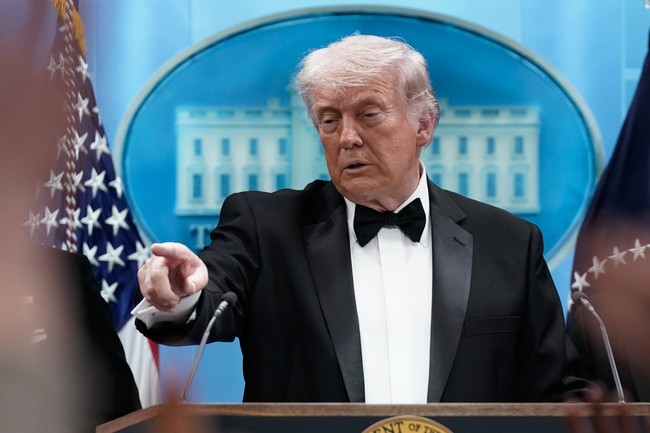
The White House Correspondents’ Association has rescheduled its annual dinner for July 24 at the Waldorf Astoria after an armed individual disrupted the original April event near President Donald Trump, and organizers say they will proceed with tradition, heightened security, and the president’s participation.
The decision to hold the dinner again signals a determination to keep civic rituals intact despite recent violence. The April incident, in which Secret Service agents intervened and guests scrambled amid the chaos, is part of a pattern of threats that have raised alarm across Washington. Those incidents include multiple, well-documented attempts against President Trump in 2024, illustrating the unusual security environment surrounding his appearances.
The contrast between orderly proceedings and sudden danger was striking that night: formal attire and half-eaten salads one moment, people grabbing bottles and seeking shelter the next. Security professionals moved quickly to neutralize the threat and evacuate attendees, but video from the scene captured moments that underscored how fast priorities can change. Rescheduling the event shows a choice to reject fear and maintain public forums where politics and press intersect.
Resuming the dinner also brings into focus the tense relationship many Americans have with the national media. Years of selective reporting have convinced large segments of the public that coverage is biased and that outlets sometimes act less like neutral watchdogs and more like active participants in political battles. That perception contributes to distrust and heightens the stakes when high-profile events draw partisan attention and security concerns.
The pattern of threats against President Trump, whether isolated actions by individuals or reflections of broader societal tensions, is unprecedented for a modern occupant of the office. The frequency of serious incidents, including those at a Pennsylvania event and on a Florida golf course, has prompted questions about why a sitting president has attracted such sustained aggression. Continued public appearances by the president, from rallies to state dinners, are seen by supporters as a show of resolve and by critics as provocative, but they undeniably require extra protection.
Trump: “In a sign of Strength and Fortitude, it was just announced that The White House Correspondents’ Dinner, which violently ended rather abruptly on April 25th, will be rescheduled to July 24th. This announcement is a very good thing in that we cannot allow Lunatics to change our way of life, or even its scheduling. I was asked to be there, and speak, by Weijia Jiang, President of The White House Correspondents’ Association, and have accepted. I don’t know whether or not I will give the same rather nasty statements, at least as it concerns certain people, but we will soon find out. In any event, it will be a ‘HOT’ ticket! Interestingly, the location will be The Waldorf Astoria, on Pennsylvania Avenue, a Building and Ballroom that I built. President DONALD J. TRUMP”
https://x.com/atrupar/status/2061870417820754072
Organizers framed the rescheduling as a defense of free expression and an insistence that acts of violence will not define civic life. That framing matters because the dinner has long been a ritual where politics, journalism, and entertainment overlap, offering a rare public stage for both critique and repartee. Planning the event again with tightened security acknowledges risk while attempting to preserve the ritual’s symbolic function.
At the same time, rescheduling does not erase the underlying tensions that helped create the moment. Conservative observers argue that heated rhetoric and one-sided media narratives have contributed to a toxic atmosphere that can inspire violent acts. Critics of that view point to deeper cultural and mental-health factors, but both sides acknowledge that the climate surrounding political leaders is fraught.
Law enforcement’s response to the April disruption was professional and rapid, and the rescheduled dinner will clearly be staged under far greater security than typical years. That reality reflects a broader shift: public gatherings now require contingency planning that once might have seemed excessive. For institutions that value public debate and accountability, adapting to this new normal is painful but unavoidable.
The correspondents’ dinner, even in its rescheduled incarnation, is an opportunity for reflection about the press’s role in a polarized nation. Robust, honest reporting that holds power accountable strengthens democracy, but when coverage is perceived as biased it feeds polarization instead of healing it. Reclaiming trust demands clearer standards and consistent fairness, qualities long promoted by journalists but harder to see in a charged environment.
President Trump’s acceptance to attend and speak signals a willingness to confront these tensions directly and to continue engaging in public rituals despite threats. The event will test whether tradition can coexist with calm, disciplined security and whether a public square riven by suspicion can still host shared civic experiences. Moving forward means confronting why hostility has become so prominent and addressing the cultural conditions that allow it to flourish.

Add comment