
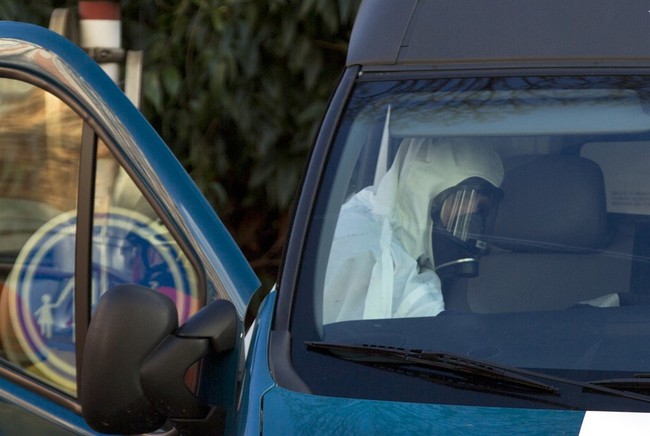
Three people died and dozens were exposed after a suspected overdose at a rural New Mexico home triggered a hazardous materials response, leaving first responders and one survivor treated at a hospital while investigators work to identify the substance and the circumstances that led to the deadly incident.
Emergency crews responded early one morning to a call reporting a possible overdose at a residence near Hanlon Avenue and Pinon Street. When they arrived, they found one person dead outside, another dead inside, and two people in need of resuscitation; one of those later died at the scene. The remaining resident from the house was transported to the University of New Mexico Hospital for treatment and monitoring.
As rescuers worked, several first responders began experiencing symptoms including nausea, vomiting, dizziness, and headaches, prompting additional medical evaluations. New Mexico State Police said responders were exposed to an unknown substance while handling the situation, and Albuquerque Fire Rescue Hazmat teams were summoned to identify and contain whatever they encountered. Officials stressed there was no known threat to the general public while the scene was being handled.
“At this time, investigators believe the substance may be transmitted through contact and do not believe it to be airborne,” Officer Wilson Silver said.
Investigators asked people to avoid the immediate area while they processed the scene and collected evidence. As the day progressed, the number of exposed people increased as authorities tracked everyone from initial medical crews to law enforcement staffing the site. By evening, state officials reported that a total of 25 people had been exposed, three of them fatally, while most of the others had been evaluated and discharged from the hospital.
Mountainair EMS Chief Josh Lewis was among the first to enter the residence and was hospitalized overnight for observation after experiencing symptoms consistent with exposure. Two other first responders remained in serious condition according to State Police reports, underscoring the strain such incidents impose on small, rural emergency teams. Local leaders noted that responding to drug-related crises is becoming a heavier burden on communities and their limited resources.
Authorities said they had ruled out carbon monoxide and natural gas as causes at the scene, narrowing the investigation toward substances that could cause acute, severe reactions on contact. Initial statements from investigators suggested drugs were likely involved, though the exact chemical or compound had not been publicly identified by evening. Hazmat teams continued to work the property while law enforcement maintained a perimeter to preserve evidence and protect residents.
The visual scene was stark: three bodies placed on gurneys and loaded into a van as teams worked under lights well into the night. Multiple agencies coordinated on scene, reflecting the many moving parts when a suspected overdose intersects with potential hazardous contamination. Families in the area and responders alike faced immediate trauma and uncertainty as investigators endeavored to determine what they were up against.
Local officials placed the incident in the broader context of a state struggling with high overdose mortality, noting New Mexico’s elevated death rate in recent years. Municipal leaders emphasized that addiction and substance abuse affect communities across wide swaths of the state and nation and that first responders are often on the front lines of those crises. They urged patience while agencies completed forensic testing and toxicology aimed at identifying the substance and establishing how exposure occurred.
Investigators continued laboratory work to analyze samples from the scene and medical evaluations of those exposed, while officials kept the public informed that no immediate danger to neighbors had been identified. Search and evidence collection activities remained active late into the investigation, as teams pieced together timelines and potential sources of the substance. The precise chain of events that led to the three deaths and multiple exposures remained under review.
Officials acknowledged the incident’s toll on the small community, describing increased pressure on local emergency services and the emotional weight carried by responders who confront addiction-related emergencies repeatedly. They reiterated that lasting solutions to substance abuse require community involvement, treatment opportunities, and accountability for those who contribute to dangerous drug distribution. For now, the priority remained to identify the toxic agent and ensure the safety of everyone who responded or lived nearby.

Add comment