
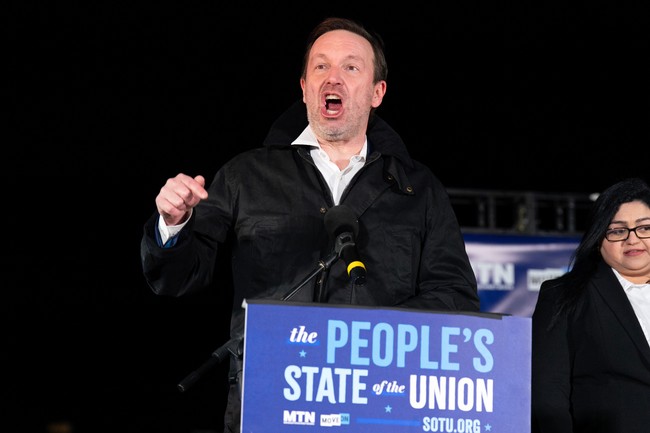
This piece examines the real reasons Thomas Massie lost the Kentucky GOP primary to Trump-backed Ed Gallrein, cuts through the spin from Democrats like Sen. Chris Murphy, and argues from a Republican perspective that Massie’s inconsistent voting record, politics of attention, and last-minute campaign missteps—not a single issue—cost him his seat.
Chris Murphy Spins a Fairy Tale About Thomas Massie’s Loss — Here’s a Reality Check
The outcome in Kentucky’s 4th District was clear: Ed Gallrein beat Rep. Thomas Massie in the GOP primary, and that result matters for conservatives who expect principled, consistent Republicans in office. Many voters had grown tired of Massie’s theatrics, his public breaks with President Trump, and votes that often sided with Democrats. This race was less about one talking point and more about a pattern of behavior and choices.
Massie’s campaign made a serious tactical error on Primary Day when it texted what looked like a Trump endorsement stamped as if it were new, when in fact the message dated from 2022. That move drew a furious response from Trump, and Massie’s decision to double down on the misleading text only confirmed what many voters already suspected about his campaign’s desperation. Voters notice authenticity, and that stunt undermined any remaining goodwill among rank-and-file Republicans.
After the loss, commentators scrambled to explain the result. Some suggested Massie’s push for release of the full Epstein files alienated MAGA voters and cost him the race. That narrative spread quickly among left-leaning voices and a handful of outspoken conservatives, but it overlooks the timeline of Massie’s sudden interest in the files. The timing made it look like a political maneuver rather than a long-held conviction.
Massie’s Epstein-file crusade accelerated only after the administration signaled it might be his last term. That sequence undermines the idea that voters punished him solely for speaking out on that topic. When a suddenly expressed position appears convenient, voters treat it as such, and in this case many concluded Massie was posturing. Political cover-ups are an easy narrative to push, but they are not the whole story.
The more consequential problem for Massie was his voting record in 2025, where he frequently opposed the Republican conference on major items like border security and tax policy. That kind of behavior matters intensely in a chamber where margins are razor thin and each vote counts for advancing an America First agenda. Republican primary voters in Kentucky wanted someone who would reliably vote for conservative priorities in Washington.
There have also been complaints about some of Massie’s critiques of Israel, described by some as carrying an antisemitic tone, which only intensified questions about his judgment and message discipline. Those criticisms—fair or not—feed into broader concerns within the GOP base about who best represents conservative values on foreign policy. For many primary voters, loyalty to allied democracies and clear positions on national security are nonnegotiable.
Massie’s concession speech did nothing to soothe critics; instead, it reinforced impressions that he had been tone-deaf about how his rhetoric played with voters in his district. When a candidate’s final words confirm the doubts people had throughout the campaign, the loss looks less like a fluke and more like a long-overdue corrective. Primary voters rewarded consistency and punished perceived opportunism.
Social media reactions from voters were blunt and unforgiving, and those grassroots sentiments mattered. One prominent post called out Massie’s use of an old Trump endorsement and labeled the maneuver “vile and deceitful,” highlighting how personal misconduct in campaigning still resonates strongly with Republican activists and everyday voters. The post also emphasized that Trump’s influence continues to shape GOP primaries across the country.
That social media blowback was followed by video and posts that amplified the narrative of deceit and hypocrisy, presenting Massie as someone who played to different audiences depending on the venue. When national activists and local voters draw different conclusions about a candidate’s sincerity, the local electorate usually decides their primary, and in this case they chose a candidate perceived as more reliably conservative.
Sen. Chris Murphy and other Democrats will keep trying to pin Republican primary results on their own talking points, but GOP voters rarely take lectures from those who are partisans in the outcome. Murphy’s take on the Epstein files was convenient for Democrats, but it did not match the lived experience of voters who had watched Massie’s record and conduct up close for years. The voters in KY-04 saw a pattern and acted on it.
The truth is straightforward for conservatives: primaries are about trust and consistency. Voters in this district concluded that they wanted a standard-bearer who would vote with the party on core issues and represent the America First agenda without grandstanding or sudden pivots. That is what decided the race, not a single narrative pushed by opponents.

Add comment