
This article examines recent reactions to an ICE-involved shooting in Biddeford, Maine, highlights inflammatory statements from Democrats about immigration enforcement, and points out an awkward moment when Senate Minority Leader Chuck Schumer appeared to pass gas during a floor speech, with embedded video references retained for context.
There was a reported shooting in Biddeford, Maine, involving Immigration and Customs Enforcement agents that set off a predictable political firestorm. Democrats immediately seized on the incident to paint ICE as some sort of new, lawless entity, despite the agency’s long history and Congressional origins. The debate quickly pivoted from facts about the event to theatrical accusations aimed at scoring political points.
Democratic Rep. Ted Lieu insisted ICE agents “are not real police officers,” suggested they lack training comparable to local law enforcement, and claimed they do not wear body cameras and act like an “out-of-control rogue agency.” Those lines caught fire online and among media outlets, but the assertions ignore important context about how federal immigration enforcement operates. Labeling ICE as outside the law only encourages dangerous misunderstandings during tense encounters.
Critics argue the rhetoric creates confusion that can escalate confrontations between civilians and agents. When someone confronts law enforcement—federal or local—the outcome often turns on whether the person resists or attacks officers, not on branding or partisan talking points. Several incidents tied to ICE that ended badly involved people resisting or attacking agents, and simplifying those situations into a political slogan is misleading at best.
https://x.com/RNCResearch/status/2077061832150311125
There are also practical reasons some ICE units lacked body cameras in certain jurisdictions, including logistical delays. Equipment rollouts can be slowed by funding and administrative hurdles, and occasional gaps do not amount to a wholesale abdication of law enforcement responsibility. When lawmakers rail against an agency, it’s fair to ask whether they are addressing the policy problems or simply exploiting a headline for partisan gain.
It bears repeating that Congress created ICE, making its existence a legislative, not executive, responsibility. Furious accusations that ICE suddenly became a “rogue agency” under a particular president ignore that background. If adjustments are needed, the solution should be found through policy and oversight rather than performative outrage that avoids accountability for prior choices.
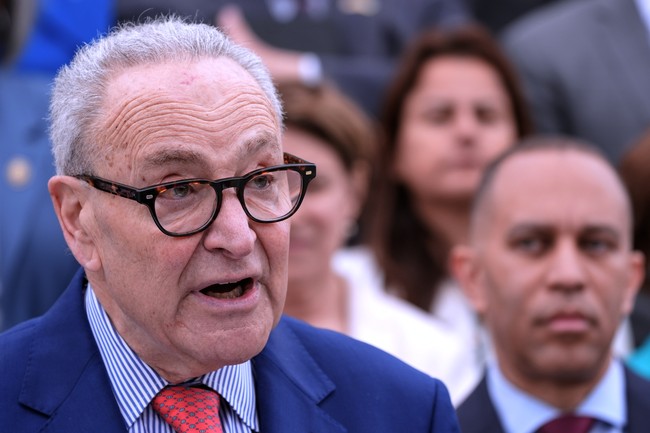
Amid the debate, Senate Minority Leader Chuck Schumer took the floor and called for “a complete investigation that was independent,” then shifted to criticize the administration’s stance on Iran. Shortly after those remarks, an audible noise interrupted the chamber and Schumer appeared to react with a brief smirk. The moment quickly became fodder for social media and late-night television alike.
The clip of Schumer’s floor appearance spread fast, with commentators seizing on the timing and tone to mock the senator’s reaction. Critics were gleeful, pointing out the irony of his call for seriousness followed by an obviously unserious moment. The episode fed a narrative that some politicians talk tough about oversight while indulging in petty theatrics.
Online, reactions ranged from lighthearted jabs to biting commentary about political hypocrisy, and several users amplified the audio to make the moment unmistakable. Social media has a way of bluntly exposing the contrast between public rhetoric and human foibles, and this instance offered a clear example. The clip became shorthand for arguments that the left’s complaints about ICE are more performative than substantive.
Past incidents of public embarrassment by lawmakers get dragged into the conversation, reminding people that congressional theater is a long-running feature of modern politics. Some recalled other famously awkward moments to underscore how common these distractions are when attention should instead be on policy. The recurring pattern shows how easily an important topic can be overshadowed by personal antics.
For conservatives and interested observers, the episode reinforces a broader point about political messaging: when one side relies on emotional shorthand and theatrical gestures, they risk obscuring real policy issues. Framing ICE as uniquely villainous without acknowledging legal and practical realities collapses a complex debate into slogans. Lawmakers who want real reform should focus on oversight, funding, and clear rules of engagement rather than sound bites and moral grandstanding.
The Biddeford shooting, the heated claims about ICE, and the Schumer interruption all landed in a media environment primed for outrage. That combination produced simplified narratives instead of measured discussion about enforcement standards, training, and accountability. If the conversation shifts back toward concrete reforms and sober oversight, it will serve the public far better than political theater.
Still, the immediate fallout highlights how quickly a single event can become a proxy fight over bigger themes: trust in law enforcement, executive power, and the quality of political discourse. Until lawmakers and the media prioritize facts and clear policy remedies, these skirmishes will continue to dominate headlines and distract from substantive solutions.

Add comment