
Checklist: Explain the House floor blockade resolution, describe Speaker Johnson’s deal to attach the SAVE America Act to State Department funding, note conservative holdouts and key quotes from their leaders, outline the Senate hurdle and related priorities, and place the debate in a Republican perspective.
The House broke a weeks-long procedural blockade, allowing a vote to move forward on State Department appropriations after Speaker Mike Johnson agreed to attach the SAVE America Act to the funding measure. That concession persuaded enough conservative holdouts to lift the stall and let the chamber resume business. The move was tactical: it forces the Senate to reckon with a popular voter ID push and creates leverage for House priorities. Conservatives framed the outcome as a step toward securing election integrity while urging continued pressure on the upper chamber.
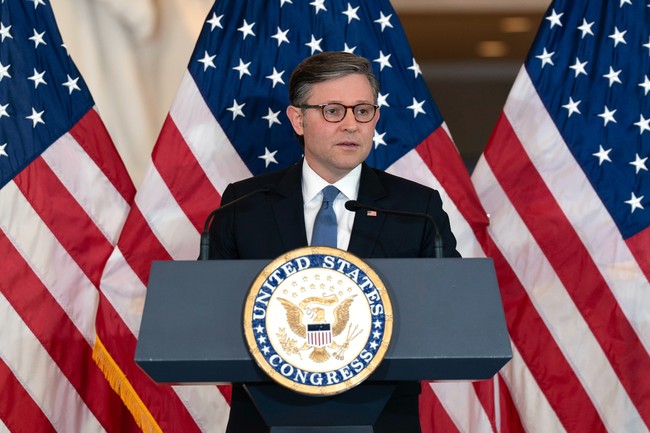
House conservatives ended their weeks-long blockade of the House floor Tuesday, handing Speaker Mike Johnson, R-La., a key victory after the rebellion brought legislative business to a standstill for nearly a month.
The procedural vote passed 215-211, setting up votes on an appropriations bill funding the State Department, a measure on making daylight saving time permanent and steps to improve veterans’ benefits. Pairing the SAVE America Act with the State Department funding was the linchpin that flipped several holdouts. That tactic shifts the argument from internal House squabbling to a direct challenge for Senate Republicans to either act or explain why they won’t.
Rep. Anna Paulina Luna was a visible organizer of the blockade, and she ultimately voted to end it after Johnson’s promise to link the election bill to appropriations. Her surrender of the floor came only after the Speaker created a clear legislative path for the SAVE America Act to reach the Senate. Many in the GOP now expect attention to turn to whether Senate Republicans will back a measure that polls show enjoys broad voter support.
Rep. Anna Paulina Luna, R-Fla., who was among the GOP rebels who effectively shut down the chamber to pressure the Senate to pass the SAVE America Act, agreed to unlock the floor after Johnson proposed pairing the election measure with the State Department appropriations bill.
Johnson had tried to attach the SAVE America Act to the defense authorization bill but did not secure enough momentum before the recess, so the Speaker recalibrated. This latest pairing with State funding was a practical move to keep legislative momentum alive and to make the Senate answer for its inaction. Conservatives see the vote as a contract between House leaders and voters who demand election safeguards.
“If John Thune strips it out in the Senate, that will be on him, and the entire country should be watching what he does,” Luna wrote on social media Monday.
The big question remains the Senate and the filibuster threshold. Senate Majority Leader John Thune has acknowledged support for parts of the voter ID package but has said the Senate lacks the 60 votes to overcome procedural hurdles. That leaves the SAVE America Act vulnerable even if the House delivers it attached to an appropriations bill. From a Republican viewpoint, that is the Senate’s test: either help pass a measure backed by voters or explain the roadblock to constituents.
Some House conservatives are also pressing for a vote on robust border enforcement legislation, including proposals that would codify Trump-era immigration controls and end catch-and-release practices. That push reflects a broader GOP appetite for securing borders while also demanding election reforms. Both issues are central to the party’s message heading into the next election cycle, so leadership is juggling competing priorities and trying to maximize leverage where it counts.
Members of the conservative House Freedom Caucus are advocating for a vote on the Permanent Trump Secure Border Act, which would codify several Trump executive orders targeting illegal immigration, including an end to catch-and-release policies.
“We need to deliver on codifying border security, deal with the birthright citizenship issue,” Rep. Chip Roy, R-Texas, said. “These are all issues people that I represent care about intently and that we’ve talked about doing, and we need to deliver.”
Republican lawmakers arguing for prioritizing election integrity say it should come ahead of other items because secure elections underpin everything else. Polls cited by supporters show broad public backing for voter ID measures, which fuels the argument that this is not a partisan stunt but a response to voters. The House’s move to attach the SAVE America Act to a must-pass appropriations bill is intended to force clarity in the Senate and to demonstrate that House Republicans will not quietly let a top priority stall.
There are practical risks: if the Senate removes the provision or refuses to advance it, House Republicans can point to that failure and return to their base with a clear narrative. If the Senate acts, it would be a major legislative win for the GOP. Either way, the episode shows how calculated procedural choices can convert a House blockade into a strategic lever for the broader agenda.
Editor’s Note: Republicans are fighting for election integrity by requiring proper identification to vote.

Add comment