
Checklist: summarize the lawsuit and detention; explain Khalil’s campus activism and immigration history; detail the federal court claims and quoted allegations; note the relief he seeks and the political context around enforcement. This article covers the same facts and quotes as the original while removing external links, images, and credits.
This Is Actually Insane: Algerian Agitator Sues Marco Rubio, Seeks Taxpayer Money for ICE Detention
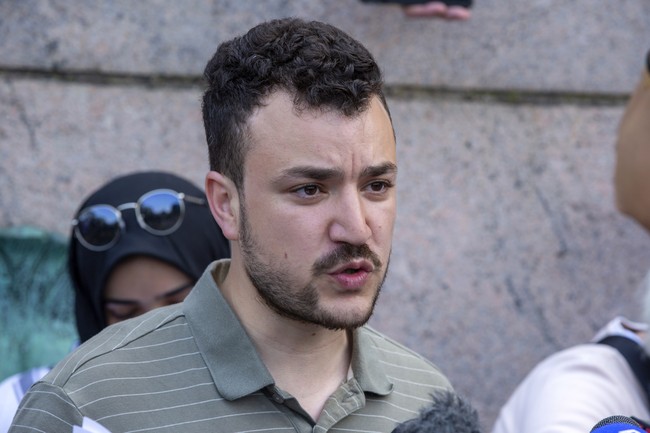
Mahmoud Khalil, an Algerian green card holder who rose to prominence during post-October 7 campus protests, has filed a federal lawsuit naming senior Trump administration officials, conservative groups, and online surveillance outfits. The complaint concerns his 104-day detention at an ICE facility in Louisiana and accuses a range of actors of coordinating to deprive him of liberty. Khalil’s case has already seen multiple turns in immigration and appeals courts, and his new suit seeks money damages and accountability. Republicans and conservatives view the filing as part grievance, part political theater, while supporters cast it as a challenge to alleged public-private surveillance partnerships.
Khalil became a visible figure during heated demonstrations at American universities, where protests and encampments often targeted pro-Israel displays and responses to the October 7 attacks. He is described by critics as a leading voice among radical pro-Palestine activists who disrupted campuses and tore down posters of hostages. After years of activism and attention, enforcement finally caught up when ICE took him into custody in March 2025. That detention led to a series of legal fights over his right to remain in the United States and whether his green card could be revoked.
His current lawsuit names a range of defendants, including high-level federal officials and conservative organizations accused of participating in or encouraging immigration enforcement actions. The filing alleges a coordinated campaign of information-sharing and pressure that culminated in his prolonged detention. The complaint leans on a theory of coordination between government figures and private groups and points to previous litigation and investigative findings for support. In short, Khalil argues that his detention was not an isolated enforcement action but the product of a wider, organized effort.
The lawsuit, filed in federal court Tuesday, alleges a coordinated campaign among senior officials of President Donald Trump’s administration, leaders of the Heritage Foundation and two online surveillance groups, Canary Mission and Betar.
Legal observers note the suit invokes statutes that date back to Reconstruction, arguing the defenses are broad and untested in this modern context. Khalil’s lawyers point to alleged public-private cooperation and claim it may run afoul of long-standing civil rights protections. The complaint urges the court to apply those statutes to contemporary surveillance methods and to the alleged blending of public power with private monitoring. That approach seeks not just compensation but a declaration that certain collaborative practices are unlawful.
According to Khalil’s lawyers, that “public-private partnership” — first brought to light in a separate trial last year — may violate the Ku Klux Klan Act, a Reconstruction-era law that sought to restrict government coordination with vigilante groups.
Khalil has publicized the personal toll he says the detention took, including missing the birth of his child and losing 104 days of his life to custody. In his announcement he vowed, “I will not stop fighting until everyone who willingly contributed to my missing the birth of my son and to taking 104 days of my life from me answers for what they’ve done.” That quote underscores the emotional core of the complaint and signals his intent to pursue the case aggressively. The filing requests compensatory and punitive damages, attorneys’ fees and costs, and whatever other relief a judge deems appropriate.
The litigation lands at a politically charged moment, with Republicans emphasizing stricter immigration enforcement and accountability for foreign-born activists who they see as hostile to American values. Supporters of enforcement argue that Khalil’s activism crossed lines and deserved the legal consequences he faced under the Trump administration’s policies. Opponents, including activist lawyers, argue the detention reflected improper coordination and warrants judicial scrutiny. Either way, the suit will force courts to wrestle with how far government-private cooperation can go before it violates civil protections.
Khalil’s immigration saga has passed through district courts, immigration tribunals, and appellate panels, including a temporary stay from the Third Circuit that paused his removal. That procedural back-and-forth allowed him to remain in the country while his attorneys press constitutional and statutory claims. The case now heads to a federal courtroom with broad allegations and political overtones, and it will likely draw attention far beyond the parties directly involved. For many on the right, the suit reads less like a legitimate civil-rights claim and more like an attempt to punish officials who enforced immigration law.
https://x.com/Uebey/status/2077076533378691362

Add comment