
The piece explains why recent denials from Iranian officials about talks with the United States don’t hold up, recounts confirmations from outside sources, and outlines what those confirmations imply about who is negotiating and what’s at stake.
When President Donald Trump said indirect communications were happening between the U.S. and Iran, Tehran snapped back with denials that sounded familiar to anyone who follows the region. Those denials landed poorly with critics who wanted to believe Iran at face value, despite a long record of duplicity and state-sponsored violence. The contrast between Iran’s public posture and behind-the-scenes actions is what makes these developments significant.
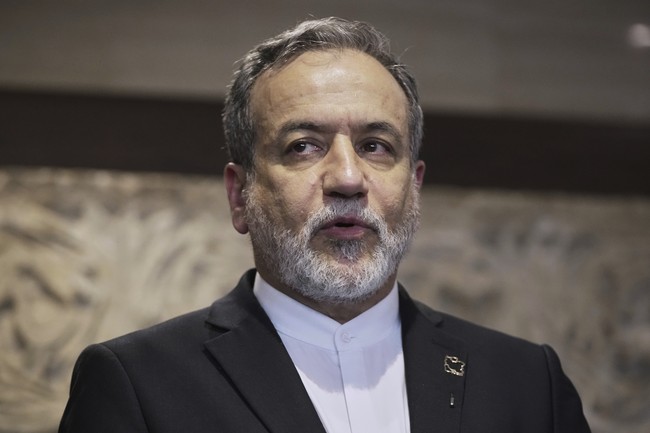
After the denials, some outlets treated Iran’s words as the end of the story, but other officials told a different tale. Pakistan’s foreign minister stepped in with a clear account that matched what supporters of the Trump administration had been suggesting. That outside confirmation changes the narrative from spin to substance and forces a reassessment of who is calling the shots and why.
Even Iran’s own foreign ministry offered language that tried to have it both ways: denying formal negotiations while admitting message exchanges through intermediaries. That kind of parsing is political theater, especially when the admission is as explicit as it was in this case. The public denial did not erase the factual admission of indirect exchanges, and people watching closely called it out immediately.
There are no talks with the U.S., which is sending messages through different mediators. The exchange of messages via mediators does not mean negotiation with the U.S.
That statement reads like an attempt to rebrand communication as something less consequential, but Pakistan’s minister gave a clearer description of the process and the substance at play. He confirmed that messages were being relayed and that the United States had presented a list of points for Iran to consider. Once an intermediary admits the existence of points under discussion, the argument that nothing is happening falls apart.
Pakistan’s message did not just say communication was happening; it detailed that the United States delivered 15 points and that those points were under deliberation by Iran. It also noted regional involvement from other nations supporting the process. That level of specificity is not the work of rumor; it is the kind of confirmation that matters in diplomatic reporting and strategic planning.
There has been unnecessary speculation in the media regarding peace talks to end ongoing conflict in the Middle East. In reality, US-Iran indirect talks are taking place through messages being relayed by Pakistan. In this context, the United States has shared 15 points, being deliberated upon by Iran.
Brotherly countries of Turkiye and Egypt, among others, are also extending their support to this initiative.
Pakistan remains fully committed to promoting peace and continues to make every effort to ensure stability in the region and beyond.
Dialogue and Diplomacy is the only way forward!
President Trump himself addressed the situation bluntly, saying talks were underway and suggesting Iranian officials wanted a deal but feared backlash at home. He described an “oily gift” of tankers being allowed through the Strait as both a goodwill gesture and confirmation that authoritative actors in Iran were involved. That kind of tangible action speaks louder than careful denials on state television.
Names have come up in association with the back-channel exchanges, including Iran’s foreign minister and the parliament speaker, which suggests the contacts are not with fringe figures but people close to the centers of power. Reports indicate those individuals received temporary protection from targeted strikes while talks progressed, a detail that underlines the stakes for anyone choosing to negotiate. When lives and leadership security are on the line, motivations shift in ways that are easy to miss if you only read official statements.
Understanding the dynamic means seeing why some Iranian officials might publicly reject negotiations while quietly engaging in them. Public denials serve domestic propaganda and factional survival, while private engagement pursues pragmatic outcomes. Observers who ignore one side of that coin risk missing the full picture.
For policymakers and analysts, the episode is a reminder that diplomacy often happens in the gray areas—through intermediaries, with limited disclosures, and under the pressure of real-world risks. A denial does not equate to absence of negotiation when credible third-party confirmations and concrete actions tell another story. The mismatch between rhetoric and reality is the central takeaway here, and it matters for how the situation will unfold going forward.



I’m making over $17k a month working part time. I kept hearing other people tell me how much money they can make online so I decided to look into it. Well, it was all true and has totally changed my life. This is what I do,
HERE →→→→→→→→→→ PayAtHome1.Com