
The political standoff over Homeland Security funding has snarled airport security, left TSA workers unpaid, and left Democrats scrambling to explain what, if anything, they have gained from the shutdown; this article examines the fallout, reactions from key figures like Bernie Sanders, the growing operational strains at airports, and the wider political calculus behind the impasse.
Are Dems Benefiting From the TSA Shutdown? Don’t Ask Bernie Sanders
The ongoing impasse over Department of Homeland Security funding has left Transportation Security Administration employees working without pay while Democrats refuse to approve the money needed to keep operations fully staffed. The result is chaos at airport checkpoints and growing frustration among travelers and front-line workers who are still on duty despite not receiving paychecks. For Republicans, the picture is simple: voters are paying the price for a political fight the other side chose.
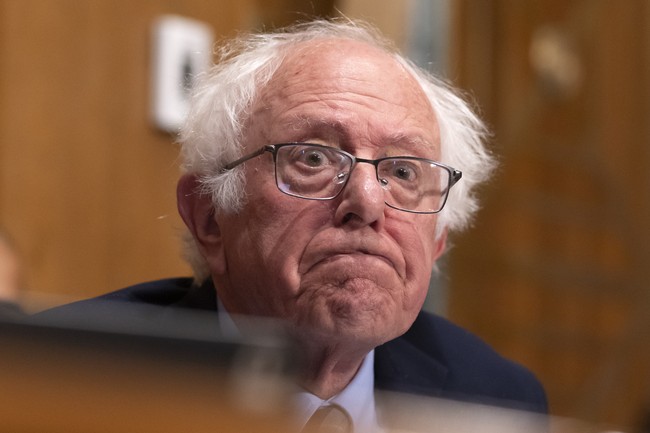
When CNN’s Kaitlin Collins asked Vermont Sen. Bernie Sanders whether Democrats had achieved anything from the DHS shutdown, the exchange showcased the party’s difficulty converting protest into tangible wins. Sanders managed to pivot to broader criticisms of ICE instead of giving a straight answer about strategic gains. That evasiveness will not play well with voters stuck in hours-long security lines, and Republicans are pressing that point hard.
The practical fallout is already visible in airports nationwide where wait times have ballooned into complete nightmares for many travelers. Staffing shortages, increased callouts, and nearly 500 resignations among TSA agents after almost 40 days without pay have stretched screening operations to the breaking point. Some travelers have reported waiting as long as four and a half hours to get through security, a level of dysfunction that threatens commerce and public confidence in federal services.
Sanders shifted the conversation toward demands for sweeping reforms at Immigration and Customs Enforcement, repeating claims that ICE is “out of control” and must be fundamentally reformed. While accountability and reform can be legitimate policy debates, doing so in the middle of an operational crisis that endangers airport safety and worker livelihoods looks like political theater. Republicans argue that policy changes should not come at the expense of basic functions like secure, timely passenger screening.
The pressure on Democrats increases when facts about the human cost of the shutdown surface, such as the spike in agents quitting and the mounting costs to travelers and airlines. For many Americans, the shutdown is not an abstract fight about policy; it is a concrete disruption of travel plans, business schedules, and family reunions. Republicans are casting the impasse as a partisan stunt that punishes ordinary citizens to score points with activist constituencies.
Beyond TSA lines, the funding gap threatens other critical agencies that Democrats chose not to prioritize, affecting FEMA, the Coast Guard, and the Secret Service. Voting patterns in the Senate showed broad Democratic opposition to certain funding measures, leaving GOP lawmakers to hammer home a message of irresponsibility and misaligned priorities. That political framing aims to portray Democrats as willing to risk public safety to press their demands.
Democrats are also demanding limits on ICE practices in response to recent tragedies, including proposed bans on masks for agents and restrictions on entering private property without warrants. Those calls come amid reports of dramatically increased threats and assaults against officers and their families, yet Democratic proposals often omit how protections for agents will be reconciled with new operational limits. Republicans emphasize that law enforcement needs both accountability and safety to function effectively.
At a recent House hearing, TSA Deputy Administrator Ha Nguyen McNeill warned of hard choices ahead if funding continues to stall, raising the prospect of selectively shutting down operations at certain airports as callout rates climb. That testimony underlines the depth of the crisis and the operational decisions leaders may be forced to make if partisan brinkmanship persists. Republicans are using such testimony to argue that the consequences are too severe to justify continued obstruction.
“This is a dire situation. At this point, we have to look at all options on the table. And that does require us to, at some point, make very difficult choices as to which airports we might try to keep open and which ones we might have to shut down as our callout rates increase.”
With public opinion already souring on the party’s agenda, Democrats face mounting difficulty explaining why a shutdown that disrupts travel and jeopardizes security should be considered a success. Republican messaging frames the shutdown as a deliberate punishment of voters, especially those who did not support Democratic candidates. As long as airports remain bogged down and TSA workers go unpaid, that narrative will be hard for Democrats to shake.
The longer the standoff continues, the more political leverage shifts toward those demanding a return to normal operations and away from those who insisted on tying funding to contentious policy changes. For Republicans, this is a moment to highlight governance versus grievances, and to press for quick, pragmatic solutions that restore services and paychecks. Voters watching long lines form at airports are unlikely to reward leaders who prioritize politics over public safety and basic government functions.


I’m making over $17k a month working part time. I kept hearing other people tell me how much money they can make online so I decided to look into it. Well, it was all true and has totally changed my life. This is what I do,
HERE →→→→→→→→→→ PayAtHome1.Com