
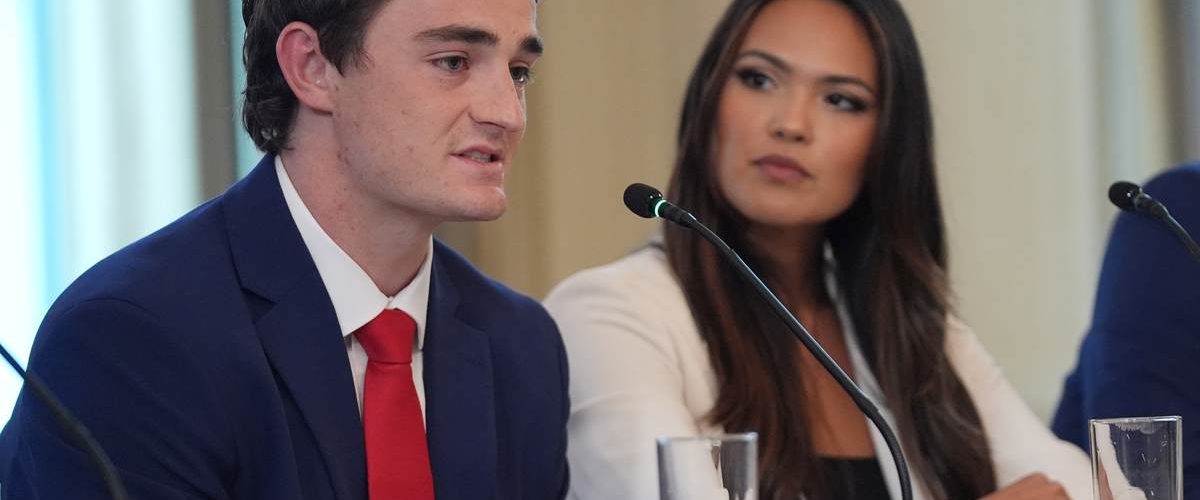
I’ll explain how Nick Shirley exposed a California bill that threatens free speech, describe his viral run-ins with reporters, show the key quotes that underscore the danger, and note the political fallout now headed for the courts.
California has had one-party control for 16 years, and that long rule has produced policies that chill scrutiny of government and nonprofit operations. A new law aimed at protecting “immigration support services providers” risks shielding fraud and muzzling journalists who expose it. The controversy centers on whether the statute creates a legal safe harbor for bad actors to avoid accountability.
Independent investigator Nick Shirley first drew attention with his Minnesota “Learing Center” video in December 2025, which claimed tens of millions were lost to fraud by programs posing as education centers. That viral success put Shirley on the map and made him a clear target for lawmakers and activists who want to limit stinging oversight. He then focused on California, where critics say a new bill is effectively designed to stop people like him from reporting on abuse.
Republican Assemblymember Carl DeMaio labeled the proposal the “Stop Nick Shirley Act” to highlight its chilling effect on independent reporting. Opponents argue the measure protects employees, volunteers, and household members of certain providers from scrutiny, plus includes other provisions framed as “protections.” Supporters claim the law shields vulnerable service users, but critics warn that codifying broad immunity invites exploitation.
At a Sacramento protest, Shirley confronted a New York Times reporter, Laurel Rosenhall, and that exchange quickly went viral for the way Shirley dismantled the bill’s logic. Two things became obvious in the interaction: she appeared to defend the statute vigorously, and she did not press on the legal and practical problems he raised. The short clip shows Shirley calmly laying out how the law could be used as cover for fraud, leaving the reporter on the defensive.
Shirley pointed to a practical loophole: “Imagine a fraudster who knows he’s committing fraud,” Shirley said. “He’s like, ‘Oh, well, now under this bill, if I’m committing fraud, I’m just going to go enroll in this program.’” That line captures the central worry—if enrolling in a protected program can blunt scrutiny, then the law unintentionally creates an incentive for scammers to hide behind it.
He pressed other points that exposed the bill’s weak spots, and the back-and-forth left the reporter struggling to rebut specifics. Observers noted her facial reactions as she appeared unable to counter the legal concerns Shirley raised. The scene is striking because it shows how a grassroots investigator can force mainstream journalists to address constitutional implications they may have overlooked.
https://x.com/libsoftiktok/status/2092984832649245169
So we just had this New York Times come up and interview me. They literally couldn’t finish the interview, because I told her why this bill is a violation of the First Amendment, and she was literally left speechless.
Tells you all you need to know.
Gov. Newsom signed the bill earlier this month after party-line votes in the Assembly and Senate, and it is set to take effect October 1, 2027. That timing matters because legal challenges are already anticipated, and opponents say lawsuits will be fast and numerous. If courts find merit in free-speech claims, this law could be an expensive and embarrassing misstep for proponents.
Beyond the immediate constitutional questions, the debate highlights a larger struggle over who gets to investigate public and nonprofit activity in California. One-party control has meant fewer checks from elected authorities, so independent watchdogs and journalists play a crucial role. Shielding entire categories of providers from meaningful oversight risks creating blind spots where waste and corruption can fester.
Shirley’s Minnesota work and his Sacramento confrontation show a pattern: persistent reporting exposes weaknesses that entrenched interests would prefer remain unseen. The “Stop Nick Shirley Act” nickname is blunt political theater, but it also frames a real policy problem—laws that aim to protect vulnerable people can be drafted so broadly they end up safeguarding the wrong actors. Expect the legal fights to test where the line between protection and censorship should be drawn.
The viral footage and the reaction to it feed into a broader narrative about media, power, and accountability in California. When independent investigators rattle bureaucracy and nonprofit sectors, defenders of the status quo often push back with both policy and narrative. That push-pull is playing out now in the courts, in newsrooms, and in public debate, as Americans decide who gets to hold institutions to account.
Rosenhall had no answer when Shirley pointed out obvious problems with the anti-free speech measure: “Imagine a fraudster who knows he’s committing fraud,” Shirley said. “He’s like, ‘Oh, well, now under this bill, if I’m committing fraud, I’m just going to go enroll in this program.’”
He had many other solid points that left her stuttering and unable to work up a comeback. Make sure to look at her face at the end of the clip where he absolutely decimates her arguments. She looks like she’s no longer sure how to breathe.
🔥 WOW! Nick Shirley spotted absolutely MIC DROPPING an insufferable New York Times “reporter” who’s defending the California Stop Nick Shirley Act
You can tell she did NOT expect Nick to outsmart her!
These people think they’re more important than all of us.
They support censoring journalists who expose fraud!
MASTERCLASS, @nickshirleyy🔥
The Stop Nick Shirley Act needs to be taken to court, all the way up to SCOTUS if needed!
Imposing fines on people for doing journalism is pure tyranny, Newsom.

Add comment