
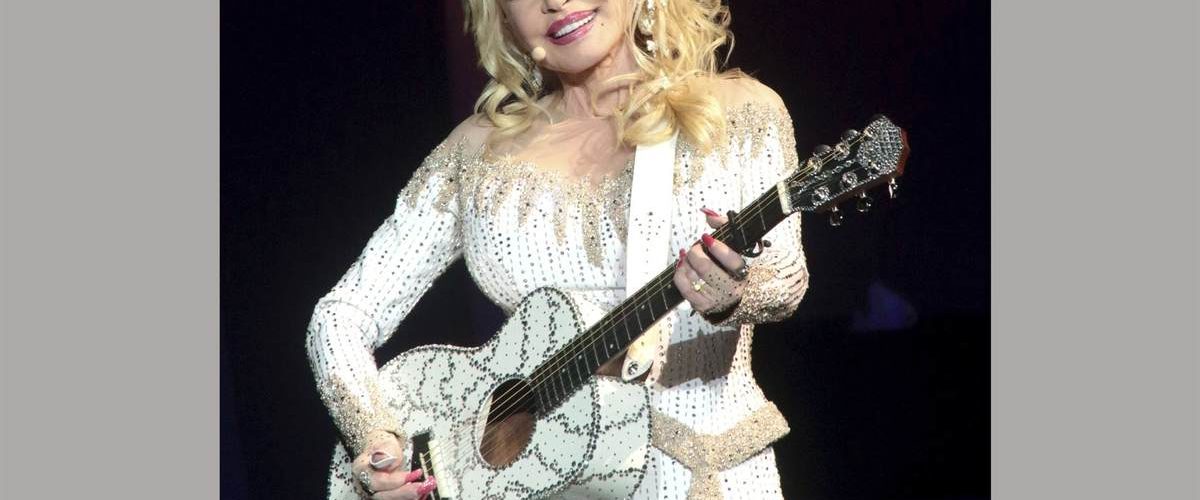
Dolly Parton’s passing has sparked a wave of remembrances, and a Michigan Senate candidate’s use of her music and memory has drawn sharp conservative criticism for mixing mourning with politics and for misreading her intentional nonpolitical stance.
Dolly Parton died on August 25 after decades in the music business, leaving a legacy of songs, charity, and an image she carefully kept apolitical. Her catalog and public persona were both built on empathy for working people and a clear desire to avoid partisan fights. That background is the reason her death created a rare moment of broad, nonpartisan reflection, not a moment for political theater.
Most people honored her memory without dragging it into politics, but Abdul El-Sayed, the Democratic Senate nominee from Michigan, chose to do otherwise. He posted commentary that framed Parton’s work as explicitly advocating against poverty and inequality, including the line, “Dolly Parton used her gift for music to highlight the challenges of poverty, inequality, and struggle in ways that uplifted and inspired working people.” He then tried to lean on her song “Coat of Many Colors” to underline that point.
El-Sayed didn’t stop at words. After drawing criticism for politicizing Parton’s life, he posted a video using her upbeat anthem “9 to 5” where he and members of his campaign appeared to lip-sync the chorus while claiming “Team Abdul was working 9-5 to deliver for the people.” He even captioned the clip, “Rest in Power, Dolly,” a phrase that carries heavy political connotations and has been used primarily by the left to honor political allies.
Parton famously kept public politics at arm’s length, declining invitations to turn popular work into partisan messages and even once refusing the Presidential Medal of Freedom for fear it might look political. She guarded her music and the way her image was used, and that context matters when a politician borrows her songs to score a campaign clip. For many conservatives, that’s not just tasteless, it’s disrespectful to an artist who worked hard to be inclusive and nonaligned.
Parton addressed the expectations around “9 to 5” herself when asked if the film was meant to send a political message. Her reply was characteristically plain: “I wouldn’t have been involved if I’d thought it was gonna be a sermon of some sort. Not that I’m not for rights for everybody, I’m just sayin’ I didn’t want to get involved in a political thing. It’s just a funny, funny show. I think it’s very obvious what it’s sayin’. It’s mostly about this boss and these three women—not bosses in general or the plight of secretaries.” That quote underlines the point that Parton didn’t intend her work to be a political battering ram.
Using her music and her name as campaign props betrays that intention and risks violating the kind of respect Parton showed toward the public sphere. Conservatives see this as an attempt to borrow cultural credibility without actually changing policy or behavior. Taking a beloved, nonpartisan figure and turning her into a campaign backdrop is the kind of shortcut that backfires: it angers fans who remember she avoided partisan leadership and it reveals a campaign’s weakness in relying on optics over substance.
There are also practical issues about music rights and intellectual property that conservative observers note. Parton controlled her catalog closely and ran a business around her brand for decades, so co-opting songs for political messaging raises questions about permissions, licensing, and the ethics of repurposing an artist’s work. Beyond the legalities, there’s the moral question of whether it’s right to use a recently deceased artist’s music to score a political ad.
From a Republican viewpoint, the episode is a case study in tone-deaf social media strategy and the hazards of quick political calculation. El-Sayed’s move looks less like outreach to undecided voters and more like opportunism that risks alienating a broad swath of people who remember Parton as someone who refused to turn grief into a partisan wedge. Political campaigns that try to harvest emotional moments without honoring the person’s expressed values are courting backlash.
Critics on the right also point out that the “Rest in Power” phrasing carries a partisan edge that clashes with the image Parton cultivated. That phrase often signals a political allegiance, and applying it to a widely beloved entertainer who intentionally stayed above partisan frays rubs many the wrong way. The result is not sympathy for the campaign but renewed determination among opponents and skeptics to question the candidate’s judgment.
@abdulelsayed Rest in Power, Dolly ✊🏼
Whether the stunt moves any votes in Michigan is uncertain, but the reaction illustrates a larger lesson: cultural icons who worked hard to be unifying symbols deserve restraint, not appropriation. Political operatives who ignore that risk turning moments of mourning into controversies that reflect badly on their principals and make the candidate seem out of step with the very people they hope to win over.

Add comment