
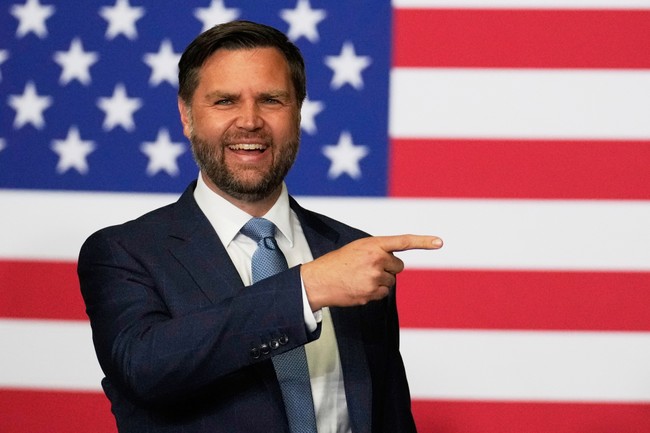
Vice President JD Vance visited Minnesota to back ICE officers under attack from local Democrats, and a group of protesters turned up at the wrong time and place, making noise and drawing police attention. The protesters thought they were targeting Vance or ICE at a hotel, but he was not in Minnesota when the commotion happened and had not yet arrived, so the action appears to have been misdirected. Authorities reported disruptions and arrests after warnings, including that people “tampered with barricades, compromising safety in the area.” Vance later saw the mistaken protest post and reacted with amusement at the botched effort.
Vance came to Minnesota specifically to support ICE agents who have faced intense criticism from Democrats and their allies. His visit was a show of solidarity with federal law enforcement, framed as standing up for rule of law and the men and women who carry it out. The criticism from the left often paints enforcement actions in the worst possible light, and Vance confronted one false narrative head-on by addressing a debunked story about a detained five-year-old.
A crowd of anti-ICE demonstrators reportedly assembled outside what they believed to be Vance’s hotel, making noise late into a bitterly cold night and looking as if they brought a band. That disturbance drew local police, and officers warned protesters multiple times before escalating their response. The confrontation escalated after officers said the crowd had tampered with barricades, and chemical irritants were deployed; three people were arrested during the incident.
Crucially, Vance was not in Minnesota when that noisy protest took place. He had not yet flown into the state when the original post about the demonstration appeared, and he left the event in support of ICE to return to Joint Base Andrews and Washington after his remarks. The protesters’ apparent belief that they were confronting Vance or ICE at that hotel turned out to be factually wrong, which made the whole episode look like a misfire at best and a setup at worst.
The spectacle raises questions about organization and information among activist circles. Either the crowd was acting on bad intel, or organizers misled participants into targeting the wrong place at the wrong time. Either way, the result was a disturbance that inconvenienced local residents and hotel guests rather than a meaningful pressure campaign aimed at officials or ICE personnel.
There were reports tying the gathering to the Graduate Hotel and speculation that protesters believed ICE agents were staying there. Those reports did not establish whether ICE personnel were actually present at that location. The practical impact, regardless of facts about ICE lodging, was that loud protesters disrupted a neighborhood and drew police attention for behavior that included tampering with crowd-control barriers.
The policing response followed a familiar progression: officers issued warnings, sought to restore order, and used chemical agents when the warnings went unheeded. That sequence led to arrests, and it left many onlookers and residents annoyed that noisy demonstrations were permitted to disturb a cold night. Questions about noise ordinances and basic respect for other people’s rights were raised amid the political posturing of those claiming moral high ground.
Politically, the episode underscores how tactical mistakes can undermine activist narratives. When protesters claim to defend vulnerable people but end up disrupting ordinary citizens and targeting empty rooms, their credibility takes a hit. Republicans and law-and-order advocates argue that lawful enforcement should proceed without interference and that honest debate does not justify harassing private citizens or hotel guests.
Vance’s public reaction was to find amusement in the protesters’ error, which fed a wider narrative about left-leaning groups getting their facts wrong while trying to stage high-drama confrontations. Supporters saw that reaction as fitting: a lawmaker standing with ICE and pointing out the gap between activist theater and real-world enforcement timelines. Critics of the protest still insist officials should be held accountable, but the timing and location of this action made the point harder to take seriously.
The incident left several takeaways: disruptive tactics that ignore facts alienate bystanders, poorly organized actions can backfire politically, and law enforcement will act to maintain safety when public order is threatened. For anyone watching, the misstep was a reminder that credible opposition requires accurate information and discipline, not just noise and spectacle.
After the dust settled and Vance had already delivered his remarks supporting ICE, he saw the original post about the protest and reacted by laughing at the apparent failure. That response highlighted how easily activist plans can be unraveled by simple timelines and logistics. The episode did not stop ICE from doing its job, but it did highlight the difference between symbolic outrage and coordinated, effective action.
Add comment