
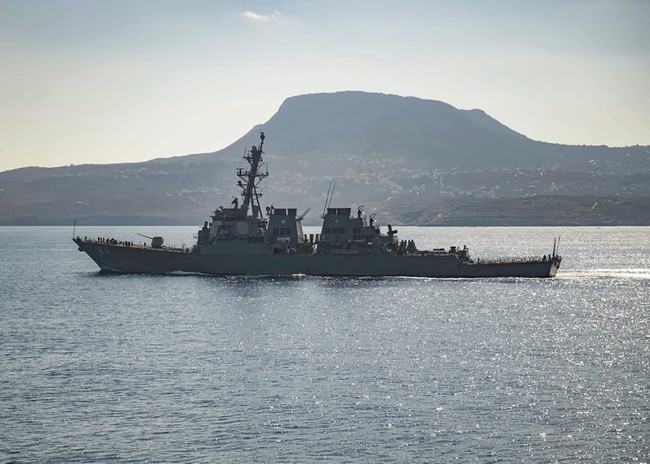
France recently deployed its navy to board a Russia-linked tanker in the Mediterranean, joining U.S. and German actions to disrupt what officials call a “shadow” or “dark” fleet moving sanctioned oil. The move, announced publicly by President Emmanuel Macron, signals growing Western resolve to enforce sanctions and complicate the networks that keep Russia supplied and funded. This article lays out the facts of the boarding, the ship involved, recent related actions by allied navies, and why this matters for sanction enforcement and global maritime law.
On Thursday the French Navy intercepted and boarded a tanker operating between Spain and Morocco, an operation announced by President Emmanuel Macron via X. The announcement framed the boarding as enforcement of international sanctions and a measure taken in concert with allies. The French statement emphasized legal compliance and the intention to prevent sanction evasion that supports aggression.
We will not tolerate any violation.
This morning, the French Navy boarded an oil tanker coming from Russia, subject to international sanctions and suspected of flying a false flag.
The operation was conducted on the high seas in the Mediterranean, with the support of several of our allies. It was carried out in strict compliance with the United Nations Convention on the Law of the Sea.
A judicial investigation has been opened. The vessel has been diverted.
We are determined to uphold international law and to ensure the effective enforcement of sanctions.
The activities of the “shadow fleet” contribute to financing the war of aggression against Ukraine.
The vessel identified in public reports is the M/T Grinch, classed among the larger Aframax tankers that carry substantial volumes of crude. That category can handle between 500,000 and 800,000 barrels, making interdictions of these ships consequential for disrupting large transfers. The Grinch reportedly loaded Russian crude in Murmansk and was transmitting registration tied to the Comoros, a detail that raised suspicions of false flagging and opaque ownership.
European actions follow a string of U.S. interdictions in the Caribbean and North Atlantic, where American authorities have boarded several tankers suspected of violating sanctions. Those U.S. operations have been credited with establishing a precedent for assertive maritime enforcement and encouraging partners to act. Germany, too, recently moved to intercept a tanker attempting to enter sensitive waters while flying a questionable flag, signaling broader allied coordination.
France’s decision to board a tanker on the high seas reflects a shift from passive monitoring to direct intervention when ships are suspected of illicit activity. Underpinning the operation was a claim of strict adherence to the United Nations Convention on the Law of the Sea, which provides legal cover for boarding when evidence suggests misuse of flags or sanctions violations. Opening a judicial investigation and diverting the vessel allow domestic courts to examine ownership, cargo manifests, and crew declarations under criminal or civil law frameworks.
These interdictions focus not just on stopping a single cargo but on dismantling the logistics that let sanctioned crude reach markets and feed state revenue streams. A so-called shadow fleet uses shell companies, frequent reflagging, and ship-to-ship transfers to hide origin and destination. Breaking that chain requires law enforcement, naval assets, and intelligence sharing to trace ownership, charter parties, and the ultimate beneficiaries of the trade.
Critics argue such actions risk escalation at sea and require ironclad legal justification to avoid diplomatic fallout, especially when operations occur in international waters. Supporters counter that nonenforcement effectively nullifies sanctions and enables geopolitical threats to sustain themselves. Those tensions play out across allied capitals as countries balance enforcement with commercial and strategic relationships.
France’s public framing framed the operation as protecting international law and preventing the financing of aggression, a message tailored to domestic and international audiences. The move also serves as a warning to operators who rely on lax enforcement and opaque maritime practices that sanctions will be contested at sea. For partners tracking shadow fleets, the boarding offers fresh evidence and may unlock intelligence that helps target networks rather than individual vessels alone.
Operationally, boarding an Aframax tanker requires trained boarding teams, secure communications, and clear rules of engagement to manage crew safety and preserve evidence. Once aboard, investigators typically inspect documents, inspect cargo, and verify AIS histories and bunkering records to detect false identities or hidden ship-to-ship transfers. Diverting a vessel for legal processing shifts the burden from immediate tactical interdiction to a longer, evidence-based judicial process.
If allied navies synchronize maritime interdictions, the combined impact can shrink routes available to illicit oil traffic and raise the costs of obfuscation for operators. That could force buyers and intermediaries to reassess risk and reduce demand for covert transfers. Still, shipping networks adapt quickly, and sustained pressure will be necessary to create lasting disruption rather than temporary diversion.
The recent sequence of actions by France, Germany, and the United States, combined with ongoing investigations, suggests a growing appetite among Western powers to take tangible steps against maritime sanction avoidance. Whether this pattern continues will depend on legal outcomes, diplomatic fallout, and how effectively enforcement can be coordinated without provoking broader conflict at sea.



Add comment