
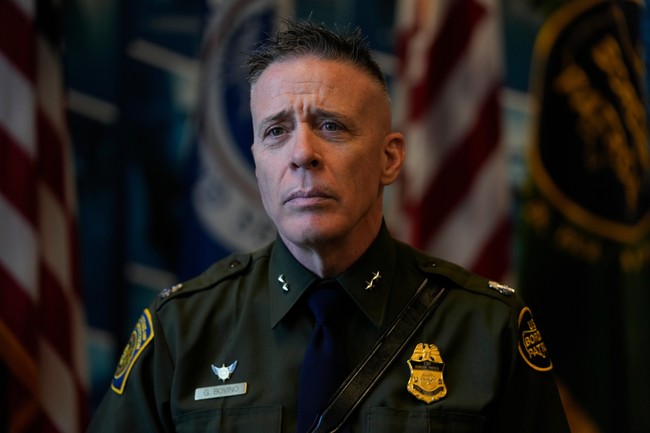
Border Patrol Commander Greg Bovino pressed the media to focus on what he calls a real child crisis at the southern border, arguing that mass non-enforcement under the current administration has left hundreds of thousands of kids at risk and trafficked across the border .
Bovino spoke to reporters in Minnesota about Border Patrol operations and wanted sharper coverage on child trafficking tied to lax border enforcement. He singled out the media for not following up on specific incidents where children were recovered in trafficking situations. His remarks were blunt and meant to force a conversation about consequences of open-border policies.
The post continues:
“300,000+ plus lost children are trafficked across that border. Now when we’ve got the news media talking about children, I’d certainly love to hear more reporting on the 300,000 lost children.”
“How about the 14 that we recovered at that pot farm a few months ago in Camarillo, California?! […] I didn’t didn’t really hear much much from you guys!”
Commander Bovino then expanded on the same claims, repeating the scale and naming one horrific case to illustrate the point. He described repeated encounters where Border Patrol agents found children in alarming medical and drugged conditions, and he criticized the press for silence. The goal of his remarks was to highlight human cost and to demand accountability from both policy makers and journalists.
(300,000+) Thousand plus, that were trafficked across that border. Now, when we’ve got the news media talking about children, I’d certainly love to hear more reporting on the 300,000 lost children. How about the 14 that we recovered at that pot farm a few months ago in Carpinteria, California, the 14 lost children trafficked across the border that were found working illegally on a pot farm in California? Very little reporting from the Minneapolis news media here, I didn’t really hear much from you guys.
And then some of the more heinous crimes against children that are trafficked across the border that ICE and Border Patrol saw daily back when that border was out of control, over the past four years. I’ll detail one for you, folks, that’s truly heinous. Border Patrol agents there in the El Centro sector encountered, uh, a young child that was approximately three years of age, the child appeared to be drugged. Not with his parents. With strangers.
Agents managed to wake the child up after doing what is known as a sternum rub, which is something that, which is a technique to wake someone up that may be induced by drugs. As the child woke up, we understood the child’s parents were not, were not with him, and medical examination saw that this child had non-surgical sutures in his abdomen. Let me say that again. Non-surgical sutures in the child’s abdomen. He was being trafficked across the border in that condition. That’s not an isolated event with the U.S. Border Patrol where I face. We saw that many, many times. Drugged children, coming across the border, and guess what? Other than a couple of news outlets, I believe News Nation and Fox reported, nobody else would. Nothing on a child with non-surgical sutures in his abdomen and nobody knows why.
These are disturbing details from an active-duty commander dealing with border chaos every day, and the Republican perspective is straightforward: secure the border and stop enabling traffickers. When agents are finding children in medical distress and separated from adults who should be accountable, that signals a policy failure. Holding the line on enforcement, not offering open amnesty, is the clear response advocated by those who prioritize public safety and the welfare of children.
Beyond the anecdote, Bovino’s argument is about patterns. He pointed to multiple episodes where children showed signs of abuse or drugging while being moved across the border, insisting these are not isolated occurrences. From this viewpoint, lax enforcement creates a market for traffickers who exploit vulnerable minors and endanger communities across the country.
Critics of aggressive enforcement often frame Border Patrol or ICE as the problem, but Bovino flipped that script by showing how weak policies empower criminals. The Republican case emphasizes protecting children and communities by restoring deterrence at the border, increasing resources for enforcement, and prosecuting traffickers to the fullest extent. That approach treats illegal crossings as the national security and humanitarian crisis it is, not a policy debate abstracted from human harm.
Local reporting choices matter too, Bovino argued, because national awareness drives pressure on lawmakers to change policy. When the press ignores certain stories, elected officials face less political cost for continuing failed strategies. Republicans say that transparency and relentless enforcement would reduce trafficking and protect children more effectively than current practices.
These remarks from a commander in the field are meant to push action: better enforcement, clearer reporting from the press, and accountability for those who exploit border gaps. The goal is not to demonize migrants but to stop the criminal networks that prey on children and to restore orderly, safe immigration through lawful means.



Add comment