
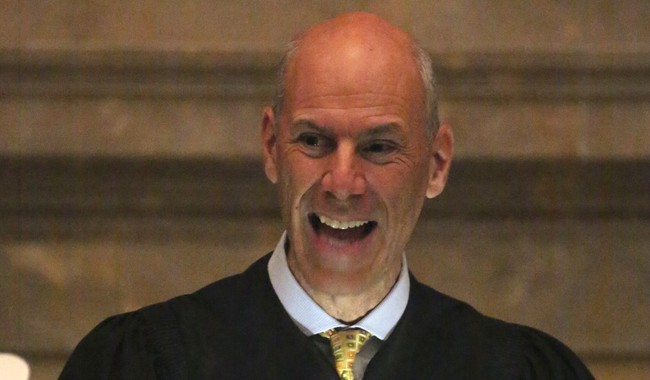
The House wrapped up its work on federal funding and has shifted focus to judicial accountability, with Speaker Mike Johnson reportedly signaling support for efforts to impeach judges accused of blocking presidential policies; key Republicans have named specific targets and are weighing options while recognizing the steep Senate hurdle for conviction.
With appropriations bills moving to the Senate, the House majority is turning attention to what it calls activist judges who, in their view, are shaping policy from the bench instead of interpreting law. Leaders and rank-and-file conservatives are reviving impeachment pushes that stalled last year and are now testing whether renewed political momentum can carry them further. The push is both symbolic and practical: it seeks to punish perceived overreach and to deter future judicial interference with executive policy priorities.
One Republican lawmaker made the case that impeachment remains a tool when other reforms fall short. “House conservatives are reviving various pushes to impeach judges accused of blocking President Donald Trump’s agenda after Speaker Mike Johnson, R-La., gave his tacit approval earlier this week.” That exact phrasing has circulated among House conservatives as they evaluate which paths to pursue — impeachment, litigation, or statutory reform limiting nationwide injunctions.
Rep. Andy Ogles, a prominent backer of judge impeachment efforts, laid out a clear next step. “I just spoke to him on the House floor, and he’s still in support, so we’re going to push to move forward on at least one,” Rep. Andy Ogles, R-Tenn., told Fox News Digital in the early evening on Thursday. Ogles and like-minded members previously introduced articles aimed at judges they say repeatedly struck down administration policies.
Past efforts singled out U.S. District Judges John Bates and Theodore Chuang for impeachment resolutions tied to rulings on transgender recognition and on a dispute involving a federal efficiency office. Those resolutions did not advance at the time, and House leadership then embraced a legislative fix instead. A bill to curtail district court power to issue nationwide injunctions passed the House but died in the Senate, leaving impeachment as the most visceral response available to some conservatives.
Those same leaders now say Speaker Johnson has signaled a different tone. During a recent press conference, the Speaker said, “I’m for it.” That concise declaration has galvanized some conservatives who view impeachment as a means to hold judges publicly accountable for what they see as policy-driven rulings. For them, naming and moving against one judge would be a warning shot across the bow to others.
Speaker Johnson has reportedly indicated a specific interest in U.S. District Judge James Boasberg, alleging rulings that hampered enforcement of immigration policies and other Trump administration priorities. He has been mentioned alongside other judges targeted by Republicans for decisions on flying migrants to El Salvador instead of detaining them in the U.S. and for other immigration-related rulings. Naming Boasberg gives a focal point to the effort and a concrete case those backing the move can rally around.
Even with a House majority willing to impeach, a conviction and removal require a two-thirds majority in the Senate, a threshold that remains distant. The Senate currently breaks down to 53 Republicans, 45 Democrats, and two independents who caucus with Democrats, a configuration that makes conviction a high bar absent an unusually large and cohesive shift. Conservative organizers are candid that achieving the votes in the Senate is unlikely under the current composition.
Still, supporters argue impeachment can still achieve tangible political outcomes short of conviction. Proceedings would put judges and their rulings in the spotlight, create a formal record of alleged abuses, and potentially tarnish reputations in ways that affect future assignments or longevity on the bench. Those are strategic incentives even if removal is improbable.
Critics warn that pursuing impeachment for policy-driven rulings risks politicizing the judiciary even further and could provoke public backlash if seen as retaliation for unfavorable decisions. Leadership in the House previously balked at impeachment for these reasons, opting for statutory changes instead, and that institutional caution remains part of the debate as conservatives press their case. How the House balances accountability and separation of powers will shape the pace and scope of any impeachment push.
For now, the decision to proceed appears to rest on a mix of political calculation, symbolic signaling, and targeted grievances against particular judges. If the House votes to pursue articles of impeachment, the country will get a clearer sense of how far congressional Republicans are willing to go in reining in federal judges they view as activist. The practical impact, however, will ultimately hinge on whether the strategy wins broader support beyond the House majority and into the Senate chamber.



Add comment