
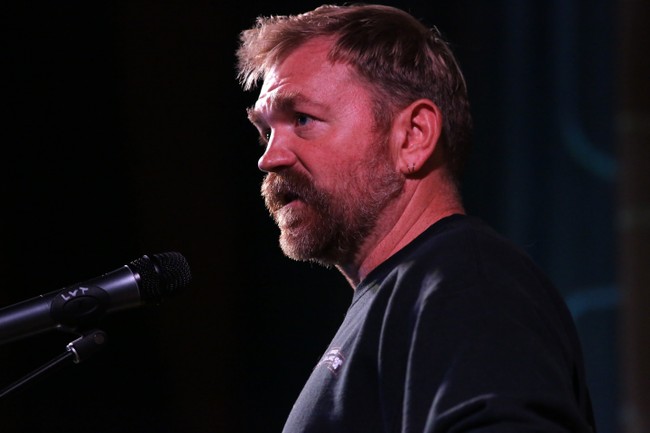
Graham Platner, a Democratic Senate hopeful in Maine, is drawing attention for urging activists to confront public officials in person, including at restaurants, as part of a push to pressure lawmakers on issues like Medicare for All. His remarks, tied to a campaign that has already featured controversial self-descriptions and troubling imagery, have prompted comparisons to past calls for public harassment from national Democrats and raised alarms about political violence and intimidation. This piece lays out the facts of Platner’s remarks, the response they echo from national figures, and the broader context of rising confrontational tactics in politics.
Graham Platner remains a notable figure in the Maine Democratic primary despite controversies that have emerged about his background and public statements. His campaign has attracted attention because it contrasts with the more traditional approach of rival Democrats, and he has positioned himself as a disruptive force capable of challenging incumbent Republicans like Sen. Susan Collins. With limited statewide polling so far, the race is drawing scrutiny over how far Democrats will go to mobilize voters and apply pressure on opponents.
At a Windham town hall, Platner told supporters they should actively impose costs on officials who oppose progressive measures like Medicare for All. He explicitly called for pouring into offices and confronting lawmakers in public spaces, saying activists should not let them have a peaceful meal. That call for direct public pressure mirrors tactics some on the left have advocated as a means to force policy shifts.
“In the future, when we’re trying to vote on something like Medicare for All, if there are other members of the Maine delegation that don’t want to come along, we need to be able to impose costs,” he said during a Saturday town hall in the southern Maine town of Windham. “We need to be able to turn people out to flood their offices. Frankly, I want people to follow them around and don’t let them have a public dinner without getting yelled at. Because that’s power. That’s real power.”
After Platner’s remarks, audio of the event circulated, showing the candidate framing disruption as an effective political tool rather than urging civil debate. Critics argue that language encouraging followers to harass public officials in restaurants or at home crosses a line from robust activism into intimidation. Supporters counter that targeted pressure is part of grassroots democracy, but the tone and context here matter when public safety is at stake.
Here’s the audio:
The comparison to earlier national incidents is striking. Years ago, Representative Maxine Waters urged supporters to confront Trump administration officials, and those comments were later cited in debates about political rhetoric and its consequences. Platner’s statements have revived those discussions, with opponents warning that normalizing harassment risks encouraging violent actors who already target public figures.
If that sounds familiar to you, it should. Here’s Democrat Rep. Maxine Waters (CA-43), urging a crowd of agitators to do the same thing in the summer of 2018, almost one year to the day that a deranged Bernie Sanders supporter tried to assassinate multiple GOP lawmakers during a Congressional baseball practice, nearly succeeding with Rep. Steve Scalise (LA-01):
There is a long memory in politics about how rhetoric can precede real-world violence. Incidents like the assassination of UnitedHealthcare’s CEO and other politically motivated attacks have made politicians of all stripes more cautious about language that could be interpreted as incitement. Many voters now view calls for public confrontation with unease, worried such tactics can spiral beyond protests and into threats or worse.
Platner’s rise in the Democratic field shows a party wrestling with strategy: embrace fiery grassroots tactics that energize a base, or pursue more conventional campaigning aimed at swing voters. His messaging suggests the first route, prioritizing confrontation as a way to break through entrenched opposition in Washington. That approach may win headlines and activist donations, but it risks alienating moderate voters who want stability and respectful disagreement.
Republicans and independents observing the race see a pattern of Democrats saying one thing and voters experiencing the consequences. When a candidate openly advocates for following elected officials and disrupting their private time, it stokes fears about the safety and functioning of representative government. The debate now is whether political pressure should include targeted personal harassment or remain within democratic norms of protest and persuasion.
For Maine voters, the choice in the primary and beyond will reflect not just policy preferences but attitudes about the tone of politics. Candidates who champion aggressive tactics may mobilize a passionate segment of the electorate, but they will also face scrutiny over whether their rhetoric contributes to a more dangerous civic environment. That tension will shape the race as both parties consider how best to win in 2026.

Add comment