
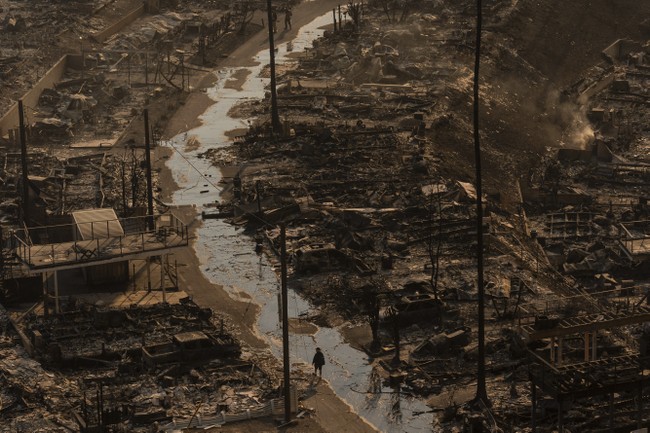
The Los Angeles mayor praised what was called the first rebuilt home in Pacific Palisades after January’s devastating wildfires, but a closer look shows the house was a preexisting project, not a post-fire rebuild. Local reporting and building records reveal the demolition permit was filed before the Palisades Fire, and the property was listed as non-eligible for wildfire rebuild programs. This piece examines the mismatch between the public message and the underlying facts, including direct quotes and official snippets that undercut the celebratory spin. The goal here is to lay out what happened plainly and let readers judge the leadership that touted this as progress.
The Los Angeles Times ran a feel-good item saying the first rebuilt home received its certificate of occupancy, and Mayor Karen Bass leaned into that narrative with a public statement. “Today is an important moment of hope,” she said in a statement, and the photo-op played into a tidy story of recovery and resilience. But the details that matter were left out of the mayoral line and the paper’s gloss, and those omissions change the meaning of the milestone.
According to reporting tied to local building records, the structure celebrated as a fire rebuild was actually the subject of demolition and rebuild plans filed months before the Palisades Fire. The routine timeline of permits, demolition, and new construction does not equal emergency recovery work, and conflating the two creates a misleading picture. When officials trumpet progress, the public deserves to know whether the work was a direct response to disaster or an unrelated development proceeding on schedule.
Less than a year after the Palisades Fire destroyed 6,822 structures, the first rebuilt home received its certificate of occupancy Friday in Pacific Palisades.
The four-bedroom showcase home features fire-resistant design and took eight months to build after a two-month permitting process.
That block of official-sounding detail looks good on the surface: a four-bedroom, fire-resistant design, completed in under a year. But the timeline buried in building department files tells a different story. A demolition permit for the same Kagawa Street property was applied for in November 2024, which predates the Palisades Fire and means the project was already in motion before flames ever reached the neighborhood.
When officials or media call routine construction a recovery victory, it cheapens the real work of helping people who lost homes in the fire. The distinction matters for accountability, for where recovery dollars are steered, and for the credibility of leaders who should be honest about what’s been done and what remains. Portraying a preplanned project as a disaster rebuild looks like spin, and voters notice when leaders reshape timelines to make themselves look effective.
Local records also list the property as “non-eligible” for the wildfire rebuild program, another key fact that did not make it into the mayor’s statement or the celebratory coverage. Being impacted by the fire is not the same as qualifying for disaster-specific programs, and that technical distinction has both policy and political consequences. If the city wants trust from residents, it should stop dressing up standard development wins as emergency recovery triumphs.
But Bass failed to note that the newly constructed home on Kagawa Street was not a fire rebuild, as the demolition project began before the Palisades Fire erupted.
Thomas James Homes applied for a permit to demolish the one-story single-family home and its attached garage in November 2024, LA building and safety records revealed.
Although city records show the residence was impacted by the fire, the property was declared ‘non-eligible’ for the wildfire project.
— Spencer Pratt (@spencerpratt)
This episode feeds into a broader pattern voters see across Sacramento and Los Angeles: officials tout optics while skipping uncomfortable facts. Whether driven by a hunger for headlines or a desire to claim quick wins, the result is the same—public confidence erodes. Effective leadership should report plainly: what was rebuilt because of the fire, what was already underway, and what remains unresolved for families still displaced.
Calling a preplanned house a victory for wildfire recovery does a disservice to those who truly lost everything and are waiting on permits, inspections, and funds tied to disaster relief. Honest communication would separate routine construction milestones from emergency response achievements and direct scrutiny toward the choices that actually influence recovery speed. Until that happens, expect political spin to outpace meaningful action in rebuilding communities hit by disaster.


Add comment