
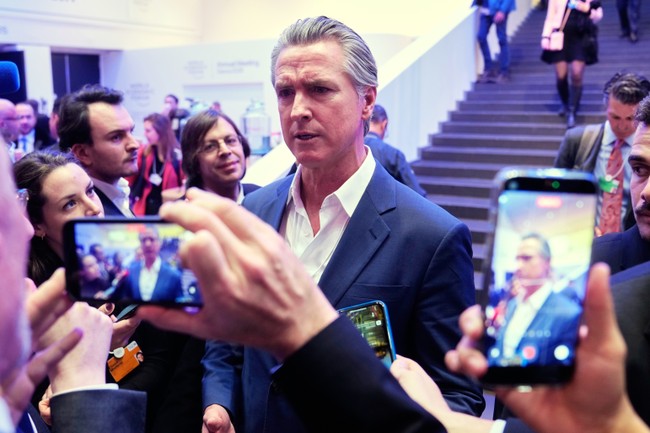
Gavin Newsom’s visit to Davos turned into a public setback when his presence drew sharp criticism from a Trump administration surrogate, his planned speech was canceled, and he was denied entry to the USA House pavilion, leaving questions about his standing with both global elites and domestic critics.
California’s governor arrived in Davos seeking attention and influence among international figures and donors. He mixed with wealthy attendees and took part in the usual festival of ideas and photo ops that the World Economic Forum attracts. For someone eyeing a national run, visibility on that stage matters.
Things shifted quickly when high-profile Trump allies showed up and took aim at him. One of those allies, Scott Bessent, delivered pointed remarks that landed directly on Newsom’s record and temperament. The tone moved from polite debate to withering critique in front of an audience that includes policymakers and donors.
Onstage, Bessent used sharp language to characterize Newsom’s governing record and his Davos presence. He said, “I think it’s very, very ironic that Governor Newsom, who strikes me as Patrick Bateman meets Sparkle Beach Ken, may be the only Californian who knows less about economics than Kamala Harris. He’s here this week with his billionaire sugar daddy, Alex Soros, and Davos is a perfect place for a man who – when everyone else is on lockdown, when he was having people arrested for going to church, he was having thousand-dollar-a-night meals at the French Laundry – and I’m sure the California people won’t forget that.” The remark underscored a broader narrative about perceived hypocrisy and elite detachment.
Bessent did not stop there, framing the criticism as part of a broader agenda to hold state leaders to account. He warned that the Trump administration would “crack down on waste, fraud, and abuse” and signaled an intent to target practices he linked to Newsom’s tenure. That kind of messaging is designed to resonate with voters frustrated by state-level problems.
Newsom’s planned Davos speech was called off amid the criticism and the surrounding media attention. Bessent described Newsom as “too economically illiterate to know anything” and outlined a list of failures he attributed to the governor, including outward migration, a large budget deficit, and growing homelessness. Those are familiar talking points in national debates about state governance, and they were deployed aggressively on a global stage.
Here is more of what Bessent said: “And I was told he was asked to give a speech on his signature policies, but he’s not speaking because what have his economic policies brought? Outward migration from California. A gigantic budget deficit. The largest homeless population in America. And the poor folks in the Palisades who had their homes burned down. He is here hobnobbing with the global elite while his California citizens are still homeless.” That passage paints a portrait of disconnect between high-society appearances and local outcomes.
The drama continued when Newsom learned he would not be allowed into the USA House pavilion, an event space in Davos celebrating America’s 250th anniversary. Organizers said he was barred from entering the pavilion, a move that quickly became part of the story surrounding his trip. The exclusion was interpreted by some as an embarrassing rebuke at an international gathering.
Newsom publicly suggested the pavilion sponsor had bowed to pressure, implying political interference. Whether the decision reflected external lobbying, internal policy, or an effort to avoid confrontation, it became fuel for media coverage and partisan commentary. The optics of being shut out at a prominent venue were hard to miss.
Critics on the right and some neutral observers framed the episode as confirmation of a larger critique: that Newsom is more comfortable with elite audiences than solving problems at home. Supporters counter that his global engagement is part of seeking partners and resources for California. The clash highlighted how international forums can amplify domestic political fights.
The back-and-forth in Davos made clear that Newsom’s national ambitions will draw intense scrutiny from political opponents. His interactions with wealthy donors and global leaders will be parsed alongside metrics like migration, budget balances, and homelessness. For a governor courting a national stage, every gaffe, snub, and comeback becomes material for the next round of debate.
As the events in Davos unfolded, the wider question became whether the episode would dampen his standing with potential supporters or harden opposition talking points. The interplay of elite socializing, sharp rhetorical attacks, and public exclusion created a narrative that will follow him as he navigates both state duties and national ambitions. At the very least, his Davos visit became a vivid example of how domestic politics can play out in an international setting.


Add comment