
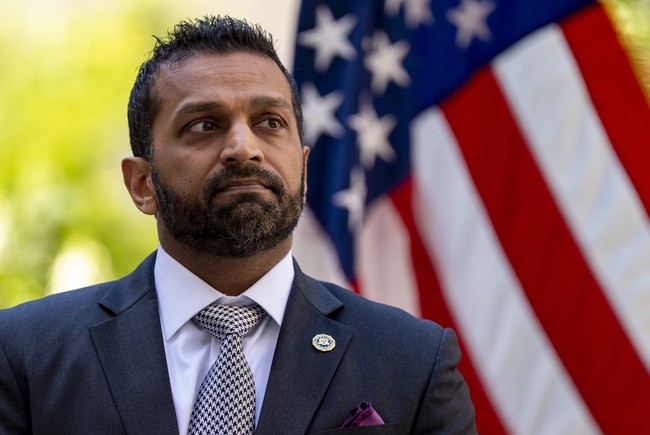
The piece examines claims by FBI Director Kash Patel that the FBI used false information to obtain surveillance on Donald Trump’s 2016 campaign, traces the fallout from those allegations, and notes the broader concerns about government spying powers and accountability.
FBI Director Kash Patel: They Lied to Spy on President Trump
Ten years on from the Russian collusion saga, the political fallout still stings and the questions about how surveillance was used have not gone away. The episode began as a frantic political moment during the 2016 campaign and ballooned into years of investigations and media drama. Now, officials on the right are revisiting whether the intelligence and law enforcement systems were weaponized against a political campaign.
Kash Patel, who now leads the FBI, has publicly accused the Bureau of using deceptive methods to secure warrants that targeted Donald Trump and his campaign. Those accusations have sparked renewed debate about FISA, surveillance authorities, and the safeguards that are supposed to prevent political abuse. The controversy is not only historical; it touches on current policy choices about how intelligence powers are governed.
FBI Director Kash Patel accused the FBI of lying to obtain surveillance warrants to illegally spy on President Donald Trump during his 2016 presidential campaign and subsequent first term.
Trump has long accused his 2016 opponent, Hillary Clinton, and former President Barack Obama of being ringleaders in an alleged spying conspiracy against his campaign, an allegation both have denied. Patel detailed the yearslong federal investigation into the alleged surveillance on the latest episode of “Hang Out with Sean Hannity.”
“It took me two years of my life to prove the following: that a political party in the United States of America in the 21st century would go overseas and hire some bogus intelligence asset to manufacture fraudulent, fake, unverified information, funnel that to not just the intelligence community, but the Federal Bureau of Investigation,” he said.
The warrants at issue were later rescinded after a federal inquiry flagged problems with how evidence was presented to the court. That alone raises alarms about the standards prosecutors and investigators used when seeking authority to surveil Americans. Rescission implies serious procedural or factual errors, and the political implications make the matter combustible.
Patel’s comments come as scrutiny intensifies over the federal government’s use of spying power and following Congress’ renewal of Section 702 of the Foreign Intelligence Surveillance Act (FISA) for 45 days.
Section 702 of FISA permits authorized U.S. officials to collect phone calls and text messages of foreign targets, but in doing so can also capture Americans’ communications – a piece of legislation Trump strongly opposes.
Patel told Fox News that FISA warrants – some signed by former FBI Director James Comey – were used to illegally spy on Trump and top officials, including himself, during the 2016 campaign and in years that followed.
At stake are the rules that let agencies sweep up foreign intelligence while minimizing incidental collection of Americans’ communications. Section 702, for example, was designed to target non-U.S. persons overseas but has long raised concerns about backdoor searches and incidental collection. Critics argue Congress and the courts must tighten oversight to prevent political misuse.
Political operatives, lawyers, and the public now argue over what accountability should look like when the system fails. Some believe criminal charges and public trials are the right corrective, while others favor structural reforms like enhanced FISA court transparency and stronger inspector general audits. Either way, restoring public trust will require more than talk; it will require demonstrable change.
The narrative coming from Patel is framed as vindication after years of contested claims about how intelligence from overseas was handled. If investigators knowingly relied on unverified or purchased material to secure warrants, that would be a severe breach of trust. The Department of Justice and Congress have roles to play in following up on those allegations and ensuring procedures are corrected.
For the American public, the lesson is stark: powerful surveillance tools can be misapplied, and the institutions that wield them must be accountable. Debates over civil liberties, national security, and political fairness are not abstract when those tools touch a presidential campaign. The outcome of current reviews and any legal actions will shape how intelligence powers are used going forward.
Patel’s claims have put a spotlight back on the 2016 era and the institutions involved, and that attention is unlikely to fade until concrete steps are taken. The broader conversation about reforms to FISA and oversight mechanisms is gaining traction in both policy and political circles. Observers on all sides will watch closely to see whether reforms follow the accusations.



Add comment