
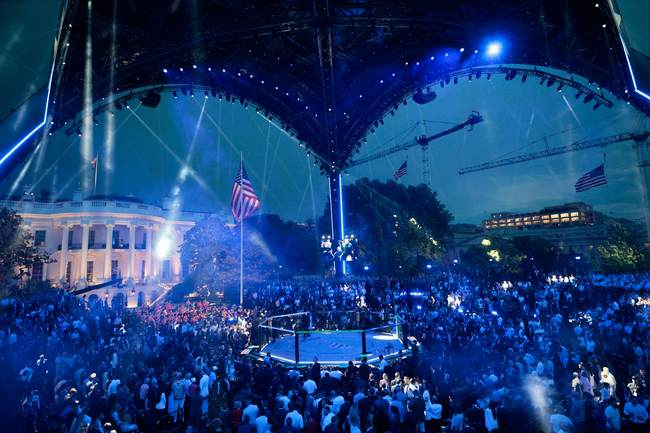
The FBI’s investigation into a foiled plot to attack a White House–adjacent UFC event uncovered a sprawling network, resulted in multiple arrests across states, and likely prevented mass casualties thanks to alert relatives and diligent law enforcement. New charges name two more suspects arrested after initial roundups, and court filings describe exchanges about weapons, drones, and 3D-printed components. The story underscores the threat posed by domestic terror schemes and highlights how ordinary citizens and federal agents stopped something horrific from happening. This account focuses on the arrests, alleged tactics, and the decisive warning that brought this conspiracy into the open.
The suspects allegedly planned a coordinated attack using drones to drive people toward other exits while armed co-conspirators lay in wait. The goal, according to court documents described publicly, was to create maximum panic and then inflict mass casualties with rifles, shotguns, and other weapons. Looking at the mugshots alone might give the impression of amateurism, but the alleged planning and stockpiling of gear show a dangerous level of intent. This was not idle talk; investigators found hardware, communications, and material meant to turn violent fantasy into action.
Federal prosecutors announced the arrest of two additional men after earlier arrests that took place in mid-June. The newly charged defendants were captured in Washington and Missouri and face conspiracy to commit murder counts in federal court. The cases link back into an even broader alleged network of individuals who communicated via encrypted apps and traded equipment. Those court papers paint a picture of coordination, resource sharing, and an intent to weaponize both drones and conventional firearms.
William Lee Spartacus Falkner was arrested midday Friday, June 19. Falkner is charged by criminal complaint in the Western District of Washington with conspiracy to commit murder. He appeared in U.S. District Court in Tacoma at 2:00 pacific time today.
Jordan W. Rincker, 28, of St. Joseph, Missouri, was arrested Sunday, June 21. Rincker is charged by criminal complaint in the Western District of Missouri with conspiracy to commit murder. He appeared in U.S. District Court in Kansas City at 2:00 central time today.
Investigators say searches turned up an alarming cache of weapons and protective equipment at one suspect’s residence. Rifles, pistols, gas masks, heavy protective gear, and magazines were among the items reportedly discovered under warrant. Another defendant allegedly had experience with drones and discussed methods to attach explosives and fly for maximum destructive impact. Those findings helped federal authorities build a case that went far beyond online boasting.
Court filings describe exchanges about transferring a 12-gauge pump action shotgun, body armor plates, and a 3D printer intended for producing drones. The papers allege trades of equipment and ammunition-filled bandoliers, suggesting the network operated like a small, ad hoc arms supply chain. That kind of logistics detail is chilling because it shows planning to equip others for violence, not just personal hoarding. Encrypted message trails and in-person meetings were central to investigators’ case.
https://x.com/USAO_WDMO/status/2069168414824792176
Rincker allegedly communicated with co-conspirators on an encrypted messaging application. According to court documents, Rincker also gave a 12-gauge [sic] pump action shotgun to Alvarez during an in-person meeting in Omaha. During this meeting, Alvarez gave Rincker a ballistic plate, face shield, 3D printer, 3D printing filament, night vision goggles, binoculars, a “wire checker,” and a minicomputer. Alvarez allegedly gave Rincker the 3D printer to make drones. The complaint also states Rincker “traded” the 12-gauge pump action shot gun with an ammunition-filled bandolier.
It’s worth noting the human element that changed the outcome: a concerned mother who reported alarming behavior by her own son to authorities. That call reportedly set investigators on the trail that unraveled the broader plot and exposed the communications and transactions behind it. Turning in a family member is never easy, but in this instance it likely prevented loss of life. The courage of that relative and the responsiveness of law enforcement made the difference between disruption and disaster.
From a law-and-order perspective, this case hits hard on two fronts: the evolving use of technology, including drones and 3D printing, in plots to cause mass harm, and the need for robust investigative tools to stop those plots before they start. Prosecutors moved quickly to bring federal charges, which reflects both the severity of the alleged crimes and the federal interest in protecting public events and government sites. The arrests will now proceed through the courts where evidence and intent will be tested.
The public reaction has been a mix of shock and gratitude toward the agencies and individuals who stepped up. Local and federal officers coordinated arrests across several jurisdictions, showing how interagency work can thwart complex, multi-state threats. At the same time, the episode raises questions about how to prevent radicalization and how to monitor the misuse of emerging technologies without trampling civil liberties. For now, the priority was stopping the plot and ensuring those responsible face the consequences of their alleged actions.


Add comment