
Checklist: critique the democratic socialist agenda; summarize Chris Rabb’s primary victory and endorsements; list his policy goals in his own words; assess the fiscal and social consequences of those goals; highlight specific risks around energy, work incentives, and constitutional change.
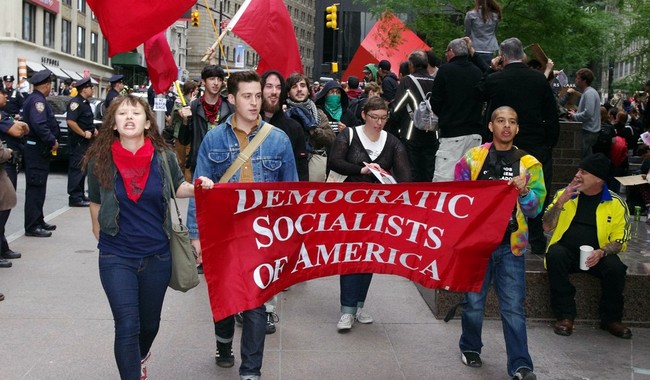
Chris Rabb won the Democratic primary in Pennsylvania’s 3rd Congressional District, and his self-identification as a democratic socialist matters. He ran against establishment forces and claimed endorsements from well-known progressive groups and figures. His victory all but guarantees a congressional seat in a district where Republicans did not even field a primary challenge. That sets the stage for a federal representative who openly rejects the party’s status quo and promises sweeping change.
Rabb attacked what he calls the “broken system that only works for the wealthy” and pledges to “guarantee families can access all the essentials we need to thrive.” He lists his preferred policy package under the label “Universal Basic Guarantees: Medicare for All, Housing, Food and Water, Free Transit, High-Speed Internet, Childcare, Income, Jobs.” Those are big promises delivered in tidy, appealing language designed to win votes. But attractive phrasing does not erase the massive costs and tradeoffs embedded in such a program.
On infrastructure and jobs, Rabb embraces “federal public works programs … for critical national efforts like infrastructure upgrades, green energy conversion, nature conservation, and more.” Central planning on that scale creates predictable inefficiencies, and it shifts resource allocation away from the private sector that actually produces goods and services. Public works can be useful when narrowly targeted, but turning them into a mechanism to fund broad social engineering invites waste and persistent budget pressure.
Climate policy is at the heart of his platform, and he frames it in urgent terms: “As we continue to face the increasing impacts of climate change, we need action now.” He adds, “Decarbonizing our economy is not just good for the environment and our health and safety, it will also strengthen economic opportunity for so many of our most vulnerable communities.” In pursuit of that goal, he supports “The Green New Deal,” “Green Union Jobs,” “Civil Climate Corps,” “No Hyperscale Data Centers,” and a “Just Transition to 100% Renewable Energy.”
These proposals sound noble until you test them against the realities of modern energy systems and complex supply chains. The talk of a “decarbonized society” glosses over how dependent health care, agriculture, manufacturing, and digital infrastructure are on affordable, reliable energy. Policies that abruptly restrict fossil fuels risk destabilizing the grid, raising costs, and causing real harm to families who can least afford it.
There is also a constitutional and institutional dimension that many supporters ignore. Rabb’s agenda would expand federal authority into nearly every corner of daily life, a shift from enumerated powers toward a centralized, rights-granting state. He even supports court-packing to shield those expansive policies from judicial review, a move that would undercut checks and balances and weaken the rule of law. That’s not theoretical; changing institutional guardrails changes incentives for generations.
Beyond the constitutional questions, the economics are stark. Universal guarantees on the scale Rabb proposes have incalculable price tags and create persistent fiscal obligations. Financing them means higher taxes, larger deficits, or cuts elsewhere—each choice brings real consequences for growth and opportunity. And while critics of capitalism often focus on inequality, broad entitlements can blunt incentives to work, save, and innovate, producing long-term stagnation rather than prosperity.
History offers cautionary examples. Large-scale, imprecisely targeted job programs tend to misallocate labor and capital, producing make-work projects that do more to consume resources than to build sustainable value. The New Deal’s employment programs were useful in context but never a substitute for a vibrant private sector. Similarly, central-planned transitions to new energy sources have often faced cost overruns, delays, and unintended shortages.
Rabb’s platform trades complex policy realities for moral certainty and bold slogans, and that is a problem when those policies come with heavy tradeoffs. Promising universal access to housing, health care, and guaranteed income is a political winner in a primary, but governing requires confronting tradeoffs, costs, and incentives. Voters should demand those practical answers rather than rely on slogans alone.
Now that Rabb is on a path to Congress, his influence will be felt far beyond his district. He will press for sweeping federal programs, push aggressive decarbonization, and advocate institutional changes that reshape American governance. The questions ahead are concrete: who pays, who decides, and what freedoms change in the process. Those are the stakes that matter as elected officials move from campaign rhetoric to votes in Washington.


Add comment