
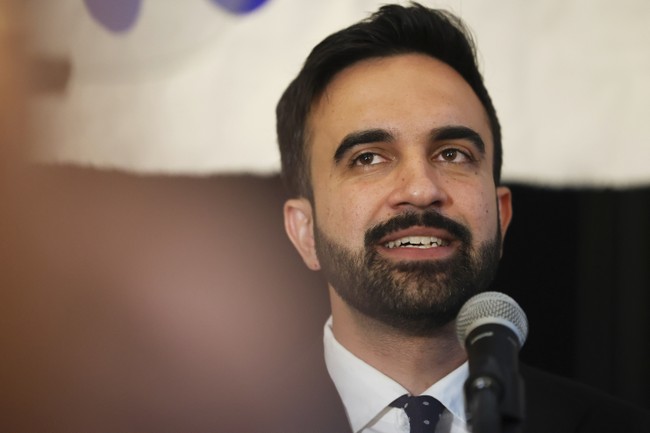
Zohran Mamdani is positioned to win New York City and his recent statements make clear he’s already acting like he owns the place, exposing a bold shift from cautious politician to confident ideologue. This piece lays out how his rhetoric reframes 9/11, how that fits into a broader strategy to silence critics by weaponizing labels like “Islamophobia,” and why that matters for the city’s future political and cultural direction. It also traces the roots of this approach back to past political gestures and shows how it feeds into a larger pattern seen in other Western cities. Finally, it highlights the risks for everyday New Yorkers as ideological battles move from think tanks into municipal power.
Already, Mamdani seems to be shedding whatever restraint he ever had, and that shift matters because New York is uniquely sensitive to symbolism and memory. He isn’t just debating policy tweaks about rent control or grocery stores; he’s reinterpreting trauma in a way that changes who can speak and who gets to set the terms for public life. That kind of reframing turns a shared national tragedy into a battleground for ideological legitimacy, and it’s dangerous when wielded by someone hungry for power. The stakes are plain: when public memory is repurposed for political advantage, consensus and civic trust erode fast.
The move to recast the worst terrorist attack in American history as a critique of the United States is a calculated power play. It’s meant to flip the script, turning attackers into something other than what they were and converting the event into a referendum on America itself. Humor has pointed at that absurdity, and even the Norm MacDonald joke highlights how surreal the effort to normalize this strategy can be. Satire lands because the underlying tactic is not irony but a serious attempt to rewrite the political narrative.
Labeling dissent as “Islamophobia” has become a blunt instrument for suppressing debate, and Mamdani’s rising confidence shows how effective that tool can be for someone courting a strongly left-leaning electorate. When calls to question ideology are shouted down as prejudice, honest, necessary scrutiny becomes off-limits. That creates a political environment where uncomfortable but crucial questions about doctrine, history, and intent never get asked in public forums. In turn, policy gets made without real pushback, and the balance of power shifts toward whoever controls the dominant narrative.
This trend didn’t appear out of nowhere. Some leaders, with good intentions or political calculation, told the country that Islam was a “religion of peace” after 9/11, and that phrase shaped the national response for decades. Whether motivated by unity or a fear of backlash, that message discouraged rigorous discussion and left many Americans second-guessing whether they could question doctrines or political aims tied to the faith. The result has been an environment where legitimate concerns get labeled as hatred instead of being addressed as policy and security issues.
Mamdani’s recent gestures fit squarely into that environment. He has publicly associated with figures whose pasts raise questions, and he appears unconcerned about the optics, suggesting he believes the city’s voters will tolerate or even reward that alignment. When candidates start embracing controversial spiritual leaders or signaling alignment with radical ideas, they change the tone of civic discourse. That’s how neighborhoods, institutions, and local government can gradually shift away from protecting broad civic values toward privileging narrower ideological commitments.
Framing critics as bigots is an old playbook for silencing opponents, and it’s a tactic designed to win elections by erasing the space for pushback. Convince enough people that opposition equals prejudice and you can reshape the electorate’s behavior. Europe offers cautionary tales where similar dynamics produced social outcomes many consider irreversible, and those lessons matter for New York. If voters prioritize identity narratives over practical concerns, policy follows, often in ways that worsen everyday life for ordinary citizens.
That’s the danger in a city as large and influential as New York: municipal decisions reverberate nationally. A mayor who normalizes the idea that dissenting views on ideology are inherently hateful makes it harder for mainstream institutions to function. Schools, law enforcement, and civic organizations rely on an ability to ask hard questions without fear of being branded bigots. Remove that capacity and you hollow out a functioning civic ecosystem, leaving power concentrated in ideological circles that answer to their base first.
At the same time, ordinary people are left on the sidelines as high-minded debates become litmus tests. The conversation pivots away from practical governance and toward cultural and ideological alignment. New Yorkers should care about who gets to define acceptable speech and what counts as legitimate public concern. When leadership rewards polarization over problem-solving, it’s residents who pay the price through higher costs, strained services, and frayed civic life.
Editor’s Note: The Schumer Shutdown is here. Rather than put the American people first, Chuck Schumer and the radical Democrats forced a government shutdown for healthcare for illegals. They own this.
Help us continue to report the truth about the Schumer Shutdown.


Add comment