
I’ll explain why Barack Obama’s response to the White House Correspondents’ Dinner shooting drew sharp criticism, note what was known about the suspect at the time, point out the missing context in Obama’s post, include the key quoted lines exactly as originally written, and keep the original embed markers where they appeared.
The shooting at the White House Correspondents’ Dinner produced a wide range of public reactions, and responses quickly became part of the story. President Donald Trump moved to reassure people and checked on the wounded, while others offered opinions that ran from conspiratorial to dismissive. The event itself forced a national conversation about motive, rhetoric, and responsibility.
Some reactions were extreme, with fringe voices claiming the incident was “staged” or a “false flag,” and others missed the mark entirely. Representative Jamie Raskin asked, “What rhetoric?” when challenged about years of heated partisan language aimed at Trump, a line that underscored how politicized the moment became. Those kinds of takes only heightened tensions instead of offering clarity.
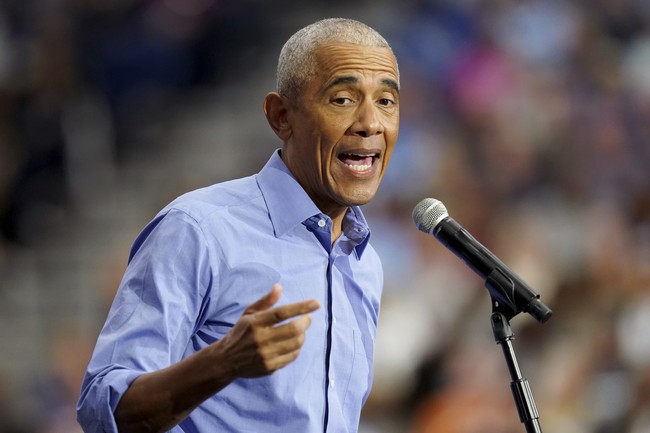
Barack Obama’s post on Sunday afternoon took a very different tack and quickly drew heat for what it did not say. The post read exactly: “Although we don’t yet have the details about the motives behind last night’s shooting at the White House Correspondents Dinner, it’s incumbent upon all us to reject the idea that violence has any place in our democracy. It’s also a sobering reminder of the courage and sacrifice that U.S. Secret Service Agents show every day. I’m grateful to them – and thankful that the agent who was shot is going to be okay.” That full paragraph stayed focused on condemning violence and praising law enforcement, and it avoided assigning political motive.
By the time Obama’s comment went up, reporting had already identified the suspect and outlined what he allegedly said about targeting Trump officials. A manifesto attributed to the shooter circulated, and it reportedly contained explicit statements tying his actions to political grievances. Reporting noted the suspect repeated attacks against Trump and used language suggesting influence by Democratic narratives.
The suspect allegedly wrote, “I am no longer willing to permit a pedophile, rapist, and traitor to coat my hands with his crimes,” Allen wrote, apparently referring to the president. That line, published in the manifestos circulated by law enforcement and media, was seized on by critics who argued the attack had an unmistakable political dimension. Observers who wanted a fuller public reckoning felt those details mattered.
Critics argued Obama’s statement, though well-intentioned, effectively erased motive by emphasizing a context-free plea to reject violence. The omission of any mention of the president or of the specific allegations against Trump struck many as a form of gaslighting, especially given how prominent the suspect’s alleged manifesto and statements had already become in the public record. For those watching, the difference between condemning violence and acknowledging political motivation is not trivial.
Supporters of Obama countered that a broad condemnation of violence and praise for the Secret Service were appropriate first responses. But opponents pointed out that ignoring the suspect’s stated reasons risks minimizing the role of sustained political attacks in creating a volatile environment. The clash over tone and focus quickly animated comment threads across social platforms and pundit shows.
Public reaction to political violence always splits along partisan lines, and this episode was no exception. Some conservatives saw Obama’s choice to avoid mentioning Trump as evidence of a double standard, arguing that political elites often downplay threats when the targets are conservatives. Meanwhile, some on the left wanted to avoid amplifying a perpetrator’s claims by repeating them in official statements.

When will this man go away?
He served as president for eight years, so now it is time for him to retire and go to Martha’s Vineyard or Chicago or wherever ! We really do not care what he thinks! I’ve never seen a president who couldn’t give up and go home like most presidents in the past have done!
Also, his wife!