
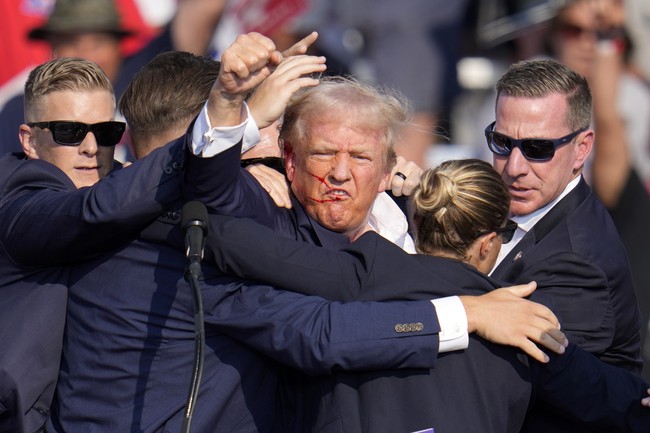
This piece looks at why three Republican presidents — Theodore Roosevelt, Ronald Reagan, and Donald Trump — survived attempts on their lives and how those events highlight the scale of their influence, outline the historic examples, and reflect on what surviving an assassination attempt can mean for a leader’s role and legacy.
President Donald Trump faced reporters with steady composure after the third attempt on his life in 21 months, answering a pointed question about why these attacks keep happening to him. He offered a considered comparison to other major figures in history, arguing that the most consequential leaders are the ones who face the worst threats. That perspective frames the attempt not as a sign of weakness but as evidence of impact and disruption.
Well… you know, I’ve studied assassinations, and I must tell you that the most impactful people, the people that do the most, you take a look at the people… Abraham Lincoln, the people who have gone through this, where they got ’em. But, the people that do the most, the people that make the biggest impact, they’re the ones that they go after.
They don’t go after the ones who don’t do much because they like it that way. And when you look at the people who have, whether it was an attempt, or a successful attempt, they’re very impactful people. Just take a look at the names. They’re the big names. And, uh, I hate to say I’m honored by that, but I’ve done a lot, we’ve done a lot. We’ve taken this country and we were a laughingstock for years, and now we’re the hottest country anywhere in the world. We’ve changed this country, and there are a lot of people who are not happy about that. So, I think that’s the answer, Peter.
That line of thinking puts Trump in the company of leaders whose policies and presence reshaped the nation and provoked strong reactions. Surviving an attack can amplify a president’s ability to pursue a bold agenda and to claim moral authority. From a Republican standpoint, such survival often becomes part of the narrative of resilience, reinforcing the conviction that their reforms were moving the country in the right direction.
Ronald Reagan is the clearest modern example of a president who survived an assassination attempt and then went on to extend his influence worldwide. The 1981 shooting by John Hinckley Jr. did not halt Reagan’s momentum, and his leadership afterward remained a defining force in bringing the Cold War to a close. Iconic moments like “Mr. Gorbachev, tear down that wall!” show how a recovered president can continue to steer global events and domestic politics alike.
The setting of Reagan’s shooting is a grim historical echo: the attempt occurred near the same Washington Hotel where a later attempt on Trump took place. Hinckley used a .22 caliber revolver in a bid to win attention from an actress, and the implications of what might have happened if Reagan had been killed are chilling to contemplate. His survival allowed conservative policies and a vision of American strength to persist and even expand.
Looking further back, Theodore Roosevelt’s brush with assassination in 1912 shows a different kind of toughness and public theater. Shot in the chest by John Flammang Schrankat, Roosevelt still delivered his speech with a bloody shirt and a manuscript pressed to his chest that slowed the bullet. He calmed the crowd, refused immediate medical evacuation, and pressed on with his message, illustrating a rugged style of leadership that resonated with many Americans.
Roosevelt’s career — from trust-busting and conservation to the Panama Canal and an assertive foreign policy — was defined by action and results. His survival allowed him to continue shaping institutions and policy in ways that still matter today, from national parks to regulatory precedents. That tenacity is part of the Roosevelt myth, and it explains why his name still carries weight when discussing presidential courage.
The pattern across these stories is clear: leaders who left big footprints were often targeted because they moved the country. Whether a bullet succeeded or failed, the attempt itself underscores the degree to which a president’s agenda can unsettle powerful interests and provoke dangerous impulses. From a conservative perspective, surviving those moments can harden resolve and validate the stakes of the fight for the nation’s direction.
Survival of an assassination attempt can become a political and moral turning point, a moment that tests institutions, law enforcement, and public resolve. It forces a nation to reckon with political violence while giving the leader an occasion to demonstrate steadiness and continued purpose. For Republicans who view strong leadership and national renewal as central goals, these outcomes often reinforce the mandate to keep pressing forward.
As America marks major milestones and debates its future, the experiences of Reagan, Roosevelt, and Trump form a thread about the costs and consequences of bold leadership. These incidents are reminders that change often invites resistance, sometimes violent, but that survival frequently offers an opportunity to deepen a leader’s imprint on the country.


Add comment