
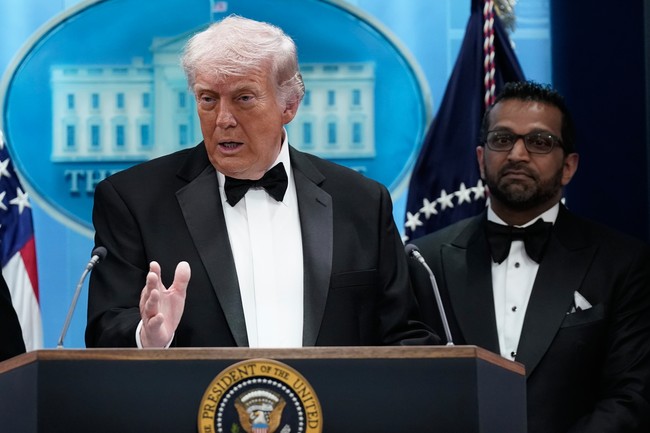
The White House Correspondents’ Dinner shooting shocked the nation, sparked concern for President Donald Trump and others at the event, and quickly revealed a streak of irresponsible reactions from the left and anti-Trump commentators who rushed to conspiracy theories and blame. This piece walks through the immediate response from the president, the strange quick-turning narratives about “false flags,” the tasteless hot takes from prominent critics, and the way mainstream and foreign outlets amplified confusion instead of calm. It highlights how rhetoric and partisan posturing can cloud judgment in crises and points to real signs that the attack was carried out by a deranged individual rather than a staged spectacle. The goal here is to stick to the facts on the scene while calling out those who irresponsibly stoked division in the immediate aftermath.
When word of the shooting at the White House Correspondents’ Dinner broke, the first reaction across much of the country was concern for those in the room, especially President Donald Trump. Trump spoke publicly within about thirty minutes, urging unity and action, and many observers noted how his briefing emphasized calm and solidarity. That simple act of leadership cut through a lot of the noise and reminded people why decorum matters in moments of crisis.
Still, as facts emerged — the alleged shooter was detained, a Secret Service agent reported being struck in the protective vest, and multiple videos documented what happened — some people immediately declared the incident a hoax. There were claims that it was “staged” or a “false flag,” even though tangible evidence contradicted those theories. Iran’s state media Press TV reported that “US activists” called it a false flag, a sign of how quickly misinformation crosses borders and fuels false narratives.
On social platforms the reflex to politicize was immediate. Some well-known figures jumped to wild conclusions or framed the attack through partisan lenses rather than acknowledging the simple reality of a violent act and the need for sober investigation. One viral reaction came from a high-profile commentator offering a reaction that many found juvenile and tone deaf in a moment when lives were at stake.
That reaction was obvious and unnecessary. Saying “shots fired” in the lead-up to a public roast at the Correspondents’ Dinner was a poor bit of wordplay to be shared after the fact, and mocking the situation played straight into chaos. People who want to remain credible during national emergencies avoid turning fear into a punchline and instead focus on verified information.
Then you had the spectacle at an alternative media party where a well-known anti-Trump operative publicly blamed the president for the violence. That moment — captured on video at Substack’s New Media Party — felt less like analysis and more like an attempt to score political points during an unfolding threat. That sort of opportunism not only demeans the victims but also feeds a growing public distrust of elite commentariat behavior.
The alleged shooter left a manifesto that used violent and obscene language about the president, calling him “a pedophile, rapist, and traitor.” Reports also link the suspect to a “No Kings” protest, suggesting an anti-establishment thread in his thinking. Those connections point to an individual motivated by radicalized views, not a carefully staged production designed for political theater.
Some Democratic officials tried to distance themselves from the rhetorical atmosphere that has surrounded the president for years, but those denials landed poorly. When Representative Jamie Raskin was asked about the heat of political rhetoric and replied, “What rhetoric?” the response felt like willful amnesia. The public remembers the escalatory language and sees the disconnect between statements and accountability.
Other examples of aggressive language were easy to point to, including a recent call from a leading Democratic House official for “maximum warfare” in political terms. That phrase, repeated in partisan contexts, shows how incendiary diction can normalize extreme metaphors that some unstable actors might interpret literally. The problem is not the occasional fiery word; the problem is a culture that treats battlefield metaphors as rhetorical cover for real-world consequences.
At a time like this, responsible leadership should be about reducing panic, ensuring investigations proceed without partisan spin, and calling out those who weaponize tragedy for clicks or clout. There will be a full accounting as authorities sort motive and method, but the immediate aftermath has already exposed how broken the public discourse can be when people choose spectacle over seriousness. The nation needs more steady voices and fewer commentators looking for theatrical angles when the situation demands clarity and compassion.

Add comment