
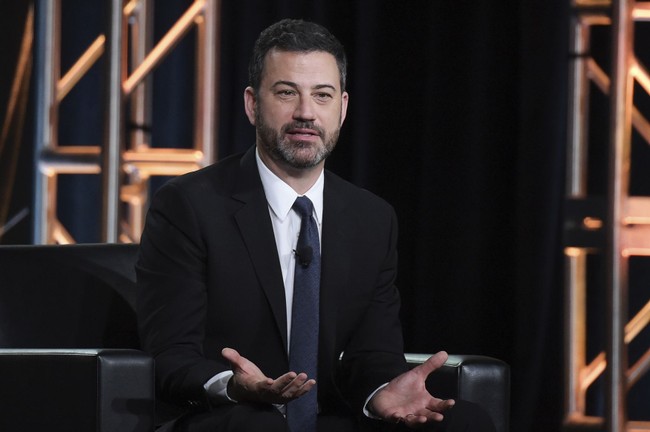
Jimmy Kimmel’s recent parody of a White House Correspondents’ Dinner crossed a line that shouldn’t be normal in any newsroom or late-night set, and it deserves blunt scrutiny. This piece examines the sketch, the exact words Kimmel used, the cultural effect of such jokes, and how those jokes can feed real-world violence. The goal here is to lay out the facts, preserve direct quotes, and show why this sort of humor matters beyond laughs. Readers will get an unvarnished look at the segment and the immediate fallout that followed.
Kimmel’s sketch targeted the First Family in a way that many found cruel and tasteless. During the parody he said, “Our First Lady, Melania, is here. Look at Melania, so beautiful,” the host said. “Mrs. Trump, you have a glow like an expectant widow.” That line landed as more than a punchline; it was an image invoked about a living wife and mother, aired on national television.
Late-night comedians have always pushed boundaries, but context matters when jokes repeatedly focus on a single family with violent language or imagery. Kimmel has used similar barbs for years, and this pattern hardens the cultural environment. When a public figure jokes about a president’s death or a First Lady’s widowhood, it normalizes extreme thinking for some viewers.
This normalization isn’t theoretical. Days after the sketch, an individual attempted violence at the real White House Correspondents’ Dinner. That timing exposes the risk of treating violent imagery as casual comedy. People with serious mental health problems can interpret persistent, dehumanizing insults as permission to act.
Kimmel also targeted the President with personal attacks in that same run of material, calling him a “delicate snowflake with the thinnest fat skin of any human being ever” and a “trembling drama queen.” Those exact words paint a picture of ridicule that goes beyond policy critique. It is personal, and that personal contempt contributes to a charged atmosphere where opponents are not just disagreed with but despised.
Criticism of the president is part of the free press, and satire has a role in a free society. But there is a difference between punching up with substantive critique and repeatedly reducing public figures to grotesque caricatures tied to death and violence. The sketch traded on shock rather than argument, and that shift matters when a segment reaches millions of viewers.
Kimmel has a track record of flame-outs and apologies, including instances when he reacted emotionally after controversy. He once said, “I do want to make something clear because it’s important to me as a human. And that is, you understand, that it was never my intention to make light of the murder of a young man,” he said, tearing up, voice cracking. “I don’t, I don’t think there’s anything funny about it.” Those words were presented after a different controversy, but they reveal a pattern: provocative remarks followed by regret once the fallout begins.
The real concern is how repetitive vilification seeps into culture. When mainstream media and comedy repeatedly label a sitting president with demonizing terms, they teach some people to see opponents as less than human. That erosion of basic decency has consequences beyond Twitter fights and ratings; it makes political violence more thinkable for certain unstable people.
Many viewers and commentators on the right see Kimmel’s routine as emblematic of a broader media problem: outlets and personalities treating political rivals not just as opponents but as targets for mockery that flirts with danger. That is why some conservatives argue for sharper accountability when public figures weaponize violent imagery, language, or fantasies about death.
At a minimum, public entertainers should consider the downstream effects of repeated violent jokes directed at living people and families. Mocking a First Lady’s appearance by invoking widowhood is not a clever bit of satire; it’s a rhetorical choice with consequences. When members of the media and entertainers amplify dehumanizing narratives, they erode the norms that reduce the likelihood of real-world harm.
The incident and its timing demand a conversation about responsibility in commentary and comedy, especially when national security and personal safety are plausibly implicated. Audiences deserve to know where lines were crossed and whether outlets will reflect on the culture their programming creates. That conversation has to be honest and direct, not hand-wringing platitudes after the fact.
Finally, it is important to keep specific examples and exact wording in view when assessing harm. The precise language used shapes public reaction and helps explain why some people reacted with alarm. Those words are now part of the record, and they should inform how we judge the responsibility of public entertainers and the media institutions that platform them.

Add comment