
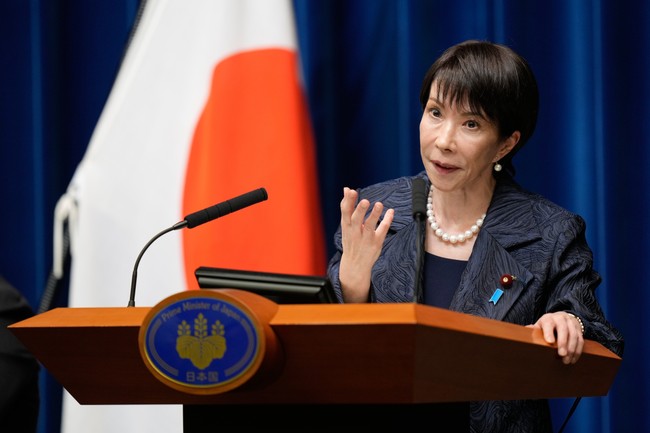
Japan has a new prime minister, Sanae Takaichi, and her rise signals a sharper U.S.-Japan partnership and a tougher stance toward China. This piece lays out what her leadership likely means for defense, regional alliances, Taiwan, economic challenges at home, and the immediate diplomatic choreography with Washington. Expect a return to policies inspired by Shinzo Abe, a push for stronger deterrence, and closer alignment with the Trump administration on security in the Indo-Pacific. Strategic moves on defense spending, constitutional change, and partnerships with the Philippines and other democracies will be central to her early agenda.
Sanae Takaichi won the premiership after the LDP formed a coalition and she became the party leader following a difficult election cycle. She is the first woman to hold Japan’s top political office and she brings a clear conservative outlook that recalls Shinzo Abe’s priorities. Her self-identification with Britain’s “Iron Lady” image signals a readiness to lead from the center of gravity of conservative national security thinking.
Beijing did not respond with congratulations but with calls for Tokyo to honor sensitive political commitments, especially around history and Taiwan. That reaction shows Beijing’s discomfort with Takaichi’s views and highlights the risk calculus now shaping Tokyo’s diplomacy. From a U.S. perspective, a firm Japanese partner is exactly what’s needed to counter coercive moves by the Chinese Communist Party.
Under the previous string of leaders, China steadily expanded military and gray zone operations near Japanese territory, exploiting gaps in resolve and coordination. Takaichi has signaled she will reverse that trend by hardening Japan’s posture and deepening ties with Washington. A return to Abe-style policies means Japan will prioritize deterrence and move away from postwar pacifist limitations.
One immediate policy thrust will be accelerating defense spending to reach two percent of GDP sooner than previously planned. That move is intended to build a more lethal, self-reliant Japanese military capable of denying aggression rather than merely reacting to it. It dovetails with American calls for allied burden-sharing and strengthens the collective posture of democracies across the Indo-Pacific.
Constitutional change is on the table as well, with Takaichi supporting revisions to Article 9 that would legitimize conventional war-fighting capabilities. That is a controversial step in Japan’s domestic politics, but it directly addresses the strategic reality posed by an assertive China. From a Republican viewpoint, a Japan able and willing to defend itself strengthens deterrence and reduces pressure on U.S. forces.
The Japan-Philippines defense arrangement that allows Japanese deployments to Manila is a blueprint for the kind of practical cooperation Takaichi will expand. Strengthening ties with democratic partners across Southeast Asia and Oceania helps blunt China’s dual-use infrastructure and maritime coercion. Strategic cooperation with regional partners will be a priority to keep sea lanes open and preserve the rule of law in contested waters.
Takaichi has also been explicit about Taiwan, calling it a valued friend and partner and urging closer security cooperation with like-minded Asian democracies. That clarity is a welcome shift from leaders who ducked hard questions about Taiwan’s defense role in regional plans. For the Trump administration, a firm Japanese stance on Taiwan offers clearer options and reduces strategic ambiguity that invites miscalculation.
Relations with South Korea are more uncertain, given Seoul’s current leadership posture and lingering historical disputes. Takaichi may adopt a pragmatic approach, cooperating where interests align while standing firm on issues that affect Japan’s security and dignity. If Seoul continues a pro-Beijing or anti-Japanese drift, Tokyo will likely press back diplomatically and seek stronger ties elsewhere.
President Trump and Prime Minister Takaichi are scheduled to meet in Japan ahead of a major regional summit, with defense talks at the top of the agenda. Their shared interest in robust deterrence and clearer alliance responsibilities points toward rapid coordination on posture and planning. Americans who prioritize secure alliances should welcome that kind of upfront, strategic alignment.
Domestically, Takaichi faces economic headwinds: higher living costs, stagnant wages, and political fragility in a coalition government. She will need to balance bold security moves with policies that stabilize the economy and reassure voters about daily life. Managing those pressures while holding a coalition together will determine how durable her premiership proves to be.
Takaichi entered office with stronger initial approval than recent premiers, and world leaders have been quick to note the shift in Tokyo. If she can navigate coalition politics and deliver both economic relief and credible defense steps, Japan could reclaim strategic momentum in the region. For the U.S., a revitalized, militarily capable Japan aligned with American goals is a vital asset in a tougher era of great power competition.

Add comment