
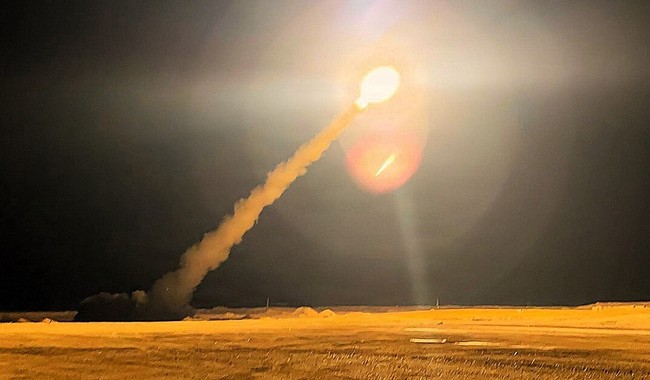
U.S. Strikes Pound 30 ISIS Targets in Syria — Dozens Dead
The United States carried out a concentrated air campaign in Syria this February, hitting 30 ISIS-related targets and reportedly eliminating at least 50 terrorists, while also striking more than 100 infrastructure sites with precision munitions. CENTCOM framed the operation as part of sustained pressure to prevent an ISIS resurgence, and political and military leaders made clear the strikes answered a deadly December ambush. At the same time, carrier groups and other forces are converging in the region amid heightened tensions with Iran. This piece lays out what happened, the official rationale, and how Republican leadership presents the action as necessary for American security.
The Pentagon said these strikes came after a sequence of earlier attacks and were tied directly to Operation Hawkeye Strike, launched in response to the December assault that killed U.S. service members and a civilian interpreter. Military officials emphasize precision and coordination, noting fixed-wing, rotary-wing, and unmanned platforms all played roles in dismantling ISIS positions and logistics nodes. From a Republican angle, this is chaos response and deterrence: use overwhelming force where necessary, punish terrorists decisively, and show resolve to dissuade future attacks.
CENTCOM described the targeting as aimed at degrading ISIS infrastructure and weapons storage across multiple sites. The command’s statement underlines sustained pressure rather than one-off retaliation, which aligns with a strategy of denying safe havens and disrupting reconstitution efforts. Conservative policymakers are inclined to view this approach as smart power: relentless military pressure combined with partnerships that make America and allies safer.
Here is the CENTCOM statement that laid out the operational details and context:
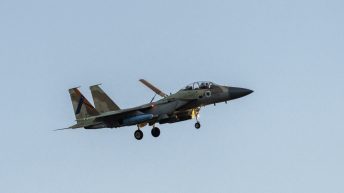
U.S. forces struck ISIS infrastructure and weapons storage targets with precision munitions delivered by fixed-wing, rotary-wing, and unmanned aircraft.
CENTCOM forces previously conducted five strikes against an ISIS communication site, critical logistics node, and weapons storage facilities, Jan. 27 – Feb. 2.
Operation Hawkeye Strike was launched in response to a Dec. 13 attack on U.S. and Syrian forces in Palmyra. The ISIS ambush resulted in the death of two U.S. service members and an American interpreter.
Officials reported at least 50 confirmed enemy fighters killed and scores of infrastructure targets struck with hundreds of precision munitions. That kind of tally is meant to send a clear message: attacks on American forces will not go unanswered. For Republican strategists, these operations also underline the administration’s willingness to use calibrated but forceful military options to protect troops and national interests overseas.
Admiral Brad Cooper, the CENTCOM commander, framed the strikes as part of a long-term campaign to prevent ISIS’s return. He emphasized coordination with coalition partners and positioned the operations as a stabilizing element for the region and for U.S. national security. The tone from the military reinforces a classic conservative policy line: maintain pressure abroad so threats do not metastasize and require bigger, costlier interventions later.
“Striking these targets demonstrates our continued focus and resolve for preventing an ISIS resurgence in Syria,”
“Operating in coordination with coalition and partner forces to ensure the enduring defeat of ISIS makes America, the region and the world safer,” he added.
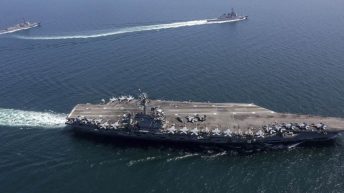
There is more military activity in the wider theater, with additional carrier strike groups and assets moving into position as diplomatic tensions with Iran persist. Republican commentary stresses that military posture must be robust while diplomacy proceeds, because adversaries only respect credible force backed by the will to use it. That balance—strength on the table, pressure in place—is the message being conveyed.
The strikes are explicitly linked to retribution for the December ambush that cost American lives, a point made repeatedly by leaders tracking the operation. Secretary of War Pete Hegseth made public statements insisting those responsible would be held accountable and that U.S. forces would deliver consequences for attacks on Americans. That promise and its execution fit a conservative narrative of deterrence through accountability.
Other embeds and public messaging accompanied the operational reports, illustrating the administration’s effort to show resolve and to keep the American public informed of kinetic actions against terrorist networks. Those public displays serve dual political purposes: they reassure voters who prioritize national security, and they warn hostile actors against further aggression. For Republican supporters, these strikes reflect a clear-sighted foreign policy that pairs force with purpose.
President Trump reinforced the hard-line posture in a public statement warning terrorists they would face increasingly severe consequences for targeting Americans. The declaration was blunt and unapologetic in tone, designed to underline the administration’s commitment to protecting troops and American interests abroad. Such language resonates with a constituency that wants leaders who will use all appropriate means to keep the country safe.
All terrorists who are evil enough to attack Americans are hereby warned — YOU WILL BE HIT HARDER THAN YOU HAVE EVER BEEN HIT BEFORE IF YOU, IN ANY WAY, ATTACK OR THREATEN THE U.S.A.
The recent strikes and associated messaging fit a broader Republican playbook: act decisively when necessary, communicate resolve clearly, and rely on military advantage to preserve peace through strength. The operations in Syria are a stark reminder that the fight against transnational terrorism is ongoing, and that willingness to use force remains a core tool of U.S. strategy. Editor’s Note: Thanks to President Trump and his administration’s bold leadership, we are respected on the world stage, and our enemies are being put on notice.

Add comment