
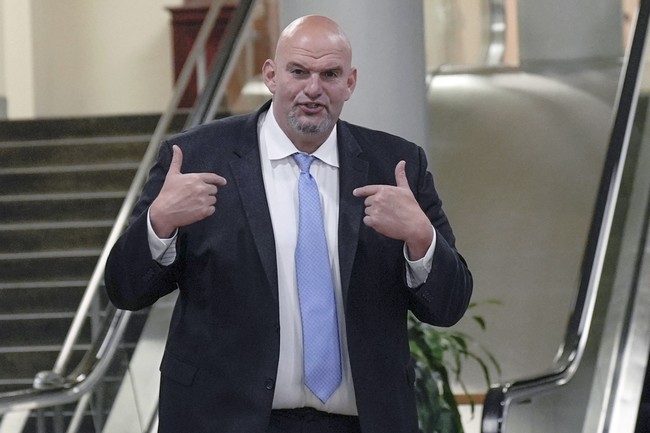
This article looks at Senator John Fetterman’s candid admission that he “should’ve quit” his 2022 Senate run, his struggle with stroke and depression, and whether a moderate Democrat like him has a future in a party that often chases the fringe. I explain the personal toll of his health crisis, the mental health care that helped him, and why his independence frustrates party leaders while drawing cautious respect from conservatives. The piece keeps his quoted passages intact and places the original embed where it appeared.
John Fetterman has surprised many on both sides by owning the cost of his decisions. He now says plainly that, in hindsight, he “should’ve quit” the 2022 race after his stroke made campaigning and public speaking so difficult. That admission strips away political theater and highlights a real human moment that voters and colleagues can relate to or criticize without the usual spin. It also forces his party to confront whether it protected a candidate or pushed him for electoral reasons.
What followed was a private, brutal period that most Americans never saw. After the stroke, Fetterman struggled with depression that predated his illness and worsened in its wake, and he says his wife insisted his campaign team get him to the hospital when she noticed something seriously wrong. The campaign continued publicly, but behind the scenes he faced cognitive and emotional hurdles that would challenge anyone, politician or not. Those realities matter because the country deserves elected officials who can do the job, but they also deserve compassion for people who face real health crises.
He writes candidly about losing routine, withdrawing from music, coffee, and conversation, and sinking into a dark place. These details are stark and honest: they show how mental illness can wreck daily life even for someone who has just won one of the highest offices in the land. For conservatives who value resilience and responsibility, Fetterman’s transparency is awkward but useful: it reminds us that people in power are still human and that political calculation sometimes overrides what’s best for the person. He notes that after being sworn in, he set up a basement apartment where he would “welcome the dark” each evening, a scene that alarms and evokes sympathy at once.
His account also pulls no punches about the political attacks he faced from his opponent and parts of the media during the campaign. Those attacks deepened his depression and fed a spiral that culminated in inpatient care at Walter Reed in February 2023. The sequence matters because it highlights how brutal modern campaigns can be and how the consequences extend far beyond headlines and polls. The political environment that celebrates hardball tactics needs to shoulder some responsibility when real people collapse under the pressure.
In the darkest moment, a mental health professional spoke four words that redirected him: “Children need their daddy.” Those words opened a way back to family and treatment, and within weeks he was home and working on recovery. That private turning point is a powerful example of how straightforward, human truths can break through clinical despair. It also offers a reminder that family and simple motivation often matter more than punditry or political calculus when someone’s life is at stake.
Fetterman makes it plain he does not see himself as bound to a partisan script. He writes, “I have never viewed my political party as an iron shackle adhering me to the party line. And I don’t take positions for my own self-interest. I take positions based on what I believe is right. I know this has cost me support from a significant part of my base, and I’m well aware that it may cost me my seat. I’m completely at peace with that.” That stance irritates the party elite, but it resonates with voters who are tired of rigid tribalism. For Republicans, his independence is an opening: it shows even elected Democrats bristle at ideological purity tests and may sometimes side with commonsense policies.
Observers on the right who initially dismissed Fetterman because of his post-stroke speech struggles have changed some views as they watched him stand for issues like support for allies abroad and criticisms of his own party’s excesses. He has not become a conservative, nor should he, but his willingness to speak against radicals inside his party creates political breathing room. For conservatives evaluating potential allies or simply seeking honest governance, that kind of independence is worth noting even if they disagree on policy.
This continued even after I was sworn in as a senator in January. I found a dark apartment in the basement of a building in Washington, and when I returned each night at around 5 p.m., I’d lock the door, lie on my thin mattress on the floor, and welcome the dark. In the morning, I’d wait until the last second to get dressed. Outside of going to work and coming home again, I didn’t have any routine. I had stopped listening to music long ago. I wasn’t even getting coffee in the morning.
By February, I wasn’t eating, and I wouldn’t talk to anybody.
Fetterman’s story raises questions about how parties handle vulnerable candidates and what standards voters should expect. It forces a conversation about compassion, competence, and the political calculations that sometimes put victory ahead of a person’s welfare. The debate over his future will continue, but the personal truth he lays out demands more than partisan reflexes; it asks for better judgment from leaders and clearer priorities from voters.

Add comment