
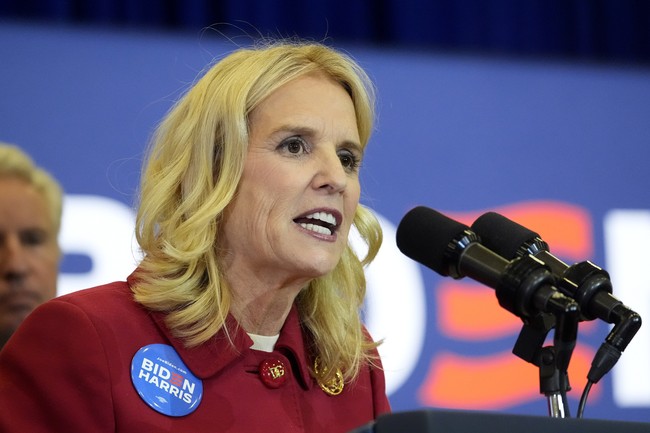
This article examines the ongoing public feud between Kerry Kennedy and her brother Robert F. Kennedy Jr., recounting Kerry’s harsh public words, RFK Jr.’s restrained replies, recent CNN remarks about a decades-old anecdote, the viral snake video that reignited attention, and the broader political tone that frames these family conflicts in the current Republican viewpoint.
The Kennedy family feud has become a public spectacle, and Kerry Kennedy’s repeated attacks on her brother keep drawing headlines. Her August interview lines were especially brutal and hard to ignore. She said, “I’m outraged and disgusted by my brother’s gaudy and obscene embrace of Donald Trump,” and “I completely get out and separate and dissociate myself from Robert Kennedy Jr. in this flagrant and inexplicable effort to desecrate and trample and set fire to my father’s memory.”
Those words signaled more than disagreement; they were a public disowning tied to politics. For Republicans and conservatives watching, the spectacle underlines something familiar: elite families prioritizing partisan purity over loyalty. When family members weaponize their surname to score political points, the result looks like performative virtue signaling rather than genuine principle.
RFK Jr. has consistently taken a measured tone in response, refusing to escalate the family drama into a media circus. He answered at the time, “I understand that they’re troubled by my decisions. I love my family. I feel like we were raised in a milieu where we were encouraged to debate each other and debate ferociously and passionately about things and still love each other.” That reply showed restraint and an attempt to keep private relationships from turning into daily fodder for cable shows.
Fast forward to now, and the same dynamic repeats with Kerry revisiting the issue on CNN. The network prompted a recollection about her brother’s connection to nature, and Kerry offered a shocking anecdote alleging an incident from decades earlier. She described a scene in which their brother supposedly held a snake in one hand and his infant son in the other, then tossed the snake into a pool where children were present, a story offered as evidence of unfitness.
That anecdote landed in the context of a more recent, fully documented moment: a viral video from late May showing RFK Jr. handling black racer snakes on the patio of an administration official. The footage stirred commentary across the political spectrum and provided fresh fuel for critics eager to link past claims with present behavior. What matters here is how anecdotes and viral clips are picked up and amplified into broader narratives about character and suitability for office.
Kerry Kennedy had an opportunity to share fond stories about a shared upbringing and an appreciation of nature, but she chose to focus on a sensational allegation to score political points. That choice says more about the teller than the subject in many readers’ eyes. In a Republican reading, it’s evidence of the same tribal reflex that brands anyone who crosses partisan expectations as a traitor.
https://x.com/OutFrontCNN/status/2066684320232980963
RFK Jr. again responded in a way that avoided escalation and landed a pointed critique of the emotional drivers behind his family’s attacks. He aimed his comment at partisan behavior and its consequences for healthy discourse. His message emphasized enduring family bonds and suggested that political disputes should not erase personal history or the principles taught at home.
The broader pattern is predictable: when a well-known family breaks publicly over politics, the press treats it like a morality play and the tribe opposite the family’s public stance cheers the split. For conservatives watching, the Kennedys’ public disputes are a case study in how elite circles police ideological conformity. The result is often less about policy and more about signaling who belongs within acceptable political company.
It’s worth noting that these disputes play into larger cultural debates about loyalty, media spectacle, and the weaponization of family status. The audience sees name recognition leveraged to make cultural claims, and the content is consumed less as a sober assessment than as partisan theater. That is why restrained answers—like RFK Jr.’s—resonate differently than theatrical condemnations.
At the same time, the underlying political shift is clear: Robert F. Kennedy Jr. now serves in the Trump administration as Secretary of Health and Human Services, and that role intensifies scrutiny from lifelong Democratic family members and allies. The friction is partly about policy and partly about identity, and both sides understand how public statements shape reputations. For Republicans, the takeaway is that political courage can invite personal blowback, and surviving it without descending into mudslinging is a point in favor of those who hold firm.
Public family battles are rarely about simple right and wrong, but they do reveal values in action. When relatives choose broadcast condemnation over private disagreement, they expose priorities to a skeptical public. That exposure matters in a political era where character claims, viral moments, and family histories are all pressed into service for or against public figures.
One final point remains clear: the media will continue feeding off family fractures because the audience keeps tuning in. In that environment, measured replies and a refusal to retaliate often carry more weight than dramatic denunciations. Republicans watching this particular saga see both the danger of grandstanding and the value of staying above the fray.


She’s huge idiot with mental issues!