
The Senate map in 2026 looks brutal for Democrats, and this piece breaks down why Republicans are positioned to hold the majority: the math of seats up, the limited number of true pickup opportunities for Democrats, the threat to vulnerable Democratic seats, and recent state-level developments that underscore GOP strengths and Democratic scrambling.
Josh Kraushaar captured the basic reality bluntly: “This is an extraordinarily tough Senate map for the Democrats. Even though the party is in a very historically favorable national environment, the reality is it would take a tsunami for Democrats to win more than two Senate seats.” That quote matters because it comes from a congressional specialist who’s watching the map, not a partisan talking point. The numbers tell the same story: Republicans control a 53 to 47 majority and 35 seats are on the ballot this cycle, which is a high hurdle for the minority party to climb.
https://x.com/RCPolitics/status/2066557851812626433?s=20
Democrats need a net gain of four seats to seize control, and only a sliver of Republican seats are realistically competitive. Two GOP-held seats—Maine and North Carolina—look close, while many other GOP seats are in states Donald Trump carried by double digits. Winning multiple double-digit Trump states in a single Senate cycle is historically rare and would require a national wave the polls do not currently show.
Democrats also face the risk of losing seats they now defend. Florida flipped in 2018 even amid a favorable Democratic environment, and this year vulnerable blue-state incumbents could be in trouble in Georgia, Michigan, and New Hampshire. On top of that, Republican campaigns anticipate a substantial fundraising advantage that will translate into messaging and ground game resources where they matter most.
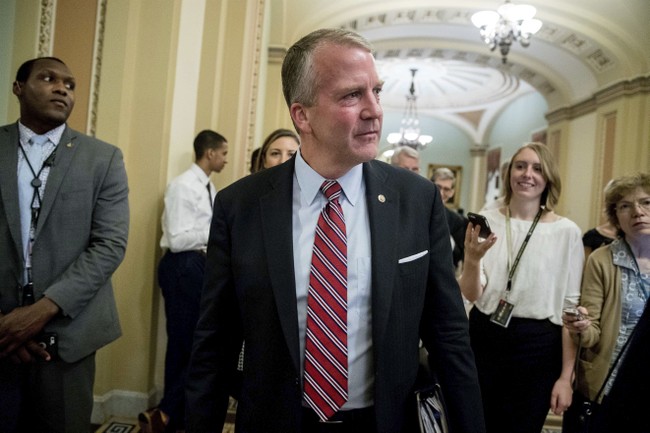
Turn to Alaska, where Sen. Dan Sullivan faces a rematch with former Rep. Mary Peltola in a state with a unique voting system and strange maneuvering from the opposition. The state’s ranked-choice setup complicates the calculus, and Democrats have tried tactics to exploit name confusion on the ballot. Officials struck a candidacy down for being filed “not in good faith” and intended “with the purpose of confusing or misleading the electorate,” which illustrates how chaotic opposition strategies can backfire in an already unusual electoral environment.
The 2025 Virginia results showed how unusual landslides can be localized; Democrats won big there, but matching that across multiple Trump states is a different challenge. State-level blowouts seldom translate into national Senate pickups when the map is stacked against you, and Alaska highlights the inventive but risky moves Democrats are attempting to offset structural disadvantages.
Georgia remains critical. The Republican nominee locked up after a runoff, and the GOP now has a clear challenger to take on Sen. Jon Ossoff, who has been a formidable fundraiser. Ossoff’s cash on hand dwarfs his opponent’s, and while Georgia is still a battleground that can swing, fundraising and incumbency advantages make this a tough climb for the GOP pick. Polls show competitiveness, but cash and organization are decisive in close statewide races.
Maine is another focal point where national attention has sharpened on the Democratic playbook and its oddities. The primary produced a controversial opponent to Sen. Susan Collins who has a long trail of problematic statements and behavior, which Republican strategists are using to squeeze the race. Accusations of radical coaching and a manufactured working-class image have followed his candidacy, and polling has tightened in ways that suggest the controversy is doing real damage to his standing with voters.
Open seats in traditionally red states also matter. In Montana, Steve Daines’ late retirement shuffled the field and prompted Democrats to back an “independent” to try to split the center-left vote. That maneuver, sometimes called the “Indy Imitation Game,” is meant to obfuscate party lines and create single-file opportunities against GOP nominees. But when official party nominees refuse to yield, the strategy collapses and the state’s conservative lean reasserts itself.
Nebraska shows the same pattern of Democrats planting or backing nominal independents to muddy races in reliably Republican terrain. High-profile Republican surrogates have called these efforts deceptive, and the state’s partisan baseline remains firmly favorable to GOP candidates. Where the electorate is heavily tilted, those tactics rarely change the outcome; they mostly illustrate the desperation of political operatives running out of paths to victory.
All of these developments add up to one clear operational advantage for Republicans: a manageable defense and the ability to focus resources where they matter. The Democrats must pick up four seats to win control, must hold all their own vulnerable seats, and are increasingly relying on risky and sometimes embarrassing tactics to manufacture opportunities. That combination makes the map look more favorable to Republicans than many headlines suggest.
Given the partisan geography, fundraising gaps, and the high number of GOP-held seats in Trump-won states, Republicans are well placed to defend the majority. The coming months will test whether Democratic gambits and high-profile fundraising can overcome structural realities, but current conditions point toward the GOP maintaining its Senate edge.



Add comment