
The GOP faces a turnout problem after the 2025 mid-midterms, and this piece argues the party needs a focused, Trump-centered plan for 2026 that emphasizes affordability, aggressive messaging against Democratic leaders, and energetic rallying to motivate wavering conservative voters.
The GOP Needs a ‘Strategery’ to Boost Its Voters’ Turnout for 2026
Recent midterm results showed that Republican turnout alone won’t always win competitive districts when the Democratic base is highly motivated. Many potential GOP voters are frustrated with persistent inflation and economic strains, and some have even misattributed those problems to prior GOP administrations. That confusion creates a communications challenge the party must correct before 2026.
The Trump political team has signaled a heavy focus on affordability heading into the next cycle, with promises aimed squarely at energizing voters worried about pocketbook issues. Public talk of $2,000 tariff rebate checks is meant to grab headlines and redirect the economic debate back toward the administration. Those moves are classic political theater designed to blunt Democratic narratives and rally the base.
https://x.com/cjwarnke/status/1989345970837168275?t=iVbIsBvYYssjeoborRmkQg&s=09
Part of the remedy is more public-facing Trump events, the kind of high-energy rallies that historically drive turnout among reliable Republican constituencies. The campaign plans a midterm mini-Republican convention centered on Trump, an experiment that relies on his capacity as a showman to headline and unify messaging. If past rally effects hold, that visibility could help tip tight Senate and House contests by lifting marginal GOP voters.
But rallies alone aren’t enough; the GOP also needs a sharper messaging strategy that directly ties Democratic policies and leaders to economic pain and rising crime. Republicans shouldn’t shy away from pointing out the policy choices that have worsened affordability and strained local communities. Hitting those themes consistently helps make the stakes of 2026 tangible for swing voters.
Negative campaigning must be a deliberate part of the playbook. Political pros know that well-executed negative attacks often move the needle more than broad positive ads. The party should pick specific targets and run disciplined messaging that resonates at the local level, taking care to make critiques personal and concrete so voters can easily connect cause and effect.
Saul Alinsky’s tactical advice remains useful even when borrowed from the left:
Alinsky applied this rule in the context of campaigns against corporations. The campaign is not against an impersonal legal entity – it’s against a person. ‘John L. Lewis, the leader of the radical CIO labor organisation in the 1930s, was fully aware of this, and as a consequence the CIO never attacked General Motors, they always attacked its president, Alfred ‘Icewater-In-His-Veins’ Sloan; they never attacked the Republic Steel Corporation but always its president, ‘Bloodied Hands’ Tom Girdler…’
Republicans should consider using the same mechanics: pick the target, freeze the image, personalize the story, and polarize the contrast. That approach is not about cheap shots; it’s about making political accountability recognizably tied to real people whose decisions have consequences for everyday Americans. Voters respond when they can point to a clear cause for their frustrations.
There are several natural targets for personalized messaging: the president, congressional leaders, and prominent local figures whose policies or rhetoric clash with mainstream voters’ interests. Naming those figures and showing the direct effects of their policies on jobs, inflation, public safety, and local services gives Republicans simple, repeatable talking points. That repetition matters in persuading and motivating undecided or lukewarm conservative voters.
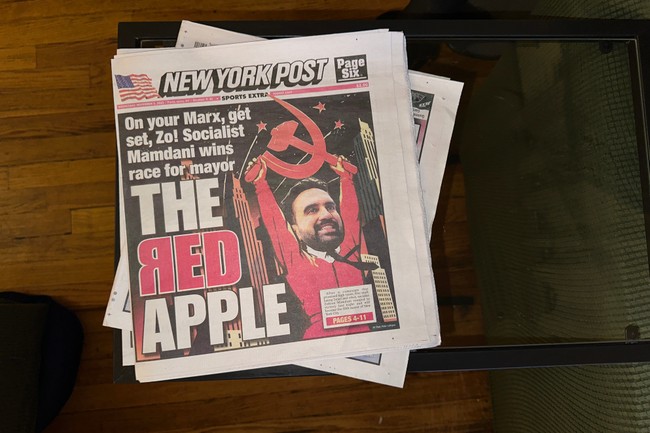
In New York, activists are already aiming at a left-wing mayoralty and the figures associated with it, which provides a template for local personalization of national themes. Congressional Republicans are testing similar approaches in battleground races, and those contests will be important proving grounds for messaging techniques that could scale nationwide. Turning scandals or policy failures into clear, memorable narratives helps drive turnout.
Beyond messaging and rallies, operational basics still win elections: fundraising, voter contact, and smart use of redistricting advantages remain central. The party is raising money and preparing ground games that could benefit from better coordination with national themes. If the GOP combines disciplined negative messaging with energetic voter outreach, it can reclaim momentum for 2026.
There’s a year until the midterms, which in politics is both a long time and a tight deadline for action. The party needs to sharpen its arguments about affordability, double down on targeted critiques of Democratic leaders, and put Trump-style visibility where it helps most. With a coherent mix of showmanship, focused attacks, and solid ground operations, Republicans can convert frustration into votes and improve turnout where it matters most.

Add comment