
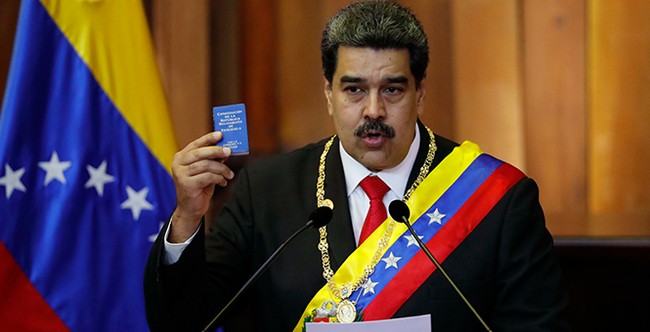
The U.S. move to brand Venezuela’s Cartel de los Soles as a Foreign Terrorist Organization, María Corina Machado’s public appeals to the military, and comments from Donald Trump all came together in a tense, time-sensitive moment that could shape Caracas’s immediate future.
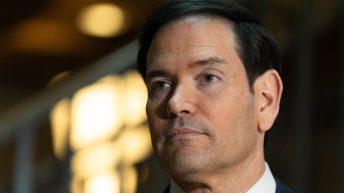
Secretary of State Marco Rubio announced that the Cartel de los Soles will be designated as an FTO, with the designation set to take effect on November 24, 2025. That step criminalizes the cartel’s leadership and reframes senior members of Venezuela’s security apparatus as internationally sanctioned terrorists. The timing of the announcement, dropped late on a Sunday, suggests a strategic push to change incentives for military officers and political actors in Venezuela.
@StateDept intends to designate Cartel de los Soles as a Foreign Terrorist Organization (FTO). Headed by the illegitimate Nicolás Maduro, the group has corrupted the institutions of government in Venezuela and is responsible for terrorist violence conducted by and with other designated FTOs as well as for trafficking drugs into the United States and Europe.
The State Department bulletin explains that the Cartel de los Soles is led by Nicolás Maduro and other high-ranking figures within what it calls an illegitimate regime. It says the cartel has corrupted Venezuela’s military, intelligence services, legislature, and judiciary, and that it works with other designated FTOs, including Tren de Aragua and the Sinaloa Cartel. Those findings matter because they link state power to transnational criminal and terrorist activity, giving the U.S. legal basis for a much tougher posture.
The U.S. has been moving forces into the southern Caribbean, and the arrival of Carrier Strike Group 12 centered on USS Gerald R. Ford changes the calculus on the ground. A credible military presence alters the bargaining environment; it gives Washington leverage while increasing pressure on Caracas. That presence is not a show of weakness; it is a signal to potential defectors inside the Venezuelan security apparatus that the option to switch sides or stand down is now more real.
The timing also overlapped with signals from other high-profile figures. One such signal came from President Trump, who commented that talks with Maduro “may be coming” just an hour after Rubio’s announcement. That sequence looks coordinated, not accidental, and it feeds the narrative that the U.S. is simultaneously applying diplomatic, economic, and military pressure to force a decision in Caracas. If the goal is a negotiated exit or peaceful transfer, the FTO designation changes the risk calculus for senior officers protecting the regime.
María Corina Machado, a Nobel Prize laureate and opposition leader, has begun direct broadcasts to Venezuela’s armed forces urging them to lay down their weapons when a decisive hour arrives. Her appeal is stark and designed to reach rank-and-file soldiers as well as officers who might be weighing their future. She framed the choice as moral and historical, insisting that those who carry out orders against their people will be judged by history, the law and Venezuelan citizens.
The FTO label carries legal consequences that reverberate beyond immediate arrests; it affects negotiations, surrender terms, and how the U.S. treats captured officers. For career officers who hope to negotiate a deal and avoid being treated as common narcos, November 24 becomes a hard deadline. If military leaders can secure assurances before that date, they might preserve options; if not, the label makes exile or prosecution far riskier.
Cartel de los Soles has deep historical roots tied to the military and predates both Hugo Chávez and Nicolás Maduro. It operates as a military-style organization with links to guerrilla groups and Colombian cartels, and it has long been implicated in drug trafficking into Europe and the United States. Recognizing it formally as an FTO acknowledges those ties and elevates them to a national security issue rather than merely a criminal one.
“What is going to happen is already happening. That decisive hour is imminent. Act now, at this very moment. Lower your weapons, do not attack your people, make the decision today to stand with Venezuela’s freedom when the precise hour arrives.
The worst hostages are those who are forced to carry out this barbarity. Those who obey infamous orders, ruining the lives of their own brothers. They feel guilty. They cannot look their children or their mothers in the eyes.
The position each one of you takes will mark your life forever. History, the law and the Venezuelan people will be your judges!”
The dynamics now are classic coercive diplomacy: present credible force, offer a clear pathway for surrender or defection, and tighten legal consequences for refusal. If the military fractures, some units will fight while others melt away or try to negotiate safe passage. Those calculations will determine whether Venezuela moves toward a negotiated transition or a more violent rupture.
Speculation about back-channel talks and last-minute bargains will continue until the November 24 effective date passes. For those watching the region, the question is whether Maduro will leave, fight, or be forced out by internal collapse. The confluence of diplomatic designation, military posture, and public appeals to the armed forces has created a narrow window where decisions matter in tangible, immediate ways.
Add comment