
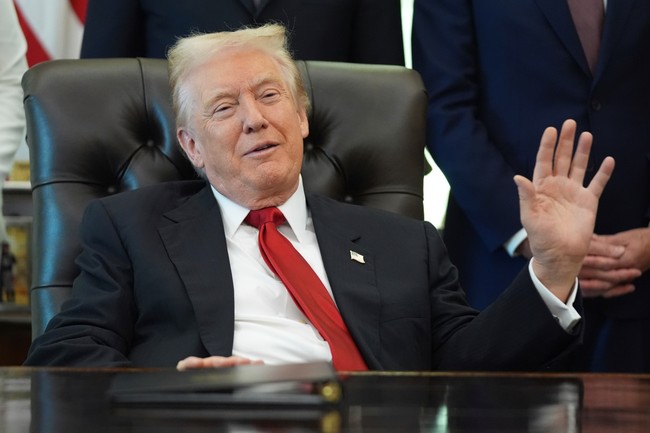
The president publicly urged House Republicans to release all Jeffrey Epstein-related documents, framing the demand as a way to expose a Democratic stunt and move past what he calls a hoax; Republicans are weighing the political and legal fallout as the House prepares to vote and the party debates whether to play along or call the Dems’ bluff.
President Trump used his platform to push House Republicans to make the Epstein records public, arguing transparency defeats the Democrats’ political theater. He said the party should vote to release the files because there is “nothing to hide,” and claimed the whole affair is a partisan ploy designed to distract from Republican successes. That message landed as the House prepares a vote on disclosure and many conservatives are watching for how leadership and rank-and-file members respond.
The president framed the Democrats’ sudden interest as selective outrage. He noted that when Democrats controlled much of government during the prior administration, they did not pursue these files aggressively, suggesting their current push is tactical rather than principled. From a Republican view, the timing looks engineered to shift attention away from issues like government shutdowns and the GOP record on taxes and economic growth.
Trump warned members not to be manipulated by what he calls the Epstein “TRAP” and singled out some Republican lawmakers he believes are being used by the opposition. He urged the party to focus on tangible accomplishments instead of getting hung up on a spectacle that could hand Democrats talking points. That warning came with a reminder to prioritize political strategy over headline-chasing investigations that may benefit the other side.
The president’s exact wording was blunt and specific: “House Republicans should vote to release the Epstein files, because we have nothing to hide, and it’s time to move on from this Democrat Hoax perpetrated by Radical Left Lunatics in order to deflect from the Great Success of the Republican Party … ” Those words anchored a broader argument that Democrats are weaponizing the subject for short-term gain. Republicans sympathetic to the message see disclosure as a way to end the conversation on their terms.
Republicans also point to missed opportunities when Democrats had control and could have released records earlier if they believed them damaging. That historical fact is used to question motives now and to argue that the timing proves political calculation. Making the files public, from this perspective, is a way to prove there was never anything substantive and to expose the partisan showmanship.
Not everyone in the GOP agrees on the tactic. Some members argue the files could contain politically useful material and should be examined carefully; others fear a messy release could produce unexpected leaks or fuel a narrative the left will exploit. The debate is about risk management: whether transparency will neutralize the issue or amplify it in ways that hurt Republicans in the near term.
There have been gaffes on the Democratic side that Republicans use as ammunition, from redaction stumbles to posts they later deleted when facts didn’t line up. Conservatives point to those mistakes as evidence of sloppy, opportunistic behavior rather than genuine investigative urgency. That line of attack aims to flip the spotlight back onto the opposition and portray Democrats as careless ideological warriors rather than impartial seekers of truth.
Beyond political maneuvering, Republicans emphasize broader concerns about fairness and selective enforcement. The GOP argues that investigations and disclosures should be consistent across parties, not tools wielded only when convenient. This argument resonates with voters who see a double standard in how evidence and allegations are treated depending on the political targets involved.
The coming House vote will test how unified Republicans can be when tactical disagreements surface. Some lawmakers have pushed for immediate release to demonstrate confidence and transparency, while others want careful review to avoid unintended consequences. Either way, the decision will shape the narrative heading into future campaigns and will factor into how the public perceives both parties’ motives.
For Republicans, the central calculation remains straightforward: either accept the Democrats’ invitation to a public showdown and release the files, or refuse to be baited and steer the conversation back to policy wins and governance. The choice will reflect how the party balances short-term optics against long-term positioning and will likely define the next phase of the Epstein controversy from a conservative perspective.



Add comment