
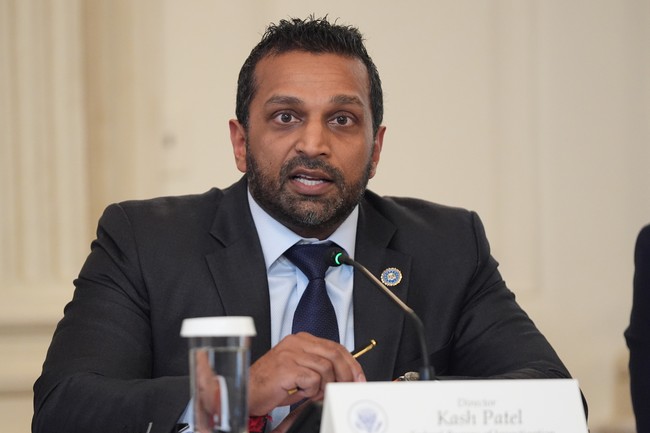
The press tried another dramatic takedown of FBI Director Kash Patel and failed spectacularly, publishing anonymous allegations that quickly collapsed under official pushback and legal warning. This piece walks through the narrative published by a legacy outlet, the immediate responses from the FBI Office of Public Affairs and other allies, the factual rebuttals offered publicly, and the legal pressure that preceded publication. It highlights how rushed reporting, anonymous sourcing, and political motives can produce a story that courts and colleagues call false or exaggerated. The end result reads less like journalism and more like a political hit job that blew up on the people who ran it.
The Atlantic published a long piece alleging excessive drinking and unexplained absences by Patel, relying heavily on anonymous sources and unnamed officials. The story began with an anecdote about a computer access issue and then escalated into claims about paranoia and the expectation he could be fired. For readers who watch Washington, the piece carried familiar signs of a rumor-driven narrative rather than a rigorously verified investigation. Senior officials and people who actually work with Patel pushed back almost immediately.
Benjamin Williamson, Assistant Director of the FBI Office of Public Affairs, responded sharply to the reporter and the piece. He called the story “one of the most absurd things I’ve ever read” and said it was “Completely false at nearly 100% clip.” That blunt rebuke came with a promise to provide more thorough responses and to copy colleagues on any corrections. Public affairs teams do not make that kind of statement lightly; it signals both factual disagreement and readiness to pursue remedy.
Patel himself posted correspondence related to the reporting with the message, “see you and your entire entourage of false reporting in court.”
Before publication, attorney Jesse R. Binnall contacted the publication with detailed corrections and a warning about legal consequences if the article ran unchanged. Counsel laying out factual errors in advance is a clear red flag that the reporting had material inaccuracies. When lawyers take the time to catalogue specific falsehoods, reputable outlets typically pause and fix factual mistakes rather than race to print. The decision to publish anyway speaks to the priorities behind the story.
Other officials supplied a point-by-point rebuttal that undercut the article’s core claims. One detailed thread explained that Patel had taken a modest number of days off—far fewer than predecessors—and that the alleged intoxication incidents never occurred. The thread also listed enforcement accomplishments under Patel’s watch to challenge the narrative that he was not focused on the job. Those facts did not fit the story arc the magazine wanted, so they were treated as inconvenient counter-evidence rather than central context.
That same rebuttal included a long list of statistics meant to show the bureau’s productivity and to refute the anonymous allegations. It noted arrests, gang takedowns, fentanyl seizures, human trafficking arrests, recoveries of missing children, and an uptick in arrests of online predators. Presenting those numbers was a strategic move: it put tangible, verifiable law enforcement outcomes up against vague character-based accusations. Readers can decide which account better explains the FBI director’s record.
But Patel, according to multiple current officials, as well as former officials who have stayed close to him, is deeply concerned that his job is in jeopardy. He has good reasons to think so—including some having to do with what witnesses described to me as bouts of excessive drinking. My colleague Ashley Parker and I reported earlier this month that Patel was among the officials expected to be fired after Attorney General Pam Bondi’s ouster, on April 2. “We’re all just waiting for the word” that Patel is officially out of the top job, an FBI official told me this week, and a former official told my colleague Jonathan Lemire that Patel was “rightly paranoid.” Senior members of the Trump administration are already discussing who might replace him, according to an administration official and two people close to the White House who were familiar with the conversations.
Colleagues emphasized that the piece ignored readily available sources who would have contradicted the accusations. One insider noted that many reliable D.C. reporters were pitched the same rumors and declined to publish because they could not verify them. That pattern—multiple outlets passing but one deciding to run—raises questions about editorial judgment and motive. Publishing a hot-headed piece that others rejected is not a vindication; it’s a failure of editorial filtering.
Legal exposure and public admonishment left the outlet vulnerable, and staffers who defended their leader signaled intent to pursue formal remedies. Public pushes back from the bureau’s communications office and from political allies created a chorus insisting the story was false. When institutions respond aggressively and coherently to anonymous-sourced allegations, it suggests those allegations should be treated skeptically until independently verified. Responsible reporting requires corroboration, not rumor amplification.
Voices close to Patel stressed his work ethic and availability during the confirmation process and afterward, pushing back on the idea that he was hard to reach or unprepared. That kind of endorsement from someone who worked with him on briefs and schedule details is significant. It shifts the conversation from innuendo to documented behavior, and shows why colleagues are confident in his performance.
If the goal was to damage the administration or to score partisan points, the piece achieved the opposite: it exposed the publisher to legal risk and public ridicule. Rapid, anonymous assault journalism still risks serious consequences when it collides with verifiable facts and prepared legal teams. For leaders who are doing the job, loud accusations will not be enough to change the record.
The episode looks like another instance where rushed reporting met organized rebuttal and a readiness to litigate, producing a fiasco for the outlet that chose to run the story. The immediate and coordinated pushback shows how determined officials are to defend reputations and to hold media accountable for unverified attacks. Political reporters and editors would do well to remember that fast and flashy is not the same as fair and factual.

Add comment