
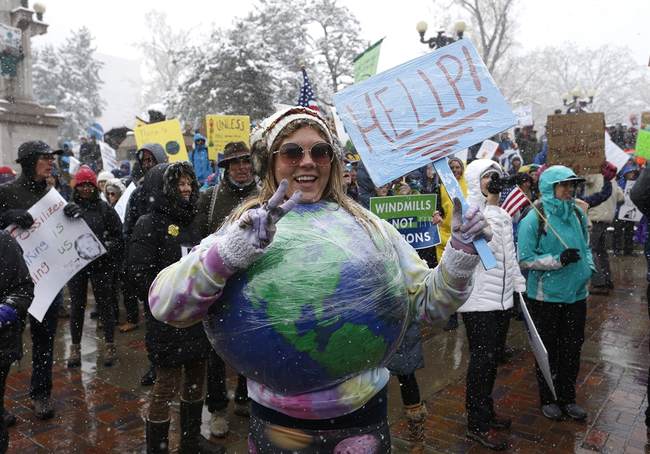
On Earth Day, this piece looks at the endless cycle of apocalyptic predictions, the contradictory claims about environmental effects, and the odd cultural baggage attached to environmentalism, keeping the original tone and notable quotes intact while removing external links and credits.
“Happy Birthday, Earth!! (What do you buy a planet that already has everything?!)” That opener lands like a jab, and the follow-up, “WE ARE DOOMED!” captures the melodrama that has become routine every April 22. For decades, public messaging about the environment has swung from one extreme to another, and today that overreach is worn like a badge of certainty by media and policymakers.
We have been fed one looming catastrophe after another, each treated as settled doctrine until the next prediction replaces it. The narrative often insists we must radically change lifestyles and funnel money into grand programs to avert disaster, with little patience for skepticism. The result is not sober policy debate but a ritualized public panic that confuses priorities and erodes trust in expertise.
History matters here. The first Earth Day set a tone of alarm, and early predictions about ice ages, mass famine, and collapsing resources turned out to be wildly off. That does not mean every environmental concern is baseless, but it does mean we should judge current claims in context and demand consistent evidence. When the story keeps changing, the public rightly asks why policymakers should upend lives and livelihoods on shaky consensus.
The reporting that follows modern environmental sermons often reads like a list of everything bad that could happen, assigned without careful weighing of probabilities. Species will vanish; others will adapt in odd ways. We get headlines warning oysters will be plagued by herpes and that entirely different creatures will expand and become new threats—all presented as inevitable consequences of a single cause.
That pattern repeats across topics: food supply, social behavior, and public order all get swept into the climate catastrophe narrative. One story says guacamole and pasta will disappear; another says some crops may thrive in warmer conditions. Predictions flip between scarcity and abundance, creating a patchwork of mutually exclusive outcomes that are nonetheless presented as proof of a monolithic crisis.
Cultural claims pile on as well. Environmental alarmists treat weather and social trends as tightly linked without proving causation, stretching from claims about infidelity and prostitution to slavery and witch executions. Those provocative assertions are often framed as inevitable consequences, which turns political persuasion into fear-based storytelling rather than an honest policy argument.
The scientific discourse itself is not immune to contradiction. We are told clouds will either trap heat and warm the planet or disappear and let sunlight roast us, and both claims are offered by different camps as settled truth. Sharks will reportedly attack us more, then less. Sea salinity will rise, then fall. Coral reefs will both diminish and benefit. This oscillation undermines the authority of the “settled” label and fuels skepticism.
Policy consequences follow public perception. When uncertainty is packaged as certainty, the response tends to be heavy-handed and expensive, with uneven benefits. Conservatives argue for measured, evidence-driven approaches that protect both the environment and economic freedom. The core Republican stance favors resilient infrastructure, innovation in energy and agriculture, and policies that incentivize smarter practices without imposing draconian lifestyle changes.
Whatever the science ultimately shows, it should be parsed carefully and translated into policy that respects individual liberty and economic realities. Alarmist rhetoric that insists “It’s Settled!” but cannot reconcile conflicting claims about clouds, waves, crops, and wildlife does more harm than good. Decisions made on shaky consensus invite backlash and reduce public willingness to cooperate when real threats appear.
Practical stewardship of land, water, and air is a common-sense goal that transcends partisan shouting. Republicans favor solutions that rely on market innovation, property rights, and local control to deliver cleaner water, more efficient energy, and resilient communities. That mix aims to address environmental problems without sacrificing prosperity or imposing endless governmental mandates.
Finally, the culture surrounding Earth Day should be open to debate rather than immune from it. Mocking or purging skeptics turns necessary scrutiny into heresy, and that is the last thing a healthy democracy needs. Honest debate, clear evidence, and policies that balance conservation with human flourishing will always beat theatrical certainty and performative panic.


Add comment