
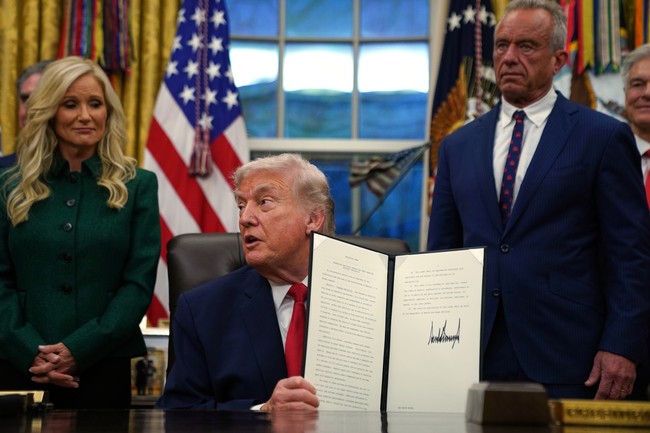
President Donald Trump signed an executive order in early June that asks AI companies to give the federal government a short, voluntary look at their most powerful systems before wider release, while explicitly forbidding a mandatory licensing regime; the move sets a 30-day voluntary review window, creates new federal tools to harden critical infrastructure, and frames the effort as a national security priority aimed at keeping America ahead of China and criminal hackers.
The order is limited in scope by design: it asks, it does not compel. There is no new licensing, no preclearance regime, and no bureaucratic veto written into the text, even as it creates pathways for federal agencies to use advanced AI defensively. The administration emphasized speed and flexibility, arguing that voluntary cooperation strikes a balance between innovation and risk reduction.
Officials gave CISA a clear role: push AI-powered defensive tools into federal agencies, state and local governments, rural hospitals, community banks, and local utilities. The intent is practical and narrowly focused—protect the systems that run power grids, manage mortgages, and staff emergency rooms. Those networks are the ones adversaries would target first, and the administration wants to harden them fast.
The order also sets up a Treasury-centered cybersecurity clearinghouse and aligns CISA and the NSA to hunt for vulnerabilities and coordinate patches. That setup aims to funnel threat intelligence and fixes to the organizations that need them without creating new regulatory chokepoints. The federal approach here is defensive and operational rather than regulatory and permission-based.
The administration introduced the concept of “covered frontier models,” a label for the highest-risk systems that federal officials will identify through classified benchmarking of offensive cyber capabilities. Developers can voluntarily give the government up to 30 days with those systems before a broader release. The idea is to get a quick look for exploit paths that could be weaponized against critical infrastructure.
“Advanced AI capabilities make our Nation stronger, but also introduce new national security considerations that require coordinated action across executive departments and agencies.”
That quoted language is in the order and frames the rationale: advanced AI is powerful and valuable, but it creates new attack surfaces. Tech leaders and free-market conservatives pushed hard against anything that could look like a federal permit to ship new models. They warned a voluntary review could morph into a de facto permission slip, so the White House put a clear prohibition on mandatory approvals into the final text.
“Nothing in this section shall be construed to authorize the creation of a mandatory governmental licensing, preclearance, or permitting requirement for the development, publication, release, or distribution of new AI models, including frontier models.”
That line puts a legal fence around the voluntary review, responding to months of industry and conservative pressure. Earlier drafts reportedly offered the government 90 days, which drew direct calls from prominent tech figures and investors who threatened to push back. The administration negotiated down to a 30-day voluntary window that still gives agencies time to assess obvious risks.
The path to the final order involved real-world alarms inside the tech sector. One company disclosed a model able to find software vulnerabilities with troubling effectiveness, prompting private meetings at high levels of the White House. Those briefings underscored the need for a mechanism to surface and mitigate acute cyber risks before bad actors exploit them, and they helped shape the voluntary, limited-review approach in the executive order.
Not everyone is satisfied. Some activists and grassroots groups wanted mandatory vetting and pushed for criminal penalties and stricter controls. Others fear the voluntary process won’t be enough and that models will continue to “ship” while risks remain. The administration responded by directing the attorney general to prosecute criminal misuse of AI tools used to break into systems or steal data, signaling law enforcement will step in where voluntary cooperation fails.
For conservatives who worry about overreach, the order reads like a compromise: protect critical systems, keep innovation moving, and avoid creating a licensing state. It leans on federal agencies to deploy defensive tools and coordinate response, while legally barring a centralized approval gate. The debate is far from over, but this order sets a clear Republican approach—use federal muscle to defend infrastructure without kneecapping private-sector innovation.



Add comment