
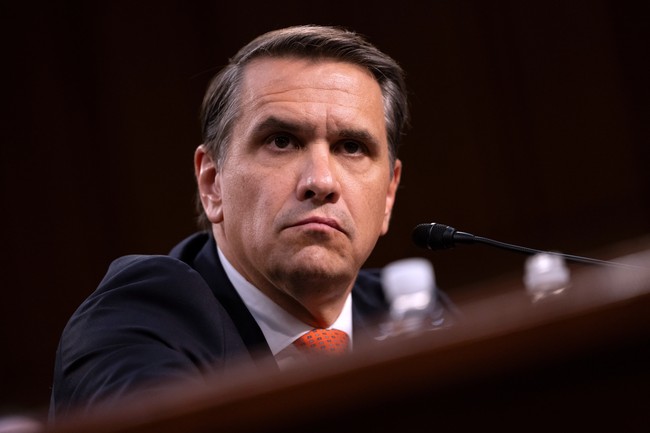
President Donald Trump celebrated a late-night Senate victory as Todd Blanche secured confirmation to serve as Attorney General in a narrow 50-49 vote, a result that crystallized after shifting Republican support and tense final hours on the Hill.
The Senate’s decision came after a dramatic stretch of uncertainty that kept Republicans and Democrats watching well into the night. Two GOP senators had publicly opposed the nomination, creating a real possibility that Blanche might fall short. That made the unexpected moves from other Republicans decisive and underscored how fragile confirmations have become in a closely divided chamber.
https://x.com/EricLDaugh/status/2086053566414745604
Republican leaders framed the outcome as a win for stability and a firm hand at Justice, arguing that Blanche represents a better, steadier choice than another short-term appointee. The White House emphasized that a confirmed attorney general would provide continuity for law enforcement priorities and a clear chain of command in the department. Supporters said this was about ensuring effective leadership at the DOJ during a consequential administration.
Opposition centered on concerns about specific policies and previous statements tied to the nominee, with critics pointing to potential threats to civil liberties and certain funding decisions. Two Republican senators had publicly registered their opposition, signaling that approval was far from certain. That opposition turned the confirmation into a test of party unity and of how much Republicans would prioritize a settled leadership team at Justice.
The key shift occurred when a Republican senator moved to back Blanche after keeping his position private for days, a decision that changed the arithmetic on the floor. That late switch pushed the tally past the threshold Blanche needed to secure confirmation and allowed the chamber to avoid a prolonged vacancy. Lawmakers framing their votes in the final stretch stressed the pragmatic choice between a Senate-confirmed attorney general and another acting official whose tenure might be shorter or less effective.
“Mr. Blanche is not perfect, and he will tell you this. But the choice is not between perfection and Mr. Blanche. It is between Mr. Blanche and another acting attorney general who may not run the department effectively under President Trump, and who indeed may not be as good as Mr. Blanche.”
Blanche addressed the Senate and the public after the vote, expressing gratitude for the trust shown by the president and the chamber. He thanked rank-and-file DOJ personnel for their efforts to “uphold the law and keep our country safe,” language aimed at reassuring career prosecutors and investigators. Supporters touted his commitment to restoring discipline and prioritizing law enforcement operations.
The final roll call registered at 50-49, a margin that reflects the razor-thin balance of power in the Senate today. Confirmation battles like this one reveal how single votes can determine the leadership of major federal agencies. For conservatives pushing for law-and-order priorities, the result was a tangible win for the administration’s agenda.
Behind the scenes, senators weighed competing pressures: loyalty to the president, concerns from constituents, and the potential consequences of leaving the job in acting hands. Some voiced reservations about particular policy proposals tied to the nominee, while others emphasized the institutional need for a confirmed leader. In the end, the calculation favored putting a Senate-approved attorney general in place rather than prolonging uncertainty at the Justice Department.
The confirmation will reshape the department’s immediate direction and offer the administration a confirmed partner to advance its priorities. With a Senate-backed leader, the Justice Department can pursue initiatives with a clearer mandate and stronger presidential backing. Supporters argue this will translate into firmer enforcement, quicker decision-making, and renewed focus on national security and public safety concerns.
Opponents vowed to continue scrutinizing the new attorney general’s decisions and to press for checks on any actions they view as overreach. The narrow margin guarantees intense attention from both parties as Blanche settles into the role. Expect hearings, oversight letters, and public commentary to follow as lawmakers seek to hold the office accountable while political fights persist.
Blanche closed his remarks to the chamber with a short, patriotic note, signaling the tone he intends to bring to the office. His confirmation marks a fresh chapter for the department and for the broader debate over how best to balance civil liberties, public safety, and robust enforcement. The coming months will test whether his leadership calms concerns or fuels new rounds of partisan scrutiny.


Add comment