
I’ll explain the sudden leadership change at the Navy, present the official statement announcing the departure, outline John C. Phelan’s short tenure and key initiatives, introduce Under Secretary Hung Cao as acting secretary, and note how this fits into the administration’s push to rebuild America’s maritime strength.
On Wednesday, Chief Pentagon spokesman Sean Parnell posted a brief announcement on X confirming that Secretary of the Navy John C. Phelan has left the administration effective immediately. The statement was terse and gave no reason for the departure, leaving observers to focus on what Phelan accomplished in the year he served and who will take charge going forward. The move puts Under Secretary Hung Cao in the Acting Secretary role, ensuring continuity within Navy leadership under the current defense team.
STATEMENT:
Secretary of the Navy John C. Phelan is departing the administration, effective immediately.
On behalf of the Secretary of War and Deputy Secretary of War, we are grateful to Secretary Phelan for his service to the Department and the United States Navy.
We wish him well in his future endeavors.
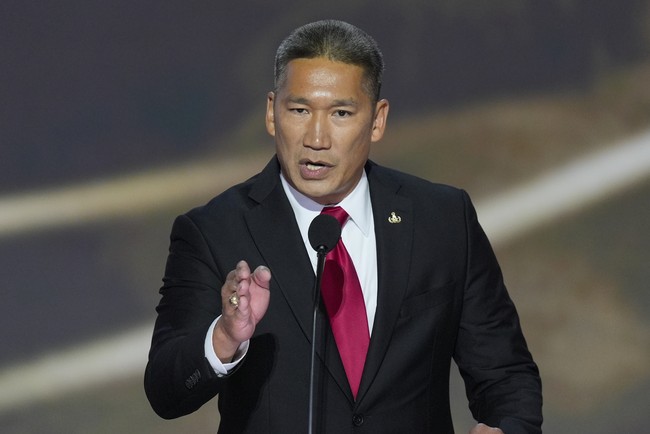
Undersecretary Hung Cao will become Acting Secretary of the Navy.
Parnell did not give further details on what led to Phelan’s departure, and that silence has sparked speculation across policy and defense circles. What is clear is that the leadership handoff is immediate and framed as a routine administrative change. Officials emphasized appreciation for Phelan while pointing straight to Cao as the person who will carry things forward without a gap in oversight.
Phelan arrived on the job after a confirmation and swearing-in on March 25, 2025, bringing a private sector background as a financier into a civilian defense role. During his time as Secretary he pushed a trim-and-rebuild agenda, targeting waste and redirecting funds toward force readiness and shipbuilding capacity. His approach mixed fiscal discipline with aggressive public-private partnerships designed to accelerate ship production and modernize maritime industry capabilities.
Phelan championed what the administration calls the Golden Age of Naval Fleets, a policy to expand and revitalize the fleet while bringing American manufacturing back to the forefront. He helped orchestrate deals linking defense requirements to industrial investment, intended to boost domestic yards and incentivize new tech players in robotics and artificial intelligence. Those partnerships were pitched as strategic investments to reduce dependence on foreign supply chains while creating jobs in coastal and inland manufacturing hubs.
One visible example was the March ribbon-cutting for the Hadrian Alabama Factory 4 plant in Cherokee, Alabama, an event that showcased the administration’s industrial strategy. At that ceremony Phelan framed the plant as a model for how the Navy intends to work with industry. His remarks at the event captured the tone of his tenure and the collaborative model he promoted.
This is step one of revitalizing the maritime industrial phase of what the Golden Fleet is, which is rebuilding the fleet, revitalizing the maritime industrial base, and changing the way the Navy does business. This is really a win-win between the Navy and Hadrian. Shared risk, alignment of incentives, downside protection, and upside participation. It’s the way we’re going to start to do things.
Another Phelan-engineered partnership focused on Gray Matter Robotics to speed domestic ship production, a move meant to bring automation and efficiency into shipyards that for years lagged behind global competitors. The strategy combined taxpayer oversight with private capital and technical expertise, aimed at reducing costs and shortening build times for essential warships. Supporters argue this is the kind of commonsense, pro-growth defense policy that restores American advantage on the seas.
Stepping into the top role, Hung Cao brings long service and operational experience to the Acting Secretary position, which should reassure professional sailors and civilian staff alike. Cao is a retired Navy Captain with a background in Special Operations, including explosive ordnance disposal and deep sea diving, and he served 25 years on active duty with deployments to Iraq, Afghanistan, and Somalia. His record includes both operational command and an understanding of the logistics and industrial ties that underpin fleet readiness.
Cao’s civilian service as Under Secretary of the Navy positioned him to assume leadership with minimal disruption to ongoing programs and initiatives. Given his service record and the administration’s priorities, it’s reasonable to expect Cao to keep pushing the Golden Fleet agenda while focusing on fleet readiness and industrial base expansion. The transition keeps the department aligned with the broader defense leadership’s goals to strengthen deterrence and modernize America’s naval capabilities.
While the administration remains silent about the reasons for Phelan’s immediate exit, the shift reinforces a pattern of placing experienced military veterans and pro-growth partners into key defense roles. For now, the focus will be on sustaining momentum in shipbuilding partnerships, protecting defense budgets from waste, and ensuring the Navy continues to rebuild capacity under capable leadership.



Add comment