
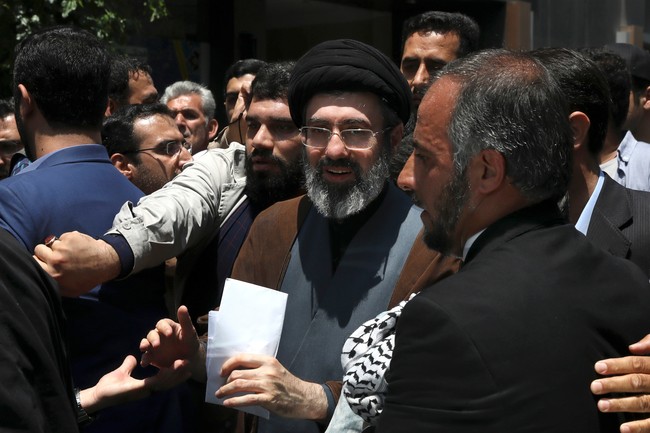
The Iranian leadership’s mystery and the White House’s public mockery are front and center as reports swirl about Mojtaba Khamenei’s health and whereabouts amid Operation Epic Fury, with viral cardboard memes and official denials colliding in a propaganda battle that matters for U.S. strategy and regional stability.
Questions about Mojtaba Khamenei’s condition have turned into a public spectacle for Tehran, and that matters beyond gossip. He skipped an important allegiance ceremony and was represented only by a photo, which fueled ridicule and suspicion about who is really running the regime. The cardboard cutout jokes went viral, and the optics are disastrous for a government that depends on projecting strength and unity.
Rumors of injuries, coma, and even amputation circulated quickly, and those reports forced Tehran to respond despite its habit of secrecy. Officials now acknowledge he suffered injuries during the attack that killed his father, yet they still have not shown him in public. That lack of visibility creates a vacuum of authority at a dangerous moment for Iran, with Operation Epic Fury actively pressuring the regime.
The broader issue is not just whether Mojtaba is hurt; it is how the regime handles consequences when its leadership looks like a phantom. When state messaging resorts to staged photos and anchors reading statements, it betrays a weakness the United States and allies can exploit. Republicans see this as further proof that decisive action against Iran is working, and that the regime’s internal coherence is fraying under pressure.
The three Iranian officials said they were told by more senior figures in the government over the past two days that Mr. Khamenei had suffered injuries, including to his legs, but that he was alert and sheltering at a highly secure location with limited communication.
Two Israeli military officials said information gathered by Israel had also led the defense establishment to believe that Mr. Khamenei suffered leg injuries on Feb. 28, a conclusion they reached even before he was selected as the new supreme leader on Sunday. The Israeli officials spoke on condition of anonymity.
Tehran’s attempt to paper over the story with a recorded statement read by a TV anchor only made things worse for the regime’s credibility. Public trust inside Iran is fragile, and international observers see the charade for what it is: a damaged leadership trying to buy time and control the narrative. For conservative observers, this underlines the necessity of maintaining pressure until the ayatollahs can no longer threaten the region.
They released a statement attributed to Khamenei that vowed retaliation and claimed operations would focus on U.S. military bases and Gulf neighbors. The tone was defiant, but the delivery was staged and thin. A leader who cannot appear publicly or speak directly to his people loses the core tool of authoritarian governance, which is visible dominance.
“We will avenge the blood of our martyrs,” Khamenei added.
“I would like to thank the brave fighters who are doing a great job at a time when our country is under pressure and under attack.”
The ayatollah also said that Iran would continue to attack its Gulf Arab neighbors, though he insisted Tehran was only targeting US military bases.
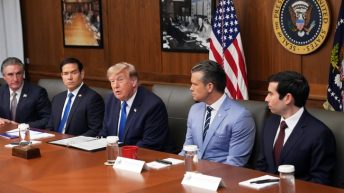
It’s worth noting how the White House responded, leaning into the mockery rather than offering cautionary diplomacy. Deputy White House Chief of Staff Dan Scavino publicly teased that Iran may need more leaders, a jab that landed amid the cardboard cutouts and jokes. For Republicans, the message is simple: pressure and messaging matter and the administration should not shy away from exposing the regime’s weaknesses.
A regime that hides its head, stages statements, and risks confusion at the top cannot credibly threaten its neighbors. The tactical benefit of the current campaign is visible in Tehran’s desperation to control optics, which often signals real operational strain. This is the kind of moment conservative policymakers argue should be seized to reduce Iran’s capacity to export violence.
Iranians watching their supposed leader disappear from public life will draw their own conclusions, and those could be destabilizing for the regime. Loyalists may bicker, rivals may maneuver, and the perception of vulnerability invites both internal and external challenge. Republicans view these fractures as historically useful moments for shifting the balance toward deterrence and dismantling hostile networks.
The cardboard mockery and the administration’s pointed responses show how soft power and ridicule can be part of a broader pressure campaign. Tehran’s attempts to patch over leadership gaps only confirm how effective military and information pressure can be when applied in sync. The U.S. and its partners should keep focusing on degrading the regime’s ability to project power while exposing its weaknesses to the world.


Add comment