
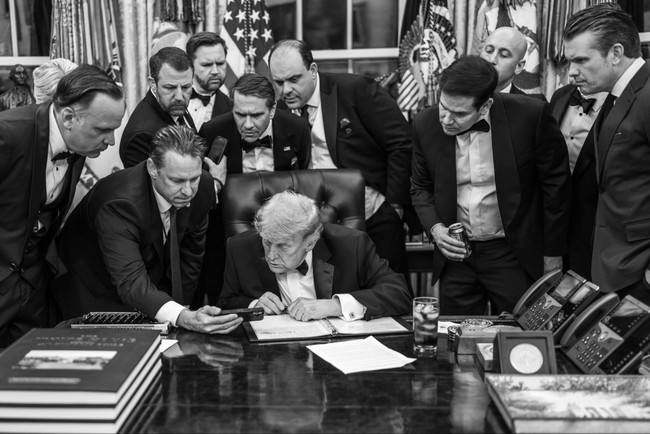
The White House Correspondents’ Association rescheduled its annual dinner for July 24 after the April 25 event was violently disrupted by an armed attacker who allegedly intended to target President Trump, forcing the cancelation of the original gathering and sparking a security and free-press debate in Washington.
The original dinner at the Washington Hilton was interrupted when a man armed with a firearm breached metal detectors and opened fire, wounding a police officer and sending guests scrambling. President Trump, attending the event for the first time as president, had been present with First Lady Melania Trump, White House Press Secretary Karoline Leavitt, and several Cabinet members and spouses when the chaos began. The shooting prompted immediate security lockdowns and the premature end of the evening.
After weeks of deliberation and scrutiny over whether it was appropriate to attempt a reschedule, WHCA leadership announced the new date and framed the decision as an act of defiance against political violence. Weijia Jiang, WHCA president and a White House correspondent for CBS News, confirmed the July 24 date and stressed the association’s commitment to the First Amendment. Jiang wrote in an email to colleagues, “When gunfire interrupted this year’s event, it further clarified the WHCA’s mission to advocate for the freedoms that are protected in the First Amendment. We will not allow an act of violence to have the last word, especially during a year when we are reflecting on the 250th anniversary of America and everything we stand for.”
https://x.com/weijia/status/2061846223875617199?ref_src=twsrc%5Etfw
The decision to move forward was not automatic and required buy-in from many who worried about optics and safety. President Trump reportedly wanted to return to the Washington Hilton the night of April 25 so the dinner could continue, but the Secret Service overruled that plan. Organizers said they wanted a “more intimate gathering” for the rescheduled date, though the exact venue was not initially confirmed by WHCA.
After the reschedule was announced, President Trump confirmed he would attend and speak at the event and publicly identified the venue he expected to use. He said the dinner would take place at the Waldorf Astoria in the Old Post Office Pavilion, a location close to the White House that formerly housed the Trump International Hotel Washington DC. In his post, Trump wrote, “In a sign of Strength and Fortitude, it was just announced that The White House Correspondents’ Dinner, which violently ended rather abruptly on April 25th, will be rescheduled to July 24th,” and added, “This announcement is a very good thing in that we cannot allow Lunatics to change our way of life, or even its scheduling.”
The suspect in the attack has been identified as Cole Tomas Allen, 32, who allegedly stormed past metal detectors at the Washington Hilton and fired shots as the dinner was beginning. One officer was struck during the incident, and federal authorities quickly moved to charge Allen with attempting to assassinate the president. He has pleaded not guilty and faces upcoming court proceedings, with a next scheduled court date on June 29.
This episode has triggered sharp questions about security at high-profile capital events and the balance between protecting public officials and preserving open coverage of government. Conservative voices have underscored that law enforcement must be supported and that violent political extremes should not disrupt civic institutions. Many on the right framed the rescheduling as the right move: a refusal to let a single act of violence rewrite traditions or weaken resolve.
Meanwhile, media organizations are wrestling with how to carry on in a way that honors press freedoms without needlessly exposing journalists or guests to risk. WHCA framed the rescheduled dinner as a symbolic stand for the First Amendment during the nation’s 250th anniversary year, but critics say organizers also had to reckon with the real-world tradeoffs of where and how to host a gathering when a known threat exists. Those debates are playing out in private meetings even as public announcements are made.
For attendees, the return to a correspondents’ dinner that includes the president is an unusual and politically charged moment. Past WHCA dinners have long mixed journalism, politics, and pageantry, but the April incident made the evening a flashpoint for broader national tensions. Organizers, guests, and law enforcement are all adjusting plans and messaging as they set the stage for July 24 and prepare for heightened scrutiny.
As the case against the accused advances through the courts, officials and media leaders will stay focused on security protocols and the optics of reopening a marquee Washington event. The rescheduled dinner represents both a logistical challenge and a symbolic choice to carry on with traditions of press coverage and public ceremony despite a dramatic interruption earlier this spring.

Add comment