
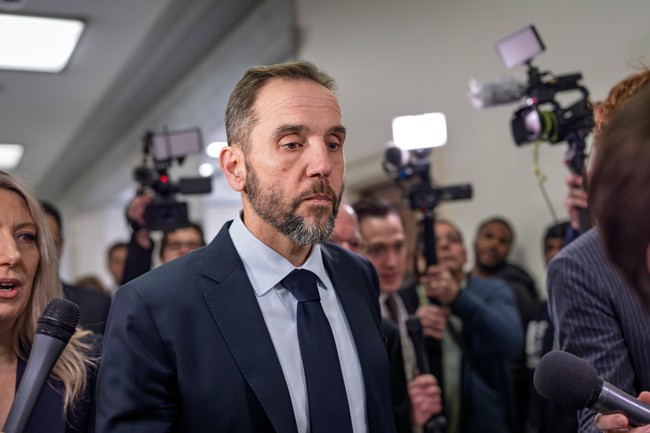
The Department of Justice unearthed a stash of documents placed in burn bags that appear to be linked to the work of former Special Counsel Jack Smith, raising questions about what was preserved, who may have hidden material, and whether any intentional effort kept evidence from destruction.
Jack Smith pursued high-profile cases against Donald Trump that collapsed in court or faded once Trump returned to the White House. The classified documents case was dealt a blow when a judge found Smith’s appointment unlawful, and the election-related matters did not survive politically after the 2024 result shifted control of the presidency.
Now acting Attorney General Todd Blanche says a room at DOJ was discovered to contain burn bags filled with documents, a find that suggests someone set aside material that otherwise might have been destroyed. Blanche framed the scene carefully, noting that a burn bag itself does not prove wrongdoing but that the placement made him suspicious.
“It’s not the existence of a burn bag that I think is interesting or problematic depending on which side you’re on,” Blanche said.
“This one was in a place where I get the point that an honorable FBI agent might have left it there because it was not where it would normally be to be destroyed,” he added. “[We] kind of stumbled on it, but it looked almost intentional.”
The implication from Blanche and others is straightforward: somebody may have intentionally preserved material that could have been relevant to investigations. That suggests either loyalty to truth over institutional pressure or a cover-up to hoard damaging documents away from normal channels. From a Republican point of view this points to a deeper problem of accountability inside agencies that wield immense power.
https://x.com/FoxNews_Flash/status/2061818933737607387
Former FBI Deputy Director Dan Bongino told a similar story about finding “the mother lode” of documents, and his remarks reinforce the idea that some employees pushed back against what they saw as wrongful actions. When asked whether those materials were intentionally spared he replied, “Yes,” and added that the stash undermined the narrative pushed by Smith’s team.
And this is why I say to people that, be careful painting the entire bureau with an overly broad brush. There were a ton of bad actors, more than I expected, and you were correct about that.
But there were a lot of people in there, under extreme pressure, who, you get where I’m going with this? Who were probably like, “This isn’t right?”
…They saved it on purpose.
And it was the mother lode.
These revelations feed a larger Republican critique: the justice system was weaponized against political opponents, and only internal resistance prevented a fuller sweep. If agents quietly preserved records that exposed bias or prosecutorial overreach, their actions deserve scrutiny both for motivation and for the material facts they reveal. Evidence that survived offers a chance to evaluate the conduct of prosecutors and investigators, including whether protocols were followed when handling sensitive items.
Multiple oversight reviews now focus on the conduct of Jack Smith while he served as special counsel, and those inquiries will look at the burn-bag trove as part of the broader record. Smith is not under criminal indictment at this point, but the political fallout continues to echo through DOJ and Congress. Republicans pressed for transparency from the start, arguing that political prosecutions harm both the rule of law and public trust.
The scene Blanche described — burn bags sitting in an unusual place, not queued for destruction — raises practical questions about chain of custody and evidence preservation. Who moved the documents, when, and why do the papers appear to have been spared normal disposal? Those are essential threads for investigators because they expose how fragile institutional safeguards can be when politics and high-stakes cases collide.
From this perspective, the discovery validates concerns about selective enforcement and internal bias, while also making clear that individual agents sometimes act to protect the record. That complicates the standard story about partisan institutions and suggests a more textured reality: agencies can be both politicized and home to conscientious objectors who preserve inconvenient facts.
What happens next matters for accountability. Oversight bodies and internal reviews must examine the materials, document movements, and interview those involved to determine whether the preservation was intentional and lawful. Republicans will argue that exposing any misconduct is crucial to restoring a justice system that treats everyone equally and resists partisan impulses.
The burn-bag discovery is a reminder that in high-profile probes, the final record can hinge on small choices made by lower-level staffers. Whether those choices were acts of conscience or part of a tactical game, the documents themselves will tell a story that could reshape how critics view the Smith-era investigations. The country deserves a clear accounting of the facts, and the documents now unearthed may be the best path to that clarity.



Add comment