

This piece examines Gov. Tim Walz’s recent response to escalating unrest in Minnesota, the federal government’s warnings, and the political fallout, highlighting claims of fraud and criticism of state leadership while preserving the original quoted remarks and embedded media cues.
Minnesota is facing serious problems that can’t be dismissed as mere noise. Longstanding allegations of large-scale fraud have crippled confidence in state institutions, and estimates of losses are staggeringly high. At the same time, confrontations with federal agents have intensified, turning law enforcement into a flashpoint for wider political conflict.
Instead of de-escalating, Gov. Tim Walz has taken a confrontational tone toward federal authorities, which critics say only adds fuel to an already dangerous situation. That posture came into sharper focus when the Deputy Attorney General issued a stern warning about incitement and responsibility for attacks on federal personnel. The federal message was clear: state rhetoric matters when people take to the streets.
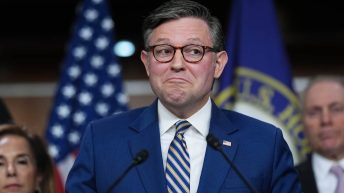
Walz’s public remarks, posted to X, were intended to calm tensions but landed with a different effect among many observers. The video aimed to cast Minnesota as a place of decency and dignity, yet critics argue reality tells a different story. Where leadership should be focused on protecting citizens and upholding the rule of law, opponents say Walz’s words have sometimes sounded like encouragement for resistance to federal action.
https://twitter.com/EricLDaugh/status/2009024640765882810
Violence and targeted attacks against ICE personnel have risen, and some in Minnesota’s law enforcement community feel undercut. Calls for support of federal law enforcement have come from different corners, but the governor’s mixed messages have only amplified confusion on the ground. When tribal and local passions collide with federal jurisdiction, clarity from the top is essential, and that clarity has been lacking.
In his attempt to reassure Minnesotans, Walz doubled down on language about community and compassion, but many say that rhetoric rings hollow in light of recent events. People point to alleged massive fraud schemes that, if true, shifted resources and attention away from vulnerable communities. The disconnect between lofty language and hard facts has become a central criticism.
“Minnesotans believe in the rule of law. And Minnesotans believe in the dignity of all people. We’re a place where there’s room for everybody, no matter who you are or who you love or where you came from. A place where we feed our kids. We take care of our neighbors. And we look out for those in the shadows of life.
We’re an island of decency in a country being driven towards cruelty. We will remain an island of decency, of justice, of community, of peace.
And tonight, I come before you simply to ask: don’t let anyone take that away from us. Thank you. Protect each other. And may God bless the people of Minnesota.
Repeating that statement verbatim cannot erase the facts critics emphasize: alleged fraud and escalating hostility toward federal officers. Republicans and other opponents argue the governor must stop equivocation and clearly support lawful federal operations. When a state leader suggests a different path from the federal government, consequences follow and lines get blurred for first responders.
People across the state demanded immediate action, and the response to Walz’s video was swift and polarized. Some urged resignation or stronger measures, while others simply wanted him to order a stop to the chaos. In this environment, tone matters and leadership even more, because failures cascade into public danger and institutional erosion.
The governor’s opponents point out that the simplest solution is also the most basic duty: call for an end to violence and back the enforcement of federal and state law. Doing so would protect families, neighborhoods, and institutions that are suffering from the fallout. Instead, critics say Walz offered empathy without accountability, which is insufficient given the stakes.
Minnesota’s problems are not abstract policy debates but tangible threats to safety and trust. Allegations of systemic fraud, the theft of public resources meant for children, and confrontations with federal law enforcement have real victims. Citizens expect a governor to prioritize security and the rule of law above political posturing, and many feel that expectation has gone unmet.
As pressure mounts, political operatives and power brokers are watching how this plays beyond state lines. For conservatives, the concern is twofold: the policy failures that led to the current mess and the broader cultural signal sent when state leaders appear to resist federal accountability. Electoral consequences may follow for those who favor chaos over order.
Walz appears to be attempting damage control, but critics describe the effort as fumbling and insufficient. Words of unity ring empty if they are not paired with decisive actions that protect citizens and enforce the law. In a crisis, leadership is measured by outcomes, and many Minnesotans want to see results rather than speeches.
At the core, the debate hinges on responsibility and whether a governor should stand as a stabilizing force or as an oppositional voice against federal institutions. For those who prioritize law, safety, and fiscal integrity, the current posture is unacceptable. The coming weeks will show whether Minnesota’s leaders will act to restore order or continue down a path critics warn will cost the state dearly.


When is that damned to hell SOB going to be arrested!!!
Walz is a CRIMINAL and TRAITOR!!!